Pool Heater Repair: A Step-by-Step Home Guide
Learn how to diagnose, safety-check, and repair common pool heater problems with a practical, field-tested approach from Home Repair Guide for homeowners and renters.


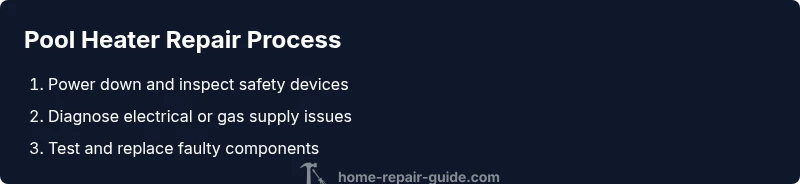
Pool heater repair can be safely completed when you first power down and verify safety devices, then diagnose heat loss, ignition, or circulation issues. This quick plan covers basic checks, testing with a multimeter, and careful replacement of faulty components. Follow the steps to minimize risk and extend your heater’s life.
Understanding how pool heaters work
Pool heaters come in electric, gas, and heat-pump variants. They maintain water temperature by transferring heat from a fuel source or electrical resistance into pool water as it passes through the heater’s heat exchanger. The thermostat signals the control board when to activate the burner, gas valve, or compressor. According to Home Repair Guide, recognizing the basic heat cycle helps you diagnose problems more quickly and safely. Start with safety checks, then verify power and fuel supply before delving into components. Knowing the difference between heating modes helps you distinguish a failed thermostat from a circulation issue, and it informs which parts you’ll test first.
If you’re new to pool equipment, keep a manual handy and label wires before disconnecting anything. A dry, well-lit work area reduces the chance of miswiring when you reassemble.
Common causes of failure in pool heaters
Most pool heater problems fall into a few broad categories: electrical faults, ignition or gas-supply issues (for gas heaters), clogged condensate lines, and worn safety devices like high-limit switches. Home Repair Guide analysis shows that many service calls stem from tripped breakers, loose connections, corroded terminals, or faulty thermostats. Visual inspections often reveal loose wiring, water intrusion, or mineral buildup. In electric models, check the contactor and capacitors; in gas models, verify the gas valve, gas line, and ignition system. Regular preventive maintenance reduces the risk and keeps efficiency high. Remember, a small crack in a seal or a corroded terminal can escalate if ignored.
Safety first: electrical, gas, and water considerations
Electrical safety comes first. Always shut off power at the main breaker and use a lockout/tagout procedure if you work with energized components. For gas heaters, verify there is adequate ventilation and no gas odor before proceeding; if you smell gas, evacuate and call the utility. Water around electrical components increases shock risk; keep dry work areas and dry hands when handling wiring. Clean, dry panels and secure mounting reduce vibration that can lead to loose connections. In all cases, consult the manufacturer’s safety instructions and wear appropriate PPE such as gloves and eye protection.
Diagnostic checklist for pool heater problems
Use this checklist to quickly identify the root cause before replacing parts. Start at the power source: confirm the breaker is on, fuses are intact, and wiring terminals are tight. Check the thermostat setting against the actual water temperature; if there’s no response, the thermostat or control relay may be faulty. Inspect the ignition system or gas valve (for gas heaters) for proper operation. Look for error codes on the control panel and refer to the manual for code definitions. Inspect the heat exchanger and flue for signs of blockage or corrosion, and test pressure switches or flow sensors. Finally, verify that the pump and filter are delivering adequate water flow to the heater.
Maintenance basics to extend pool heater life
Preventive maintenance is your best defense against sudden failures. Schedule seasonal checks of electrical connections, thermostat calibration, and gas line integrity if you have a gas heater. Clean or replace air and water filters to ensure good water flow, inspect venting for obstructions, and test safety devices monthly. Use a water-treatment plan to prevent mineral buildup on heat exchange surfaces and consider a professional tune-up for complex systems every couple of years. Keeping a simple maintenance log helps you catch trends before they fail.
When to call a professional for pool heater repair
Some issues are best left to a licensed professional, especially gas-related repairs or situations involving high-voltage circuits. If you smell gas, notice persistent leaks, or cannot safely de-energize the unit, stop and contact a pro immediately. If the heater repeatedly trips breakers, shows persistent fault codes you can’t resolve, or you lack the tools to safely test components, a certified technician should take over. The Home Repair Guide team recommends prioritizing safety and using a structured approach when deciding whether to DIY or hire help.
Wrap-up: applying what you’ve learned to maintain reliability
By applying the diagnostic framework, performing careful testing, and following safety protocols, pool heater repairs become manageable tasks. Keeping up with regular maintenance minimizes downtime and cold-water surprises. Maintain logs of maintenance activities and any part replacements to help future diagnostics. The goal is durable performance, safety, and energy efficiency, rather than quick but unreliable fixes.
Tools & Materials
- Safety gear (gloves and eye protection)(Heat-resistant gloves recommended when handling heaters and electrical components.)
- Non-contact voltage tester(Check for live circuits without touching conductors.)
- Digital multimeter(Test voltage, current, and resistance across thermostat terminals and sensors.)
- Screwdriver set (Phillips and flathead)(Includes Phillips #2 for most panels; have a small flathead for prying connectors.)
- Wrench and pliers (adjustable)(Handle clamps, fittings, and small fittings safely.)
- Replacement parts (thermostat, fuse, capacitor, valves as needed)(Only replace parts after confirming failure with testing.)
- Rags and small containers(Catch any water or residue and keep screws organized.)
- Pool heater manual(Helpful reference for model-specific wiring diagrams and specs.)
Steps
Estimated time: 60-120 minutes
- 1
Power down and secure
Turn off the pool heater at the main breaker and engage any lockout devices if available. For gas units, close the gas valve only if you are sure there is no odor and it is safe to do so. Wait 30 seconds to ensure capacitors discharge before touching components.
Tip: Double-check the breaker and label the circuit to prevent accidental re-energizing. - 2
Verify safety and access
Inspect the area for wet surfaces or standing water. Remove the heater cover and photograph wiring before disconnecting any wires to aid reassembly. Confirm you have a dry, well-lit workspace.
Tip: Label wires with masking tape or take a reference photo before detaching connections. - 3
Test power and control signals
Use a digital multimeter to check voltage at the thermostat terminals and control board. Compare readings to the manufacturer’s specifications in the manual. If readings are off, the control board or sensor may be faulty.
Tip: Document readings for future reference and potential warranty claims. - 4
Inspect ignition/gas components (gas heaters)
For gas heaters, inspect the igniter or pilot assembly and ensure the gas valve opens on demand. Look for corrosion, blockages, or signs of delayed ignition. If you suspect a gas issue, do not force parts.
Tip: Never attempt ignition if you smell gas; evacuate and call the gas utility. - 5
Check safety devices and sensors
Test the high-limit switch, pressure switch, and flow sensors for continuity. Replace any device that shows open circuits or inconsistent readings. Recheck wiring after replacement.
Tip: Keep spare safety switches on hand for common models. - 6
Proceed with repairs or part replacement
If testing confirms a faulty component, replace it following the manufacturer’s wiring diagrams. Reconnect wires securely, reinstall the cover, and restore power to observe the system’s operation.
Tip: Match wire colors and terminal numbers exactly to avoid miswiring. - 7
Test run and monitor
Power the unit back on and run the heater through a complete cycle. Check for proper ignition, stable temperature, and absence of abnormal noises, leaks, or error codes for at least 10-15 minutes.
Tip: Listen for unfamiliar hums or grinding; these can indicate bearing or fan issues.
FAQ
What are common signs my pool heater needs repair?
Frequent cycling, no heat, error codes on the panel, unusual noises, or visible leaks are typical indicators you may need repair. Use the diagnostic checklist to narrow down the cause.
Common signs include unusual cycling, lack of heat, and error codes. Use the checklist to diagnose the cause.
Is it safe to repair a pool heater yourself?
DIY repair is possible for basic electrical or simple mechanical issues if you have the right tools and training. For gas systems or uncertain situations, hire a licensed professional.
DIY is possible for simple issues if you have the right training and tools. For gas systems or uncertain situations, hire a pro.
How do I know if the thermostat is failing?
If the water temperature does not respond predictably to changes in the setpoint, the thermostat may be failing. Verify connections, calibrate if applicable, and test with a thermometer.
If the water doesn’t heat when you adjust the setting, the thermostat may be failing. Check wiring and calibrate if possible.
Can mineral buildup affect heater performance?
Yes. Mineral deposits can insulate heat exchangers and reduce efficiency, causing longer heating times and higher energy use. Regular descaling and maintenance help.
Mineral buildup can reduce performance. Regular maintenance helps prevent this.
What maintenance helps extend heater life?
Regular inspections, cleaning the heat exchanger, checking wiring and seals, and testing safety devices extend life and prevent failures. Keep a maintenance log.
Regular maintenance and inspections extend life and prevent failures.
When should I call a professional?
If you smell gas, see persistent leaks around connections, detect ongoing ignition problems, or feel unsure about safe procedures, stop and call a licensed technician.
Call a professional if you smell gas or are unsure about safe procedures.
Watch Video
Key Takeaways
- Power down and test safety devices before touching any components
- Use a multimeter to verify electrical signals and identify faulty parts
- Follow manufacturer wiring diagrams for replacements
- Inspect ignition, gas valves, and safety switches for common failures
- Schedule routine maintenance to extend heater life and prevent surprises