Oven Repair: A Practical Step-by-Step Guide for Homeowners
Learn how to diagnose, troubleshoot, and safely repair common oven problems. This educational, step-by-step guide from Home Repair Guide covers repair basics, safety, tools, and when to hire a professional.


Following this step-by-step guide, you will diagnose and repair common oven issues at home—from power problems to failing heating elements. You’ll learn safe testing methods, how to identify when a part needs replacement, and which basic tools you should own. This quick path helps homeowners decide whether DIY fixes are practical or a professional visit is needed.
Why oven repair matters
Ovens are central to many households, enabling reliable, safe cooking. Repairing common oven issues keeps your kitchen functional, saves money, and reduces waste from early appliance replacement. According to Home Repair Guide, a methodical, safety-first approach helps homeowners identify the root causes of failures without jumping to conclusions. By understanding how the oven operates—heat generation, temperature regulation, door interlocks, and sensors—you gain leverage to troubleshoot effectively. This guide emphasizes practical, durable fixes over quick, risky workarounds. Whether you own a gas or electric model, the core ideas remain: isolate power, inspect components, test for continuity, and verify operation before sealing the unit back up.
A well-repaired oven not only functions more predictably but also lasts longer. Small issues such as squeaky hinges or uneven heating can often be resolved with calibration or a simple part replacement, delaying the need for a full appliance upgrade. Home Repair Guide’s approach focuses on safety, clarity, and repeatable steps that homeowners can perform with confidence. The aim is to empower you to make informed decisions about repairs and maintenance, reducing downtime and frustration in a busy kitchen.
Common oven problems and quick diagnostics
Ovens fail for a mix of electrical, mechanical, and control-related reasons. Common symptoms include the unit not heating at all, uneven temperatures, or error codes on digital displays. Start with basic checks: confirm that the oven is receiving power, inspect door seals, and verify the control settings. For electric ovens, a blown fuse or tripped breaker can mimic a power issue, while for gas ovens, leaks or faulty ignition can prevent operation. A systematic diagnostic path helps you distinguish between a simple component you can replace and a more complex electrical problem that requires a professional. The goal is to gather enough information to decide whether DIY repair is feasible or if a service call is warranted.
In addition to component tests, consider calibration: many ovens drift in temperature over time. Calibration can bring temperature readings back in line with actual oven performance and improve cooking accuracy. Remember to document the symptoms and tests you perform; this information is invaluable if you eventually consult a technician.
Safety first: when to call a pro
Oven work involves both electrical risk and, for gas models, potential gas leaks. If you notice a burning smell, hissing, or you smell gas, immediately stop and evacuate. Do not attempt to diagnose gas line issues yourself. If you hear arcing or see damaged wiring, or if you’re unsure about any electrical testing, it’s safer to contact a licensed appliance technician or gas fitter. This guide emphasizes safe handling: disconnect power before inspections, wear protective gloves and eye protection, and never bypass safety interlocks or fuses. When in doubt, seek professional help to prevent hazards and ensure code-compliant repairs.
Home Repair Guide recommends scheduling a diagnostic with a professional if the oven is under warranty or if the repair involves critical components like the control board, gas valve, or high-voltage circuits. A pro can also verify that the installation meets current safety standards and perform a proper calibration after service.
Tools and parts you'll need
Having the right tools and model-appropriate parts on hand makes the repair smoother and safer. This section outlines essentials and optional adds based on common oven repairs. Essential tools include a digital multimeter for continuity testing, a screwdriver set (flathead and Phillips), nut drivers, pliers, and a non-conductive inspection light. You’ll also want safety gear: gloves and safety glasses. Replacements like a generic bake element, temperature sensor, or a thermal fuse may be required depending on your diagnosis. Always verify compatibility with your oven model before purchasing.
Consider keeping a small parts bag with labeled screws and connectors to simplify reassembly. If you’re replacing a component, obtain the exact part number from the manual or manufacturer website to avoid fitment issues. For complex repairs, a service manual or model-specific guide can save time and prevent errors.
Step-by-step diagnostic flow
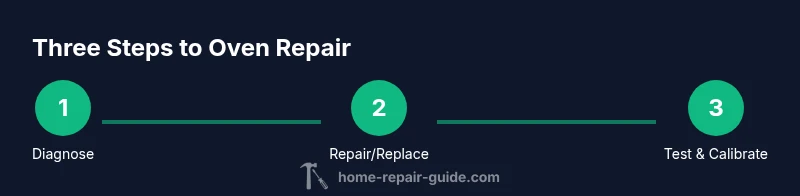
A clear diagnostic flow saves time and reduces guesswork. Start with basic power checks, then progress to component tests. Document each step, testing results, and any observations about symptoms. This middle section expands on the quick answer by detailing practical checks you can perform, including safe disassembly steps, sensory inspections for heat-related wear, and how to interpret diagnostics from multimeters and control boards. The emphasis remains on safety, accuracy, and making an informed repair decision. If you encounter unfamiliar error codes, consult the model’s manual or manufacturer support resources before continuing.
Replacing components: heating element, thermostat, and fuse
Replacing faulty parts is often straightforward when you have the right replacement and the proper procedure. Heating elements (bake or broil) are common culprits for uneven heating or no heat; thermostats or temperature sensors can cause inaccurate temperatures; a blown thermal fuse can prevent power to the oven. For each component, disconnect power, remove access panels, test the existing part, then install the replacement with correct wiring and fasteners. After installation, reassemble the unit and conduct a test bake to confirm proper operation. Always follow the manufacturer’s instructions for part replacement to avoid damaging other circuits. If you feel uncomfortable at any point, pause and call a professional—safety first.
Calibrating after replacement helps restore accurate temperatures and consistent cooking results. Refer to your manual for calibration steps, since different models use distinct methods. A properly calibrated oven heats more evenly, reducing the risk of undercooked or overcooked food.
Maintenance tips to extend oven life
Regular maintenance extends the life of your oven and improves cooking results. Clean the interior, wipe down racks, and check door seals for wear. Inspect heating elements for signs of scorching, cracking, or blistering, and replace them if you notice damage. Keep venting clear to prevent overheating and ensure efficient heat transfer. Schedule periodic inspections, especially if you rely on the oven for daily meals. The Home Repair Guide analysis shows that proactive maintenance reduces the frequency of major repairs and helps ovens run more reliably over time. Keep a repair log and set reminders for routine checks—this habit pays off with fewer surprises when you need to cook for guests or family.
Authority sources and safety resources
For further reading and reference, consult credible sources on appliance safety and repair best practices. ENERGY-related guidelines, safety standards, and general repair ethics are covered by recognized authorities and major publications. Useful resources include: Energy.gov’s appliance efficiency and safety articles, guidance from consumer safety organizations, and professional safety guidelines. These references support the practical steps outlined in this guide and reinforce safe, responsible home repair practices. The Home Repair Guide analysis underscores the importance of grounding DIY efforts in safety-first principles and compliance with local codes.
Tools & Materials
- Multimeter for continuity testing(Digital, 200-2000 Ω range)
- Screwdrivers set (flathead and Phillips)(Precision and standard sizes)
- Nut drivers and pliers(For clamps and panel fasteners)
- Wire cutters/strippers(Electrical work and strip insulation)
- Safety gear: gloves and safety glasses(Heat-resistant gloves preferred)
- Replacement bake/broil heating element(Generic model compatible with numerous ovens)
- Thermal fuse (if applicable)(Only if your model includes a fuse and it’s tested faulty)
- Thermostat/temperature sensor (if applicable)(Only replace if diagnostic indicates sensor failure)
- Work light or headlamp(Improves visibility inside the oven cavity)
Steps
Estimated time: 60-90 minutes
- 1
Power down and prep the workspace
Unplug the oven at the wall outlet or switch off the corresponding circuit breaker. Remove racks to expose the interior and give yourself space to work. Label and organize screws, brackets, and wiring connectors as you remove them so reassembly is straightforward.
Tip: Keep screws in labeled containers and photograph every disassembly step. - 2
Access control panel and verify power
Open the control panel and visually inspect for any obvious damage. Use a digital multimeter to confirm the control board is receiving power and that there are no blown fuses or tripped breakers in the circuit.
Tip: If you see burnt components or melted insulation, stop and replace the affected part. - 3
Test heating elements for continuity
With power disconnected, remove the heating element(s) and test for continuity using the multimeter. A reading of infinite resistance indicates a faulty element requiring replacement.
Tip: Handle elements carefully to avoid cracking ceramic insulators. - 4
Inspect for physical damage and signs of wear
Look for cracks, blistering, or scorching on bake and broil elements, as well as wear on door seals and hinges. Replace any damaged components before power-up.
Tip: Even hairline cracks can lead to heat loss and damage other parts. - 5
Check the thermal fuse and control board connections
If your oven has a thermal fuse, test or replace it as needed. Inspect connectors for loose or corroded pins, as poor connections can cause intermittent failures.
Tip: Only replace a thermal fuse if you’ve confirmed the fuse has failed; otherwise you risk cutting power to the entire oven. - 6
Test the temperature sensor/thermostat
Measure the resistance of the oven temperature sensor at room temperature and compare to the manufacturer’s specification. Replace if readings are out of range.
Tip: Some sensors require parallel testing with the control board for accurate diagnosis. - 7
Reassemble, power up, and run a test bake
Reconnect all components, restore power, and perform a test bake. Observe whether the oven heats to the set temperature and whether temperature readings align with actual food temperature.
Tip: Allow extra time for the oven to stabilize after replacement before judging results. - 8
Calibrate and document results
If the oven temperature is off, use the calibration procedure per your manual to correct drift. Record the steps taken and the final calibration settings for future reference.
Tip: Calibration can improve cooking accuracy by a few degrees; verify with a thermometer across multiple racks.
FAQ
Can I repair an oven myself?
Yes for simple tasks like replacing a heating element or thermostat; complex electrical or gas work should be performed by a licensed professional.
You can start with simple fixes, but for gas or complex wiring, contact a licensed professional.
What are common signs my oven needs repair?
Inconsistent temperatures, failure to heat, error codes on digital displays, or unusual smells indicate issues worth diagnosing.
If your oven isn't heating evenly or shows error codes, it's time to diagnose or call a tech.
Should I replace the thermostat or heating element myself?
If you have model-specific instructions and the right tools, replacement is feasible. Otherwise, hire a technician.
It can be DIY-safe if you have the right parts and instructions; otherwise, a pro is safer.
Is it safe to work on a gas oven?
Gas ovens require checking for leaks and proper ignition. Service by a licensed technician is strongly recommended.
Gas work has higher risk—it's best handled by a certified pro.
How do I calibrate my oven's temperature?
Use your oven's calibration feature or manual instructions, then verify with a separate thermometer for accuracy.
Calibration is a good idea after repairs; verify with an oven thermometer.
What basic safety gear should I use?
Wear heat-resistant gloves and safety glasses; keep a fire extinguisher nearby and work in a well-ventilated area.
Wear gloves and glasses, and work safely with proper ventilation.
Watch Video
Key Takeaways
- Identify whether the issue is electrical or mechanical.
- Test components with the correct tool before replacing.
- Prioritize safety and disconnect power before any work.
- Replace faulty parts, or call a pro for gas or wiring.
- Calibrate the oven after major repairs for accurate temps.