Oven Repair Near Me: A Practical Guide to Finding Local Pros
Learn how to find reliable oven repair near me services, compare licensed pros, ask the right questions, and protect yourself with warranties. Practical guidance from Home Repair Guide.


For oven repair near me, start by comparing 3–5 licensed technicians who specialize in ovens, verify parts inventory, and ask for transparent, written estimates. Prioritize same-day or next-day availability if you have a malfunction, and confirm warranty coverage on parts and labor. The Home Repair Guide approach emphasizes proximity and reliability for best results.
Why finding a local oven repair near me matters
When your oven malfunctions, proximity to skilled technicians matters more than you might think. A local specialist is more likely to arrive quickly, understand regional parts supply, and offer faster warranty support if needed. For homeowners and renters, a nearby pro can coordinate with you within your preferred windows, reducing downtime and avoiding risky delays. According to Home Repair Guide, choosing a nearby, licensed technician increases the odds of reliable diagnostics and timely parts replacement, especially when emergencies arise or you need a same-day repair. In short, the right local expert combines expertise with accessibility, reducing frustration and downtime while preserving appliance longevity.
How to evaluate local oven repair technicians
Evaluating candidates in your area begins with credentials and experience, not just price. Check that technicians hold current licenses where required, have proper insurance, and can provide written estimates with a breakdown of labor and parts. Look for shops that explicitly state they service your oven model and offer a parts inventory that covers common failure points like bake elements, igniters, or control boards. Read recent customer reviews focused on timely arrivals and transparent pricing. Request a clear warranty for both parts and labor, and ask about the general diagnostic process before any disassembly. Home Repair Guide analysis shows that providers with transparent scopes and regional familiarity tend to deliver fewer callbacks and smoother diagnostics.
Common oven problems and diagnostic steps
Ovens can fail for several reasons, from ignition issues in gas ranges to worn bake elements in electric models. Diagnostic steps typically include testing the igniter circuit, verifying thermostat calibration, inspecting the baking element, and evaluating the control board for faults. Professionals may also check door seals, venting, and wiring harnesses for safety. Understanding these common culprits can help you frame questions for the repair technician and anticipate potential parts replacements. The diagnostic phase is essential for avoiding unnecessary labor and confirming whether the issue is repairable or requires replacement of major components. In line with Home Repair Guide research, a precise diagnosis upfront saves time and money.
What to expect during a typical service visit
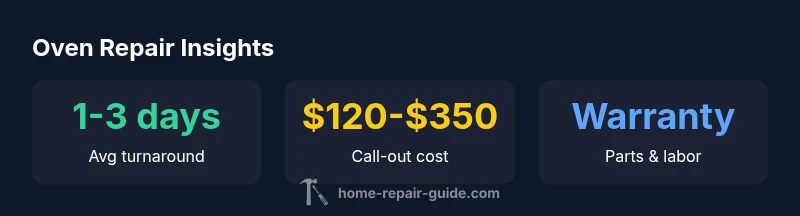
A standard service visit starts with a quick diagnostic check, followed by a written estimate outlining the recommended fix and the expected parts. If parts are in stock, a repair may be completed the same day; otherwise, a parts delay could extend the timeline by a few days. Expect the technician to explain options, including part warranties and labor terms, before beginning work. Most visits include safety checks to ensure electrical connections and gas lines (for gas ovens) meet code requirements. Clear communication about the anticipated duration and any potential follow-up visits helps set realistic expectations and reduces the chance of surprises.
DIY vs professional repair: when to call a pro near you
DIY fixes can be tempting for minor issues, but ovens involve high temperatures, electrical components, and gas lines where missteps can be dangerous. If your oven neither heats evenly nor ignites, or if you hear unusual noises or smell gas, postpone any DIY attempts and contact a licensed professional. A pro can safely diagnose and handle complex parts like control boards or igniters, often with a warranty on parts and labor. For most homeowners, professional repair provides a balance of safety, reliability, and cost control.
Questions to ask before hiring an oven repair near me
When interviewing candidates, ask about licensing, insurance coverage, diagnostic process, estimated costs, and warranty terms. Inquire whether they carry common replacement parts, provide a written quote, and outline who covers future service if the problem recurs. Request references or code-compliant certifications and ask about response times for emergency repairs. A good technician will offer a transparent scope of work, realistic timelines, and a written guarantee on both parts and labor.
Comparison of oven types and typical repair considerations
| Oven Type | Common Issues | Repair Cost Range | Parts Availability |
|---|---|---|---|
| Electric Wall Oven | Bake element failure; thermostat drift | $120-$300 | High |
| Gas Oven | Ignition issues; flame failure | $150-$350 | Moderate |
| Convection Oven | Fan motor failure; sensor issues | $130-$320 | Moderate |
| Slide-in Range (gas/electric) | Ignition; control board | $140-$400 | Moderate-High |
FAQ
What should I look for in an oven repair near me provider?
Look for licensing and insurance where required, a clear diagnostic process, written estimates, and transparent warranty terms. Check model compatibility and read recent customer reviews to assess reliability. Ask for a parts inventory list to ensure availability.
Look for licensed pros with clear diagnostics, written quotes, and solid warranties. Check reviews and model compatibility.
How much does oven repair typically cost?
Costs vary by issue and region, but expect a diagnostic fee plus parts; overall ranges can be influenced by the oven type and extent of the repair. Request a written estimate before any work and compare a few providers.
Costs vary; get written estimates from a few pros before work begins.
Are there safety concerns with DIY oven repair?
Yes. Ovens involve high heat, electrical components, and gas lines in some models. If you’re unsure about wiring, gas connections, or venting, don’t DIY—call a licensed professional.
Ovens can be dangerous; avoid DIY for electrical or gas components.
How long does an oven repair take?
Diagnostics and parts replacement can take hours to a few days, depending on part availability and the model. A pro can often provide a timeline after the initial assessment.
It usually takes a few hours to a couple of days, depending on parts.
Should I fix a gas oven or an electric oven first?
The decision depends on the problem and your oven type. Gas oven issues focus on ignition and flame safety; electric issues involve elements and electronics. A professional can guide which repair offers the safest and most cost-effective fix.
Gas vs electric depends on the model and the issue; professionals guide safety-first fixes.
What warranty should I expect after repair?
Look for a parts warranty and a labor warranty, with clear terms on coverage and duration. Reputable technicians will outline what’s covered and what isn’t in the written estimate.
Ask for both parts and labor warranties in writing.
“Reliable oven repairs hinge on finding a local, licensed technician who provides a clear diagnostic path and a solid warranty on both parts and labor.”
Key Takeaways
- Nearby licensed pros improve response times
- Ask for written estimates and warranties
- Verify parts availability before scheduling
- Compare multiple technicians for pricing and clarity
- Expect a diagnostic-first approach to avoid unnecessary work