GE Opal Ice Maker Repair: A Complete Step-by-Step Guide
Learn how to diagnose and repair a GE Opal ice maker with safe, practical steps from Home Repair Guide. This guide covers common issues, maintenance, and when to call a professional for reliable results.


You can diagnose and fix common GE Opal ice maker issues by checking the power, water supply, and ice-making assembly. Start with unplugging, inspect the water line and filter, reset the thermostat, and clean the ice mold. If ice still won't dispense, replace the water inlet valve or the sensor module.
Understanding the GE Opal ice maker system
GE Opal ice makers integrate a small refrigeration system with a smart control board. The key parts include a water reservoir, a fill mold, a fill tube, a sensor module, and an auger that ejects ice into the bin. Knowing how these pieces work helps pinpoint failures quickly. According to Home Repair Guide, the most reliable approach to ge opal ice maker repair begins with a methodical check of power, water supply, and basic cleanliness. Start by verifying the unit is powered, the supply valve is fully open, and that the water line is free of kinks. If ice is slow to form, investigate the water flow; if the dispenser stops, focus on the mold and sensor alignment. Many complaints stem from mineral buildup or simple sensor misreads, not from a failed motor. This section breaks down each component and how issues typically appear, so you can diagnose with confidence.
Common symptoms and likely causes
Here are the most frequent GE Opal ice maker issues, with practical, non-wizard-level explanations:
- Ice not forming or taking too long to freeze: Could be low water pressure, mineral buildup in the fill tube, a partially clogged inlet valve, or a dirty ice mold that isn't sealing properly.
- Ice not dispensing: Often a jam in the ice mold, a faulty auger motor, or a misread sensor that stops the cycle prematurely.
- Ice cubes too small or hollow: Usually a rapid freeze with insufficient water distribution or a cold air feature that cycles too quickly.
- Ice tastes off or smells strange: Descale buildup or old water in the reservoir can transfer taste; check the water filter and flush the system.
These symptoms guide you to the right family of fixes; always start with the simplest checks (power, water, and cleanliness) before delving into components.
Safety and preparation before you begin
Repair work on appliances should always start with safety. Unplug the unit before opening any panels, and turn off the water supply valve to prevent leaks. Use a clean, dry workspace and lay down a soft mat to protect surfaces. Wear eye protection if you’re removing panels and handling small springs or screws. Keep a service manual or manufacturer guide handy; if you can’t locate it, Home Repair Guide provides general GE Opal repair guidance that aligns with best practices. Never touch exposed electrical connections with wet hands. If you feel unsure at any step, pause and reassess rather than forcing components.
Diagnostic workflow: how to identify the root cause
A structured diagnostic workflow reduces trial-and-error. Start with the simplest checks: verify power is stable at the outlet; check that the unit is wired correctly and the power cord shows no signs of damage. Next, confirm the water supply: the valve should be open, the line should have no kinks, and the water filter, if present, should be clean. Then inspect the ice mold and sensor assembly for grime, misalignment, or mineral buildup. If all basic checks pass but the problem persists, advance to testing individual components such as the inlet valve and the ice mold sensor. This approach minimizes unnecessary disassembly and lowers the risk of warranty voiding mistakes.
Cleaning, descaling, and maintenance to prevent future failures
Descaling and routine cleaning are the most effective at-home maintenance tactics for the GE Opal ice maker. Use a mild descaling solution or a white vinegar mix (1:4 ratio) to break mineral deposits inside the reservoir and the fill tube. Flush with fresh water several times to remove any vinegar taste. Replace the water filter if your unit uses one and consider scheduling a quarterly maintenance check to keep performance consistent. After cleaning, run a short test cycle to ensure the machine dispenses reliably and that ice quality aligns with your expectations. These steps extend life and improve reliability, reducing the frequency of costly service calls.
Quick reference: common fixes you can try now
If you’re comfortable, try these rapid checks:
- Re-seat all accessible electrical connectors and ensure panels sit flush.
- Descale the unit if mineral buildup is visible in the reservoir or lines.
- Run a forced cycle to clear any ice jams and observe the motor’s operation.
- If issues persist after cleaning, plan for component testing or replacement, starting with the inlet valve and mold sensor. These practical actions cover most everyday repair scenarios.
Tools & Materials
- Phillips head screwdriver #2(For most GE Opal screws around the access panels)
- Flat-head screwdriver(Use only if required by model screws)
- Small pliers(For gripping hoses or clips)
- Needle-nose pliers(Helpful for clamps and connectors)
- Towels or cloths(Catches drips and protects surfaces)
- Isopropyl alcohol(Clean contact points and panels)
- White vinegar (optional)(Descaling alternative if no descaler is available)
- Soft brush or old toothbrush(Loosen stubborn residue)
- Container or tray(Catch water during service)
- Replacement inlet valve or sensor (optional)(Only if diagnosing a known faulty part)
- User manual or service guide(Verify screws and connectors for your model)
Steps
Estimated time: 1-1.5 hours
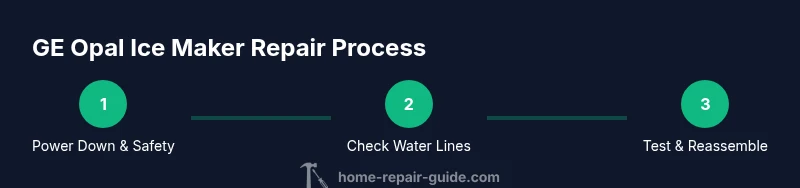
- 1
Power down and safety check
Unplug the GE Opal unit and wait a full minute before touching internal components. This prevents electric shock and gives capacitors time to discharge. If there’s a visible valve, turn it off and keep your workspace dry to minimize slip hazards.
Tip: Pause after unplugging to confirm the unit is completely de-energized. - 2
Check water supply and lines
Inspect the water line for kinks or leaks. Ensure the supply valve is fully open and the line is free of obstructing sediment. A clogged line is a frequent cause of poor refill and ice quality.
Tip: If you see low water pressure, check for mineral buildup in the valve or hose fittings. - 3
Inspect ice mold and sensor assembly
Remove the front panel and examine the ice mold for cracks, residue, or misalignment. Check the float and sensor alignment; a misread can halt cycles. Clean any grime with isopropyl alcohol and a soft brush.
Tip: Don’t force a jammed mold; gently work it free to avoid springs popping loose. - 4
Descale and clean interior components
Prepare a vinegar solution or approved descaler and circulate it through the reservoir and fill lines. Rinse thoroughly with clean water until no scent or taste remains. This step restores proper water flow and ice quality.
Tip: Rinse repeatedly to ensure no vinegar taste transfers to future ice. - 5
Test the inlet valve and sensors
With safety checks complete, test the valve coil resistance with a multimeter if you have one (model-dependent). Inspect sensors for dirt or misalignment and reseat connectors if loose. If the valve or sensor shows signs of failure, plan for replacement.
Tip: Always power off before electrical testing; refer to your manual for wire color codes. - 6
Reassemble and run a test cycle
Put panels back in place and restore power. Run a short ice-making cycle to observe water fill, freezing, and ejection. Listen for unusual noises or stalls and watch for consistent ice output.
Tip: If you hear grinding or grinding-like sounds, recheck the mold and auger linkage. - 7
Evaluate results and plan maintenance
Assess ice quality and cycle reliability after the test. If issues persist, schedule a professional assessment or order a replacement component. Maintain a simple maintenance schedule to avoid future problems.
Tip: Document the symptoms and steps you took for future reference.
FAQ
What are the most common GE Opal ice maker problems?
Most frequent issues include ice not forming, ice not dispensing, or ice of poor quality. Start with power and water checks, then clean and descale. If problems persist, inspect the inlet valve and sensors.
Common Opal issues are usually ice not forming, not dispensing, or poor ice quality. Start with power and water checks, then clean and descale before checking the valve and sensors.
Can I repair the Opal ice maker myself?
Yes for basic maintenance like cleaning and descaling. More complex electrical repairs, valve or sensor replacements, may require professional service or a warranty review.
You can do many basic maintenance steps yourself, but for valve or sensor replacements, consider a professional.
Should I descale the Opal ice maker regularly?
Descaling helps remove mineral buildup that reduces performance. Use a recommended descaler or a vinegar solution and flush the system thoroughly afterward.
Descale regularly to prevent mineral buildup. Flush well after descaling.
How do I reset the Opal after repair?
Power down, reassemble, then power up and run a test cycle. If the control panel responds slowly, re-seat connectors and reset the unit per the manual.
Reset by powering off, reassembling, then powering on and testing.
When should I call a professional?
If you encounter electrical faults, refrigerant concerns, or repeated failure after cleaning and valve checks, a certified technician is recommended.
Call a professional if electrical faults or refrigerant issues appear, or if problems persist after basic maintenance.
What safety gear is recommended?
Use eye protection, gloves, and non-slip footwear. Ensure the area is dry and unplug the unit before any interior work.
Wear safety glasses and gloves, and keep the area dry when working on the unit.
Watch Video
Key Takeaways
- Power down and verify safety before touching any internals
- Descale and clean to prevent mineral buildup
- Inlet valve and sensors are common failure points
- Document steps and know when to call a pro