GE Appliances Repair: A Practical DIY Guide
A comprehensive, step-by-step guide for diagnosing, troubleshooting, and safely repairing common GE appliances. Learn tools, safety, when to DIY, and when to call a pro with practical Home Repair Guide instructions.


According to Home Repair Guide, you can confidently diagnose and safely repair common GE appliances with basic tools, a model number, and a careful fault-check plan. This guide walks you through safety steps, essential tools, typical symptoms, and when to hire a professional. You’ll also understand typical cost ranges, DIY-friendly tactics, and how to document work for future maintenance. Before you start, gather basic tools and the appliance model number for parts compatibility.
GE appliance repair: a homeowner's guide to safe DIY
GE appliances repair is a practical skill set that can save money, reduce downtime, and extend the life of your devices. According to Home Repair Guide, a disciplined DIY approach starts with a clear plan, a safe workspace, and the right measurement of risks and benefits. This section explains why learning basic troubleshooting matters and how a repeatable process can apply to refrigerators, dishwashers, washers, and ovens alike. By embracing a method, you improve your odds of a successful fix and avoid introducing new faults. The goal is to build confidence through small, verifiable steps and to document findings for future maintenance. Remember: safety and accuracy come first, especially when dealing with electrical components and sealed systems.
Safety-first: power off and prepare
Safety is the foundation of GE appliances repair. Always unplug the unit before opening any panel or touching internal parts. If accessible, switch off the corresponding circuit at the home panel to eliminate residual power. Use dry hands, insulated tools, and protective gear like safety glasses and gloves. Never work on live electricity, damaged cords, or water-damaged areas. Create a tidy workspace and have a plan for where you’ll place screws, panels, and removed parts so nothing is misplaced. Keeping a notebook or digital record of what you check helps you avoid repeating steps.
Common symptoms and quick diagnostics across GE appliances
GE appliances often show predictable symptoms that you can safely assess with basic checks. Common issues include unusual noises, failure to start, improper drainage, or visible leaks. Start with non-invasive steps: verify power, inspect accessible wiring for loose connections, check filters or screens for clogs, and ensure doors or lids are properly interlocked. For refrigerators, frost buildup or temperature swings hint at evaporator or defrost issues; for washers, draining or spinning problems may point to a pump or belt concern. This section frames a practical diagnostic mindset you can apply across models and brands, with GE-specific considerations in mind.
Tools and parts you'll commonly need on hand
A well-stocked but focused toolkit makes GE appliances repair more efficient. Essentials include a multimeter for basic voltage checks, a screwdriver set (Phillips and flat-head in common sizes), a nut driver, needle-nose pliers, and a bright flashlight for dim compartments. Keep towels, a small bucket, and spare parts compatible with your GE model—filters, switches, seals, and gaskets are frequent wear items. Always have your model number handy to verify compatibility. A safety gear kit (gloves and glasses) is recommended for any disassembly or panel work.
The diagnostic flow: a practical framework
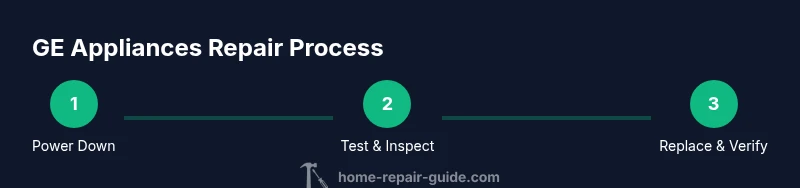
Adopt a simple, repeatable flow to move from symptom to fix. Step 1: confirm power and safety (unplug, disconnect power). Step 2: identify the exact symptom and locate the service manual or model documentation. Step 3: inspect interlocks, switches, hoses, and accessible connectors. Step 4: perform non-destructive tests (voltage at power rails, continuity on switches). Step 5: replace obvious worn parts with manufacturer-approved components. Step 6: test the unit and reassemble. This framework keeps you organized and reduces guesswork while safeguarding components.
When to call a pro and cost considerations
Not every GE appliance issue is a DIY project. If you encounter refrigerant leaks, sealed compressor work, high-voltage components beyond basic testing, or uncertain diagnostic results, seek professional help. A technician can confirm diagnostics, evacuate refrigerants safely, or replace complex control boards. When planning repairs, consider part availability, warranty terms, and the potential risk of further damage. This guide emphasizes safe, incremental steps and knowing when to escalate to avoid costly mistakes.
Authoritative sources and practical safety notes
For broader safety standards and best practices, consult these reliable references: • U.S. Consumer Product Safety Commission (https://www.cpsc.gov) • U.S. Department of Energy / Energy Star guidance on household appliances (https://www.energy.gov) • National Institute of Standards and Technology (https://www.nist.gov) These sources support safe handling of electrical appliances, energy-efficiency considerations, and general consumer guidance. Always cross-check model-specific manuals and GE customer support resources for your exact appliance.
Authoritative sources
- U.S. Consumer Product Safety Commission: https://www.cpsc.gov
- Energy.gov: https://www.energy.gov
- NIST: https://www.nist.gov
Tools & Materials
- Multimeter(Test voltage and continuity safely)
- Screwdriver set (Phillips and flat-head)(Include Phillips #2 and flat-head 1/4 inch)
- Nut driver set(Sizes 1/4, 5/16, 3/8 inch)
- Needle-nose pliers(Grip small components and clamps)
- Hex/Allen wrenches(Include common metric sizes)
- Safety gear (gloves + safety glasses)(Protect hands and eyes during work)
- Flashlight or headlamp(Bright, focused light for dim interiors)
- Towels, small bucket(Catch drips and keep parts clean)
- Model number and user manual(Needed for parts compatibility)
- Replacement parts compatible with GE model(Filters, switches, seals, fuses as needed)
Steps
Estimated time: Estimated total time: 1.5-3 hours
- 1
Power down and unplug
Unplug the appliance from the wall and switch off the circuit if accessible. This ensures there is no live electricity while you inspect or remove panels. Do a quick visual check to confirm no power indicators are active.
Tip: Always verify power at the outlet before touching any wiring. - 2
Find model number and service manual
Locate the data plate or door jamb label to capture the exact GE model and serial numbers. Use the manual or GE support site to identify compatible replacement parts and any model-specific warnings.
Tip: Having the exact model number prevents wrong parts and unnecessary damage. - 3
Inspect exterior and interlocks
Look for loose screws, damaged hoses, or misaligned doors. Test interlock switches (like door switches) with the appliance unplugged to confirm they trigger correctly when doors are opened or closed.
Tip: Interlocks are a common failure point in many GE appliances. - 4
Test primary components safely
With the unit unplugged, check accessible components for continuity or resistance using your multimeter. Do not test live circuits; rely on dry hands and insulated tools.
Tip: Document readings to compare against manual specifications. - 5
Inspect water flow and drainage paths
For washers and dishwashers, examine water inlet hoses, filters, and drain lines for kinks or clogs. Clean filters and straighten hoses to restore proper flow.
Tip: Even small blockages can create major performance issues. - 6
Replace obvious worn parts
If you identify a visibly damaged seal, gasket, switch, or filter, replace it with an OEM or GE-approved part. Recheck connections after installation.
Tip: Handle parts with care to avoid damaging adjacent components. - 7
Reassemble and test the unit
Carefully reassemble panels, reconnect power, and run a test cycle. Observe for unusual noises, leaks, or error codes and stop if anything seems unsafe.
Tip: Never rush reassembly—secure all fasteners and verify panel fit. - 8
Document outcomes and plan next steps
Record what was checked, what was replaced, and the results. If the problem persists or recurs, escalate with notes and photos for a technician or consider upgrading if repairs become cost-inefficient.
Tip: Maintaining a repair log helps future maintenance and resale value.
FAQ
Is it safe to attempt GE appliance repair myself?
DIY repairs are safe for basic tasks if you follow safety guidelines, unplug the unit, and avoid sealed refrigerant or high-voltage work. For complex issues, or refrigerants and controls, contact a professional.
DIY repairs can be safe for simple tasks if you unplug the unit and avoid high-voltage components. For complex issues or refrigerant work, call a professional.
How do I locate the model number on a GE appliance?
The model number is typically on a data plate or label inside the door frame, on the back, or near the convection area. Once found, use it to download the manual and compatible parts.
Look for the label inside the door frame or on the back to find the model number, then use it to get the manual and parts.
What are the most common fixes homeowners can perform safely?
Many DIY fixes involve cleaning or replacing accessible parts like filters, gaskets, door switches, and basic hoses. Always start with safety checks and non-invasive tests before ordering parts.
Common DIY tasks include cleaning filters, replacing door switches, and checking hoses. Start with safety checks and simple tests.
When should I call a professional for GE appliances?
Call a professional if you encounter refrigerant leaks, sealing issues, complex electrical faults, or if the problem remains after basic troubleshooting and part checks.
Call a pro for refrigerant leaks or complex electrical faults, or if troubleshooting doesn’t fix the issue.
Do repairs affect warranty status?
DIY repairs can affect warranty coverage depending on the terms. Check the appliance warranty and GE support guidance before starting any repair.
Warranty terms vary; consult the manual and manufacturer guidance before DIY repairs.
How long does a typical DIY repair take?
A simple, well-planned repair can take 60-180 minutes, while more complex fixes may require several hours. Always budget extra time for parts sourcing and reassembly.
Simple repairs may take about an hour or two, more complex ones longer. Plan for parts and reassembly time.
Watch Video
Key Takeaways
- Identify the symptom first, then verify power and safety.
- Use model-specific manuals to guide part selection.
- Non-destructive tests reduce risk while diagnosing faults.
- Document steps and outcomes for future maintenance.
- Know when to escalate to a professional to avoid costly mistakes.