Dishwasher Repair: A Practical How-To Guide for Homeowners
A practical, safety-first guide to diagnosing and repairing common dishwasher problems, with tools, steps, and maintenance tips for homeowners and renters.


Learn how to diagnose and fix common dishwasher problems, from leaks to drain blockages, with a safe, step-by-step repair approach. This guide covers tools, safety, and when to call a pro. By following these steps, you can save money, avoid water damage, and extend the life of your appliance. This overview assumes basic DIY skills and access to common repair parts.
Why repairing a dishwasher matters
Repairing a dishwasher matters for several reasons. From preventing water damage to extending appliance life and reducing waste, a well-executed fix can save money and time. According to Home Repair Guide, understanding common dishwasher failures empowers homeowners to diagnose issues accurately and apply safe remedies. The most frequent problems—leaks, poor drainage, and failed spraying—often share root causes that you can address with basic tools and careful inspection. By approaching repairs methodically, you reduce downtime and improve performance without resorting to costly replacements. In this section, we examine why repairs matter, how to assess when a repair makes sense, and the mindset you should bring to the process. We’ll also outline safety boundaries, so you know when to call a professional.
The Home Repair Guide team emphasizes that a methodical, safety-first approach reduces the risk of water damage and electrical hazards. By learning to observe symptoms, you can often identify the faulty subsystem—whether it’s the door seal, filtration, or drain pump—before attempting any repair.
Safety first: hazards and precautions
Dishwasher work involves electricity and water, which can be dangerous. Always unplug the unit and shut off the water supply before starting any diagnostic or repair. Use a flashlight and dry hands; keep a towel handy for spills. Wear protective gloves and eye protection if you’re working with sharp components or heavy parts. If you suspect the circuit is live or you smell burning insulation, stop and call a licensed technician. Remember that dishwashers may hold water under pressure; releasing that pressure incorrectly can cause sprays or leaks. This is where safe procedures and proper tools matter most.
Safety is the top priority in any home repair project. If you’re unsure about any step, take a break, review model-specific guidance, and consider professional support to avoid injury or appliance damage.
Tools and parts you may need
Before you begin, assemble a basic repair kit and a few common replacement parts. Essential tools include: a multimeter for testing electrical continuity; a Phillips and flat-head screwdriver; nut drivers; pliers; a silicone sealant and string for temporary fixes; a bucket and absorbent towels for spills; and a flashlight. Replacement parts you might need: door seal or gasket, float switch, drain pump, spray arm, water inlet valve, and a new washer kit for fittings. Optional but helpful items: a camera or smartphone to document wiring, a spare hose clamp set, and a service manual for your model.
Common dishwasher problems and quick checks
Leakage, drainage failure, and poor cleaning are the top complaints. Leaks often come from worn door seals or gaskets; inspect for cracks and test with a paper towel to locate drips. Drains clogged by food debris reduce water flow; check the filter, spray arms, and drain hose for obstructions. If dishes come out wet, the rinse aid and heating element may be at fault, or the timer/microcontroller may misbehave. A noisy cycle can signal a worn pump bearing or jammed spray arm. Lastly, a dishwasher that won’t start could be a faulty door latch, a tripped breaker, or a failed thermal fuse. Use a model-specific guide to locate these components safely.
Understanding these common failures helps you plan your repair strategy and decide when to seek professional help—especially for electrical or refrigerant-related concerns.
Step-by-step repair workflow overview
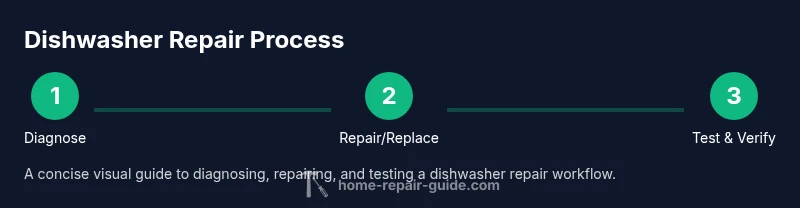
A successful repair follows a repeatable workflow: diagnose, isolate, repair, reassemble, and test. Start by identifying the symptom and confirming that the problem is reproducible. Then isolate the faulty component by testing electrical connections and mechanical movement, while ensuring power and water are disconnected. Replace the failed part with a compatible unit, reseal joints, and reassemble the dishwasher. Finally, restore power, run a test cycle, and observe for leaks, proper drainage, and clean performance. This overview sets the stage for the detailed steps below, and helps you plan the session to avoid surprises.
When to DIY vs when to call a pro
DIY repairs work well for minor leaks, gasket wear, or clogged filters where tools and instructions are clear. Complex problems—such as a faulty main pump, control board failures, or persistent leaks behind the tub—often require professional diagnosis and possibly warranty-preserving service. If you lack confidence or the appliance is still under warranty, consider professional service to avoid voiding coverage. Use this guide to empower your decision, but be mindful of safety boundaries and manufacturer terms.
Maintenance tips to prevent future breakdowns
Preventive maintenance pays off: clean the filter monthly, inspect hoses for cracks, and wipe gaskets dry after cycles. Run a short test cycle after any repair to confirm performance. Use manufacturer-approved detergents and avoid overloading; this reduces strain on spray arms and seals. Schedule periodic checks for level of water and drainage, and keep a log of issues and fixes to spot recurring patterns early. Small, regular actions keep your dishwasher reliable longer.
Checklists and quick-reference guides
- Before repair: unplug, turn off water, and gather tools
- During repair: label wires, photograph connections, test components safely
- After repair: run full wash cycle, check for leaks, observe drainage and residue
- Maintenance: clean filters monthly, inspect gaskets, replace worn parts promptly
- Safety: never bypass interlocks or safety switches
Homeowners and renters can use this quick reference to stay organized and reduce downtime.
Tools & Materials
- Multimeter(Used to test electrical continuity and diagnose motor or heater faults.)
- Phillips screwdriver(Standard driver for most panels and fasteners.)
- Flat-head screwdriver(Slim tool for prying panels and delicate clips.)
- Nut driver set(For hose clamps and plumbing fittings.)
- Pliers (needle-nose)(Grip small parts and pull hoses safely.)
- Towel or bucket(Contain spills and protect cabinet interiors.)
- Silicone sealant and replacement gasket(For resealing doors or joints as needed.)
- Replacement parts kit (seal, pump, or valve)(Only if you’ve diagnosed a specific fault.)
- Smartphone or camera(Document wiring and orientation for reassembly.)
Steps
Estimated time: 60-90 minutes
- 1
Power down and prepare safely
Unplug the dishwasher from the outlet and shut off the water supply. Retrieve towels and a bucket in case water remains in the base. This initial safety check prevents electrical shock and water exposure during inspection.
Tip: Label the cord and power source so you can reconnect it correctly. - 2
Access the internal components
Remove the toe-kick panel or access cover to view internal components. Keep screws organized and reference photos for correct reassembly. Ensure the door is latched securely while you work.
Tip: Work slowly and avoid forcing panels—the clips are delicate. - 3
Check for obvious leaks and seals
Inspect door seals and gaskets for cracks or stiffness. If you spot damage, plan for replacement before testing further. Wipe surfaces to see if new moisture appears.
Tip: A torn gasket often explains recurring leaks. - 4
Test the drain pump and hose
Inspect the drain pump and attached hoses for clogs or kinks. Disconnect hoses only if you know how to safely reseat them. Run water through the drain path to confirm clear flow.
Tip: Do not remove the pump housing unless you’re confident in reassembly. - 5
Inspect the float switch and inlet valve
Check the float switch for sticking or obstruction and ensure the inlet valve isn’t blocked. A faulty float switch can misread water level and trigger overfilling or failure to fill.
Tip: Gently test the float mechanism for smooth movement. - 6
Replace worn parts and reassemble
Install any replaced seals, pumps, or valves. Reassemble the interior panels and ensure all fasteners are snug but not over-tightened. Double-check hose routing to avoid kinks.
Tip: Use manufacturer parts where possible to maintain reliability. - 7
Restore power and test a cycle
Reconnect power and run a short cycle with no dishes to observe leaks, drainage, and noise. Verify water intake, wash action, and drainage performance.
Tip: If leaks appear, pause and recheck gasket seating. - 8
Evaluate results and finalize
If the machine runs cleanly through a full cycle, document the fix. If issues recur, consider deeper diagnostics or professional service, especially for warranty protection.
Tip: Keep a repair log with dates and parts replaced.
FAQ
What’s the quickest way to tell if the pump is failing?
Common signs include a dishwasher that won’t drain, unusual noises from the pump, or water remaining in the bottom after a cycle. Verify by inspecting the pump housing and testing the electrical connection with a multimeter if you’re comfortable. If the pump sits hot or shows visual damage, replacement is typically advised.
If your dishwasher won’t drain or makes grinding noises, check the pump and wiring. If you’re unsure, consider a professional evaluation.
Can I fix leaks myself?
Yes, many leaks come from worn gaskets or loose hose clamps. Tighten clamps gently and replace any cracked gaskets. After a repair, run a test cycle to confirm there are no leaks.
Leaks from gaskets are often DIY-friendly. Replace the gasket and retest to be sure.
Is it safe to run a dishwasher after replacing a seal?
Yes, provided the seal is properly seated and the area is dry before testing. Inspect for moisture on the door frame and ensure the seal sits flush. Start with a short cycle to verify.
If the new seal is seated correctly and dry, a test run is fine.
How long does a typical DIY dishwasher repair take?
Most straightforward repairs take about 1–2 hours, depending on access and familiarity with your model. More complex fixes can take longer or require professional service.
Most fixes take under a couple of hours; complex issues may need a pro.
Do I need special tools or a service manual?
Basic tools suffice for many repairs; a model-specific service manual helps identify parts and wiring. If you don’t have a manual, you can often find diagrams online or contact the manufacturer.
A few common tools plus your model manual will cover most needs.
What maintenance can prevent breakdowns?
Regularly clean filters, inspect gaskets, check hoses for wear, and run a maintenance cycle monthly. Keeping a repair log can help catch recurring issues early.
Regular checks and cleaning keep your dishwasher reliable.
Watch Video
Key Takeaways
- Diagnose symptoms first to target the right component.
- Use the right tools to avoid damage.
- Test thoroughly after each repair.
- Know when to call a pro.