Dishwasher Repair and Service: A Practical Guide
Learn practical, safety-focused dishwasher repair and service steps for homeowners. This guide covers common problems, DIY maintenance, when to call a pro, and tips to extend your dishwasher’s life.


This guide helps you diagnose common dishwasher problems, decide between repair and service, and follow a safe, step-by-step approach. You’ll need basic tools and the manufacturer manual; the focus is practical troubleshooting and knowing when to call a professional.
Why Dishwasher Repair and Service Matter
Dishwashers are workhorses in modern kitchens, delivering spotless dishes with minimal effort. Regular dishwasher repair and service help prevent leaks, improve cleaning performance, and extend the appliance’s life. The Home Repair Guide team emphasizes safety and proper diagnostics to avoid damage to electrical components. By understanding core dishwasher systems—water inlet, drain, spray arms, seal gaskets, and the pump—you can address many issues without expensive service calls. Proper maintenance also reduces water usage, lowers energy waste, and minimizes the risk of mold growth in hidden corners. In practice, a simple weekly routine—inspect the door seal, clean the filter, and run a maintenance cycle—can prevent small faults from becoming costly repairs. This section outlines practical, step-by-step considerations you can apply whether you own a compact apartment unit or a large family-sized dishwasher. Keep in mind that many common problems originate from misaligned spray arms, clogged filters, and aging seals. Taking a proactive approach now can save you time, money, and stress later. (According to Home Repair Guide, regular maintenance reduces the chance of major failures.)
Common Problems and Their Causes
Most homeowners encounter a handful of recurring dishwasher issues. Clogged filters prevent proper water circulation, causing dishes to come out dirty or spotted. A worn door seal leads to leaks around the door, especially during cycles with high water pressure. Blocked spray arms reduce cleaning performance and can create uneven spraying that leaves residue. A failing pump or poor drainage results in standing water after a cycle. Float switch malfunctions can prevent the dishwasher from starting or stopping mid-cycle. Electrical issues such as loose connections or blown fuses can cause the unit to trip or fail to power on. Home Repair Guide analysis shows that these problems often stem from mineral buildup, improper loading, and delayed maintenance. Routine inspection—checking seals, filters, hoses, and spray arms—along with prompt replacement of worn parts, can keep your dishwasher functioning smoothly. Auditing behavior like unusual noises or long cycles helps catch issues early before they escalate.
DIY vs Professional Service: When to Roll Up Your Sleeves
Many basic dishwasher issues are solvable by a confident homeowner, but some problems require professional expertise. If you have basic hand-tool skills and are comfortable following manufacturer instructions, you can tackle clogged filters, clean spray arms, and replace door seals. For electrical concerns, gas-related appliances, or situations involving water and electricity in close proximity, hire a licensed technician. Do not attempt wiring work on a live circuit or replace components that involve the control board without training. Gas supply lines or sealed systems require permits and specialized tools. If the dishwasher stops mid-cycle, leaks, or triggers ground fault circuits, seek professional help promptly to avoid further damage. A careful diagnostic approach—laboratory-like testing with a multimeter when you have instruction—can help you determine whether a repair is feasible or if replacement is wiser. (The Home Repair Guide team emphasizes safety first and knowing your limits to avoid costly mistakes.)
Maintenance Schedule and Best Practices
A simple, repeatable maintenance routine can extend the life of your dishwasher. Daily rinse and wipe the door gasket to prevent mold; weekly, remove and clean the filter, spray arms, and interior walls to remove mineral buildup. Monthly, run a maintenance cycle with a dishwasher cleaner or a vinegar-water solution to dissolve mineral deposits and sanitize the interior. Check hoses and clamps for signs of wear and ensure there are no kinks that restrict drainage. Use the right detergent and avoid overloading the racks, which can hinder water flow. Ensure the inlet valve is not clogged by clean water sources and that the drain hose is installed with the correct loop height to prevent backflow. If you notice persistent odors, rinse with a baking soda solution and run an empty cycle. Following these practices helps reduce repair frequency and keeps performance steady over time; a well-maintained dishwasher uses less water and energy, which is both economical and environmentally friendly.
When to Replace vs Repair
If repairs become frequent or cost the price of a new unit, replacement is often the smarter option. Evaluate the age of the dishwasher, the availability and cost of parts, and the potential for future reliability. If the appliance exhibits major failures such as chronic leaks, persistent electrical faults, or significant rusting that affects performance, replacing it may be more practical than ongoing repairs. Consider energy efficiency; newer models offer better water and energy use, which can reduce operating costs over time. However, if a minor component such as a gasket, spray arm, or filter is worn but the rest of the system remains solid, a targeted repair can extend life at a fraction of replacement cost. The Home Repair Guide team suggests weighing the long-term benefits of reliability and efficiency against the upfront cost of a new model to determine the best path forward.
Quick Troubleshooting Checklist
- Verify power is off before opening the unit. Then unplug or switch off the breaker to ensure safety. - Inspect door seal for cracks or tears; a bad seal leads to leaks and poor drying. - Clean the filter and remove any debris from the sump area; a clogged filter reduces cleaning efficiency. - Inspect spray arms for clogs and ensure they rotate freely. - Check the drain hose for kinks or blockages and verify a proper loop height. - Listen for motor or pump noises that indicate wear. - Run a cycle with clean water to observe performance. If problems persist beyond basic steps, consult the manual or a professional.
Tools & Materials
- Flat-head screwdriver(For access panels and fasteners)
- Phillips-head screwdriver(For screws on panels and components)
- Nut driver set(Size varies by model)
- Multimeter(Used for basic electrical tests if you have training)
- Pliers (needle-nose)(For clamps and small fittings)
- Soft brush / old toothbrush(To remove mineral buildup)
- Towels or rags(For spills and leaks)
- Bucket(Catch water during drain work)
- Replacement seals/gaskets(Only if you identify wear)
- OEM parts or compatible equivalents(For components showing wear (gasket, hose, spray arm))
- Gloves and safety glasses(Personal protection)
- Manufacturer manual / model-specific guide(Always reference your model)
Steps
Estimated time: 60-120 minutes
- 1
Power down and safety check
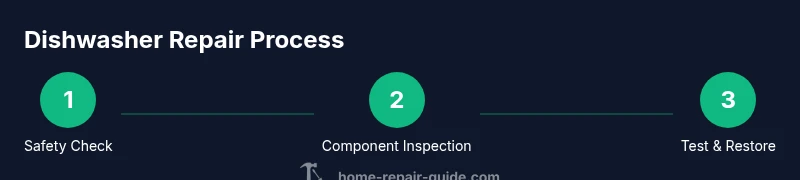
Unplug the dishwasher or switch off the circuit breaker. Shut off the water supply to minimize flooding risk. Move nearby items away to avoid accidental spills. This safety step protects you while you inspect components.
Tip: Always verify power is off with a tester before touching any electrical components. - 2
Access interior components
Remove the lower kick panel or access panel according to your model's manual. Photograph each connection before removal to aid reassembly. Label hoses and wires so you can return parts exactly where they belong.
Tip: Keep parts organized with labeled containers or resealable bags. - 3
Inspect the pump, hoses, and spray arms
Check for cracks, clogs, and kinks; remove mineral buildup with a gentle brush. Verify hoses are securely connected and clamps are tight. Manually rotate spray arms to confirm free movement.
Tip: If a spray arm threads on, ensure it is not cross-threaded during reinstallation. - 4
Test electrical connections
With power off, test for continuity or loose connections if you have a multimeter and the manual. Do not touch live circuits; refer to the schematic. Reconnect components only after confirming a clean path.
Tip: Take a photo of wiring before disconnecting anything to aid future troubleshooting. - 5
Replace worn parts
If gaskets, seals, or hoses show wear, replace them with OEM parts or compatible equivalents. Re-seat connectors and secure with clamps. Ensure correct orientation of seals to avoid leaks.
Tip: Hand-tighten clamps until snug, then give a gentle quarter-turn with a screwdriver—avoid overtightening. - 6
Run a test cycle and observe
Reconnect power, run a short cycle with clean water, and watch for leaks, proper drainage, and drying performance. Allow several minutes to confirm stability before loading normal dishes.
Tip: Keep a towel handy to catch any residual drips during the first test run.
FAQ
What is the most common dishwasher repair?
The most common repairs involve clogged filters or spray arms, worn door seals, or a failing pump. Regular cleaning and timely seal replacement prevent bigger issues.
Most common dishwasher fixes are clogged filters or worn seals; keeping filters clean prevents bigger problems.
Can I repair a dishwasher myself?
Yes for basic tasks with safety precautions. Always consult the manufacturer’s manual and avoid working on the control board unless trained.
You can tackle basic fixes yourself, but skip the control board unless you’re trained.
Is it safe to run a dishwasher during repair?
If you suspect leaks or electrical issues, do not operate the unit until a professional has inspected and approved it for use.
Don’t run it if you see leaks or smell something electrical—let a pro assess first.
How long do dishwasher repairs take?
Repair time varies by issue and parts availability. A straightforward fix can be completed in a short block, while complex problems may take longer.
Timing depends on the problem and parts; some fixes are quick, others take longer.
When should I replace my dishwasher?
Consider replacement when repairs are frequent, the appliance is old, or energy efficiency is poor. A newer model can offer better reliability and lower operating costs.
If repairs keep coming back and the unit is old, it may be time for a replacement.
What maintenance helps dishwasher life?
Regularly clean filters and seals, load dishes properly, use the recommended detergent, and run a maintenance cycle periodically to prevent buildup.
Keep filters clean, load correctly, and run maintenance cycles to extend life.
Watch Video
Key Takeaways
- Safety first: power down before starting any work.
- Diagnose by system: inlet, drain, spray arms, and seals.
- Regular maintenance reduces repairs and improves efficiency.
- Choose repair vs replacement by considering long-term reliability.