Appliances Repair Parts: A Practical Guide for Homeowners
Learn how to identify, source, and safely install appliances repair parts. Practical steps, sourcing tips, compatibility checks, and maintenance strategies from Home Repair Guide.


You will learn how to identify the right repair parts for common appliances, verify compatibility, and install or replace them safely. This guide covers sourcing options, safety checks, and maintenance routines to extend appliance life. By following these steps, you can diagnose issues, locate compatible parts, and complete replacements with confidence. You'll understand when to repair versus replace, how to source genuine parts and sturdy aftermarket alternatives, and how to test the appliance after installation.
Why parts matter for appliance reliability
A tired appliance is often a cascade of small failures: a worn seal, a stretched belt, or a failing switch can lead to bigger problems like leaks, poor performance, or sudden shutdowns. When you replace a worn component with the correct repair part, you restore efficiency and prevent further damage. According to Home Repair Guide, the majority of common failures trace back to aging parts that degrade performance over time. Understanding which parts typically wear out helps you plan preventive maintenance and budget for repairs before a complete replacement is needed. By focusing on the right part for the symptom, you can extend the life of your appliance and avoid costly service calls.
In addition, the Home Repair Guide analysis shows that proper part selection—using OEM parts where possible or clearly compatible aftermarket parts—significantly reduces the risk of fit issues and subsequent damage. The correct part is designed to match the appliance’s electrical, mechanical, and safety systems, ensuring safe operation and consistent results. This foundational knowledge is essential for homeowners and renters who want reliable, durable improvements rather than quick, ineffective fixes. Throughout this guide, you’ll learn how to identify, source, and install the right repair parts with confidence.
Common repair parts by appliance
Different appliances share some common wear points, even though each model has its own layout. Typical repair parts include belts that drive drum mechanisms, seals and gaskets that prevent leaks, and door switches or locking mechanisms that control cycles. Water inlet valves and hoses govern the flow of water in dishwashers, washers, and refrigerators, while thermostats and sensors regulate temperatures and safety limits. Fuses and thermal cutoffs protect circuits from overheating or overloads. When you suspect a part is failing, you should verify symptoms like strange noises, leaks, inconsistent temperatures, or failure to start. Keeping a small parts kit with belts, seals, and fuses on hand can reduce downtime. Some errors are caused by simple wear, so knowing which parts to inspect first saves time and money.
In practice, prioritize parts that directly affect safety or critical functions—door switches, thermal cutoffs, and inlet valves—because failures there can cause stoppages or hazards. Regular inspection of hoses and seals also prevents minor leaks from turning into water damage. Remember, different brands may use slightly different designs, so always cross-check compatibility before purchasing a part.
Verifying compatibility and selecting the right part
Compatibility is the cornerstone of a successful repair. Start by locating the appliance’s model and serial numbers on the rating label, usually found near the door frame, back panel, or inside the access panel. Then search the manufacturer’s official catalogs or trusted parts databases to identify OEM part numbers that match your model. If you can’t find an exact OEM number, use cross-reference guides from the manufacturer or reputable retailers to identify compatible aftermarket parts that meet the same electrical and mechanical specifications. When in doubt, contact the manufacturer or a certified technician for confirmation. Being precise here prevents mismatches that can cause fit issues or safety concerns. Home Repair Guide emphasizes documenting the exact part number you need and keeping notes on the model, so future repairs are easier and faster.
Sourcing parts: OEM vs aftermarket
Choosing between OEM and aftermarket parts depends on availability, budget, and risk tolerance. OEM parts guarantee exact fit and performance, but can be pricier and take longer to source. Reputable aftermarket parts can offer substantial savings and comparable reliability if they carry cross-reference compatibility and have strong quality assurance. Always read reviews, check the return policy, and compare part numbers before purchasing. To avoid counterfeit or unsafe parts, use trusted retailers and avoid bargain-bin sellers. The goal is to restore original performance while maintaining safety margins. Home Repair Guide’s guidance is to verify part authenticity, ensure warranty coverage, and prioritize compatibility over price alone.
Safety and installation basics
Safety comes first. Always unplug the appliance and shut off water supply before starting any repair. If your unit uses high voltage, discharge capacitors only if you’re trained to do so. Wear safety goggles and gloves to protect against sharp edges and debris. Gather the required tools, follow the manufacturer’s teardown steps in the manual, and keep fasteners organized in labeled containers. Do not force parts into place; if something resists, re-check alignment and connector orientation. A careful approach minimizes the risk of further damage and makes testing after installation safer.
Maintenance tips to extend appliance life
After completing a repair, adopt a preventive maintenance routine to reduce future failures. Regularly inspect seals, hoses, and gaskets for signs of wear, clean coils and filters to improve efficiency, and run periodic diagnostic checks if your appliance has built-in self-tests. Keep a simple maintenance log noting the date, symptoms observed, and parts replaced. Proper maintenance extends the life of you parts and improves performance over time. Home Repair Guide recommends scheduling periodic checks and documenting wear patterns to anticipate replacements before they fail.
Testing the replacement and common pitfalls
When testing a new part, run the appliance through a complete cycle and observe for abnormal noises, leaks, or error codes. If the unit operates normally, re-check connections and seals after the first few minutes of runtime, since vibration can loosen fittings. Always have a plan to revert steps if something doesn’t work as expected: re-check torque on fasteners, confirm that electrical wires are secure, and ensure there are no water leaks around valves or hoses. A practical pitfall to avoid is mixing parts from different compatibility families or attempting to adapt components that aren’t designed to work together. Take photos during disassembly to guide reassembly and future repairs.
undefined
Tools & Materials
- Owner's manual or appliance label(To locate model and part numbers.)
- Screwdriver set (Phillips and flathead)(Include #2 Phillips and a small flathead for pry points.)
- Nut driver or socket set(For fasteners on behind panels and access doors.)
- Needle-nose pliers(Useful for wiring and small hose clamps.)
- Digital multimeter(For basic continuity checks and voltage verification.)
- Replacement parts (OEM or reputable aftermarket)(Confirm compatibility with model number.)
- Flashlight or headlamp(Better visibility in tight spaces.)
- Safety gloves and eye protection(Protect hands and eyes from sharp edges and splashes.)
- Masking tape and small containers(Label wires and store small parts.)
Steps
Estimated time: 60-90 minutes
- 1
Identify problem and gather model numbers
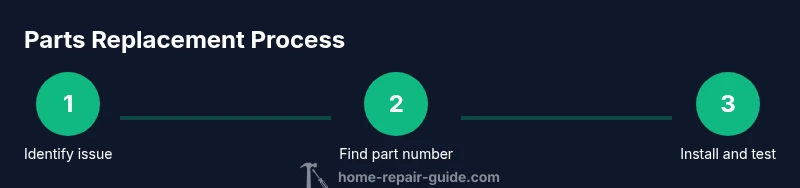
Start by noting the symptom (noise, leakage, failure to start). Locate the appliance’s model and serial numbers on the rating label and record them. This ensures you search the correct parts and avoid mismatches.
Tip: Take a photo of the rating label for quick reference later. - 2
Find compatible parts
Use the model number to search OEM catalogs or trusted retailers. If an exact OEM part isn’t available, check cross-reference guides for compatible aftermarket parts with matching specifications.
Tip: Always compare the part number and dimensions to the old part before ordering. - 3
Verify compatibility with your model
Double-check that the replacement part is designed for your exact model, including voltage, connector types, and mounting points. Ambiguities can cause fit issues or safety hazards.
Tip: If in doubt, contact the manufacturer or a pro before buying. - 4
Choose supplier and order
Select a reputable supplier with clear return policies. Confirm warranty terms and estimated delivery times before purchasing. Save order confirmations for future reference.
Tip: Prefer suppliers offering OEM or clearly approved aftermarket options. - 5
Prepare workspace and safety checks
Unplug the appliance, shut off water if needed, and gather tools. Clear the area of obstacles and lay a soft mat to protect surfaces.
Tip: Keep a labeled tray for small screws and parts. - 6
Remove the faulty part
Follow the manufacturer’s removal steps, noting how components were connected. Keep screws organized and avoid forcing parts free.
Tip: Take photos during removal to guide reassembly. - 7
Install the replacement and reconnect
Align the new part, secure fasteners to recommended torque, and reconnect any wires or hoses. Check for proper seating and clearances.
Tip: Do a quick visual inspection before powering up. - 8
Test the appliance
Plug in or restore power, run a full cycle, and monitor for leaks, noises, or error codes. If issues persist, re-check connections and verify part compatibility.
Tip: Allow a complete cycle to ensure stability.
FAQ
What qualifies as an appliance repair part?
An appliance repair part is any component designed to replace a worn or failed element within an appliance—such as belts, seals, valves, switches, or sensors. Parts must match the model’s specifications and mounting configuration to function safely.
A repair part is a genuine replacement piece that fits your exact model, like a belt or valve.
OEM vs aftermarket: which should I choose?
OEM parts guarantee exact fit and performance but may cost more. Reputable aftermarket parts can offer value if they have proper cross-reference and quality assurance. Always verify compatibility and warranty terms.
Choose genuine OEM parts for guaranteed fit, or trusted aftermarket parts with solid cross-reference and warranty.
How do I find the correct part number?
Check the appliance’s rating label or user manual for the exact part number. If the number isn’t listed, use cross-reference guides from the manufacturer or a reputable retailer to locate an equivalent part.
Look on the label or manual for the part number, or use official cross-references from the maker.
Is it safe to repair appliances myself?
DIY repair can be safe for many parts if you follow safety steps, unplug the unit, and use proper tools. Some repairs involve high voltage or gas and should be performed by a professional.
DIY can be safe for simple repairs if you follow safety steps and use the right tools.
What if the part isn’t available?
If a direct replacement isn’t available, contact the manufacturer for alternatives or consider compatible aftermarket options. You may need to refit the appliance with a different, compatible design.
If a direct part isn’t available, check with the maker for alternatives or compatible aftermarket options.
How long does a typical repair take?
Repair time varies with complexity. Simple parts replacements can take under an hour, while more involved repairs may require longer. Plan for a conservative window and have a contingency if additional checks are needed.
Times vary; simple fixes may take under an hour, more complex ones longer.
Watch Video
Key Takeaways
- Identify model and part numbers before shopping
- Verify compatibility to prevent misfits
- Always unplug and shut water off before work
- Test thoroughly after installation to confirm success