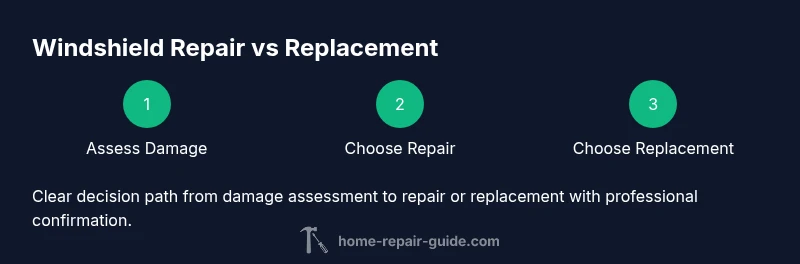
Repair or Replace Windshield: A Homeowner's Step-by-Step Guide
Learn how to decide between repair or replacement for a damaged windshield, with step-by-step instructions, tool lists, safety tips, and expert guidance from Home Repair Guide.


Definition: Repair or replace windshield refers to addressing damage to the windshield by resin repair for small chips or a full replacement for large cracks; the choice depends on damage size, location, safety implications, vehicle age, insurance coverage, and cost. This guide helps homeowners decide and explains safe, durable options. According to Home Repair Guide, when damage affects driver visibility or structural integrity, replacement is typically safer.
Why windshield integrity matters
A windshield is not just a pane of glass; it is a critical part of your car's structural integrity and a barrier to the elements. It supports the roof during a rollover, helps airbags deploy correctly, and provides the driver with a clear line of sight. Damage like chips or cracks can quickly worsen with temperature changes, road vibration, or impacts from projectiles. Even a seemingly minor flaw can compromise visibility or lead to complete failure in a collision. The Home Repair Guide team emphasizes that safety should drive every decision about repair or replacement, and delaying action often increases costs and risk. In addition to safety, many regions have legal requirements about minimin obstruction of the driver’s view. If the damage is in the central field of view or near the edge, repair viability may decline. The goal is to restore structural integrity and maintain a safe, clear view of the road ahead. This requires assessing the damage, understanding repair options, and selecting a process that aligns with your budget and safety priorities.
Tools & Materials
- Safety glasses(ANSI-rated goggles to protect eyes from glass shards)
- Nitrile gloves(Chemical-resistant gloves for resin handling)
- Windshield repair resin kit(Includes resin, hardener, and curing tool)
- Cleaner/degreaser( prepares the surface for adhesion)
- Razor blade or windshield scraper(For removing loose debris or dried adhesive)
- Masking tape and plastic sheeting(Containment to protect surrounding areas)
- Car-safe polish or glass cleaner(Finish and clarity after repair)
- Replacement windshield (professional procurement)(If replacement is chosen, professional installation is recommended)
- Basic suction cups or removal tools(Optional for gentle removal in DIY replacement scenarios)
Steps
Estimated time: 2-6 hours
- 1
Assess damage and safety
Carefully examine the chip or crack. Note the location, length, and whether the damage is in the driver’s line of sight. If the crack is spreading toward the edge, or there are multiple cracks, plan for replacement. This initial assessment guides whether a DIY repair is feasible or if a pro should perform replacement.
Tip: If in doubt, err on the side of safety and consult a professional early. - 2
Gather appropriate tools and materials
Assemble a resin repair kit, cleaners, gloves, and masking materials. Having everything ready reduces delays and ensures the repair is done cleanly. Organize your workspace to minimize dust and debris that could contaminate the repair.
Tip: Read the resin kit instructions thoroughly before mixing to ensure proper curing. - 3
Prepare the surface
Clean the damaged area with a degreaser to remove oils and dirt. Dry thoroughly to improve resin adhesion. Protect surrounding glass with masking tape to avoid accidental overspill.
Tip: Avoid using rough cleaners that could scratch intact glass; stick to a mild degreaser. - 4
Apply resin for minor damage
Mix the resin and hardener as directed, and apply it into the chip or crack, then use the curing tool or UV light as recommended by the kit. Ensure the resin fills the void without creating air bubbles. Allow the resin to cure completely before inspecting.
Tip: Work in a shaded, dust-free area to prevent debris from embedding in the resin. - 5
Assess repair results
After curing, inspect the repaired area for clarity and depth. If the repair is not smooth or the crack remains visible, plan for replacement. Remember that cured resin does not restore structural integrity in all cases; safety comes first.
Tip: If the windshield still shows distortion or the crack lengthens, stop and seek a professional inspection. - 6
Plan for replacement if needed
If repair is not viable, obtain professional quotes for windshield replacement. Replacement must ensure proper fit, seal, and electrical/sensor integration if your vehicle has advanced safety features.
Tip: Request a written quote with details on adhesive type, warranty, and disposal of the old windshield. - 7
Final verification and cure
Whether repaired or replaced, perform a final safety check: confirm clear visibility, verify that wipers operate smoothly, and ensure no new gaps or leaks exist. If you chose replacement, schedule a quick post-install inspection per the installer’s warranty terms.
Tip: Take a short test drive in daylight to check for distortion or wind noise.
FAQ
When should I repair versus replace a windshield?
If the damage is small and not in the driver's line of sight, repair is often viable. Large, spreading cracks or damage near the edge typically requires replacement for safety and structural integrity.
Repair for small, non-critical chips; replace when cracks are large or near the edge for safety.
Can I repair a windshield myself?
Minor chip repairs can be done with a DIY resin kit, but results vary and do not guarantee safety. For most cracks or if you’re unsure, professional repair or replacement is recommended.
DIY can work for tiny chips, but for larger damage or safety concerns, call a pro.
Will my insurance cover windshield repair or replacement?
Coverage varies by policy. Many insurers offer glass coverage or waive deductibles for windshield repairs, but check your plan and file promptly after damage occurs.
Coverage depends on your policy—check with your insurer for specifics.
How long does windshield replacement take?
Typical replacement takes about 1-3 hours for the installation, plus any curing or inspection time as required by the installer and adhesive used.
Most replacements take a few hours, depending on vehicle and availability.
What safety considerations should I know?
Avoid driving with a damaged windshield whenever possible. Use a professional service to avoid incorrect installation, compromised airbags, or improper sealing that could leak or fail in a crash.
Safety first: if in doubt, get a professional to assess and repair or replace.
Watch Video
Key Takeaways
- Decide repair vs replacement based on safety and damage.
- Use proper PPE and follow kit instructions.
- Hire a pro for full windshield replacement.
- Inspect after repair or replacement for visibility and sealing.
- Protect against future damage with proper maintenance.