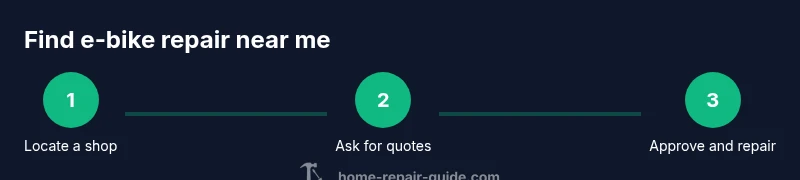
Find e-bike repair near me: a practical guide
Learn how to locate trusted e-bike repair near you, evaluate shops, and choose safe, transparent service with our step-by-step guide for 2026.


By following this guide, you will locate reliable e-bike repair near you, compare shop capabilities, and understand common service offerings. Start by confirming your bike model, battery type, and warranty, then check local shops for experience, turnaround time, and parts availability. Always request a written estimate and a warranty on repairs before any work begins.
Why e bike repair near me matters for riders
Finding a repair service nearby matters for safety, turnaround time, and battery warranty handling. According to Home Repair Guide, many riders prefer local shops that specialize in electric bicycles because they can diagnose issues more accurately and communicate clearly about parts. When your e-bike needs attention, proximity matters for scheduling, test rides, and warranty exchanges. Common scenarios include battery health checks after charging issues, motor noise concerns, brake fade, and drivetrain wear. In urban environments, fast access to a technician reduces downtime, helps maintain commuting schedules, and supports ongoing safety checks. For riders, the ability to drop off, discuss a plan, and pick up a bike in the same day is a real convenience. The phrase “e bike repair near me” is more than a search term—it's a pathway to quicker, safer rides. In many communities, nearby shops offer flexible appointment windows, same-day diagnostics, and loaner bikes during longer repairs.
How to evaluate a local e-bike repair shop
To choose the right local shop for your e-bike, use a simple checklist. Look for shops that explicitly advertise e-bike or motor-assist expertise, battery testing capability, and access to OEM parts. Confirm they have trained technicians familiar with your battery chemistry (Li-ion or others), motor type, and controller software. Ask about diagnostic tools, service warranties, and whether they provide itemized written estimates before work begins. Check online reviews and request to see a sample warranty policy. Clarify turnaround times for the most common services (battery swap, brake service, tune-ups) and whether loaner bikes or shuttle services are available. Your goal is a shop that communicates clearly, offers transparent pricing, and stands behind their repairs. Finally, ensure the shop adheres to local safety standards and uses proper safety equipment. As you compare options, remember that choosing a nearby, reputable shop often leads to faster service and better ongoing support for your e-bike.
Core services you should expect from an e-bike repair shop
A reputable e-bike repair shop should provide a comprehensive set of services. Expect diagnostic checks for motor, controller, and battery; health assessments of the battery pack, charging system, and wiring; Braking system inspection and pad/rotor replacement if needed; drivetrain tune-ups including chain, gears, and derailleur alignment; motor lubrication where applicable; firmware updates when supported by the manufacturer; and safety checks to ensure wheel trueness, tire condition, and frame integrity. Many shops also offer test rides after service to confirm performance. If a component requires replacement, request a written parts list and a price estimate before installation. A strong shop will explain what the issue is, why a fix is needed, and how long the repair will take, with a warranty on labor and replaced parts.
Safe, practical options: DIY vs professional repair
Some maintenance tasks are suitable for DIY, such as cleaning, lubrication, tire inflation, brake adjustment, and basic drivetrain care. However, e-bike batteries and high-voltage systems, motor diagnostics, and advanced firmware work should be handled by trained technicians. Always power off and disconnect the battery before any inspection of electrical components, and wear eye protection and gloves when handling components. If you notice swelling, leaks, unusual heat, or irregular motor behavior, seek professional service promptly. DIY can save money on routine upkeep, but complex issues require professional tools and knowledge to prevent safety hazards and warranty voiding. When unsure, prioritize safety and schedule a professional evaluation.
Budgeting and planning: getting the right care
Budgeting for e-bike repair depends on the service scope, parts needed, and labor rates in your area. Most riders should expect to plan for a diagnostic check, battery testing, or a routine tune-up as a baseline service. Costs vary by region and shop, and you should request an itemized quote before any work begins. If a battery or motor is involved, ask about OEM parts versus aftermarket options and clarify warranty implications. Consider asking about bundled service packages that combine diagnostics, tune-ups, and safety inspections for a reduced total price. In many cases, proactive maintenance—regular inspections, tire checks, and drivetrain lubrication—can prevent expensive failures and extend the life of your e-bike. Base your decisions on written estimates, warranty terms, and the shop’s communication quality. The Home Repair Guide analysis highlights that transparent pricing and clear warranties correlate with higher customer satisfaction when repairing e-bikes.
Tools & Materials
- Torque wrench(Used to apply correct torque to bolts on motor/mounts per manufacturer specs.)
- Allen keys set(Metric sizes common for e-bikes; range 2-6 mm.)
- Multimeter(For checking electrical connections and battery pack voltage.)
- Bike stand(Keeps bike stable during inspection.)
- Replacement parts (if needed)(Spare fuses, brake pads, tires depending on model.)
- Rag and lubricant(Degrease and lubricate drivetrain after service.)
Steps
Estimated time: 2-4 hours
- 1
Power down and secure the bike
Power off the bike and remove the battery if removable. Place the bike on a stand and ensure it will not move during inspection to prevent electric shock and mechanical injury.
Tip: Always disconnect the battery before touching any electrical components. - 2
Gather model, battery, and service history
Locate your bike's model number, battery chemistry, and any previous service notes. This information helps the technician select appropriate tests and parts.
Tip: Have the serial number, motor type, and controller version handy for quick reference. - 3
Inspect the battery and charging system
Check for swelling, corrosion, or damaged connectors. Test charging current and voltage safely and note abnormal readings.
Tip: Do not puncture or attempt to dismantle swollen cells; seek professional evaluation. - 4
Evaluate brakes and drivetrain
Inspect pads, rotors, cables or hydraulics, chain wear, and gear shifting. Look for misalignment or noise that indicates wear.
Tip: If braking performance changes suddenly, reduce speed and arrange a professional inspection before riding at speed. - 5
Check firmware and diagnostics
Use OEM or reputable diagnostic tools to read fault codes and confirm software versions. Record results for discussions with the shop.
Tip: Take screenshots or notes of any fault codes for later reference. - 6
Decide DIY vs professional repair
For safety-critical components like batteries and motors, lean toward professional service. For routine maintenance, consider DIY if you have the right tools and knowledge.
Tip: If in doubt, schedule a professional assessment first to prevent unsafe operation.
FAQ
What should I ask a local e-bike repair shop before booking?
Ask about technician specialization, battery expertise, diagnostic capabilities, warranty terms, and itemized quotes. Also confirm turnaround times and availability of OEM parts.
Ask about specialization, diagnostics, warranties, and parts before booking.
Can I repair an e-bike battery at home?
Some basic maintenance is possible, but battery repair or replacement should be done by a trained technician. Mishandling high-voltage systems can cause injury or fire.
Battery work is best left to professionals due to safety risks.
How long do typical e-bike repairs take?
Repair times vary by issue and shop workload. A diagnostic or routine tune-up may take a few hours, while battery or motor work can require multiple days if parts must be ordered.
It depends on the issue and parts; expect a few hours to a few days.
Are there online resources to diagnose issues before a visit?
Yes, many manufacturers provide diagnostic apps or manuals. Use them to describe symptoms to the technician, but avoid interpreting fault codes without professional tools.
There are online guides, but professional tools are needed for accurate diagnosis.
What warranties should I expect after repair?
Look for a warranty on labor and replaced parts. Warranties vary by shop and manufacturer; ask for specifics in writing before work starts.
Ask for clear labor and parts warranties written down.
Watch Video
Key Takeaways
- Vet local shops for e-bike specialization and parts capability.
- Get written estimates and warranties before any repair.
- Differentiate between DIY-friendly tasks and high-risk work.
- The Home Repair Guide team recommends transparent pricing and clear warranties when choosing a shop.