Motorcycle Repair Close to Me: A Local Guide to Finding Trusted Shops
Learn how to locate reliable motorcycle repair near you, compare local shops, estimate typical costs, and ask the right questions to keep your bike safe, reliable, and road-ready.


Roadmap to finding motorcycle repair close to me
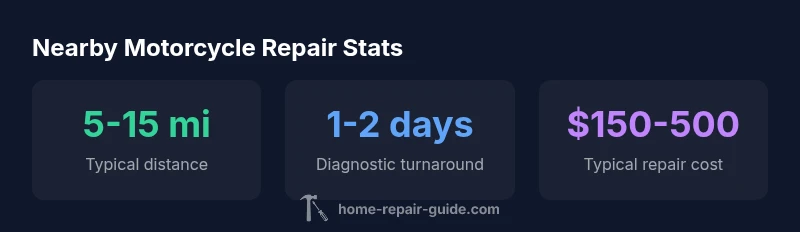
If you own a motorcycle, your next service should start with a plan. The route to reliable repair close to you combines research, a few test calls, and smart budgeting. According to Home Repair Guide, proximity matters because it supports quicker follow-ups and easier warranty support. In urban areas, you’ll typically have several options within 5 to 15 miles, including independent shops and dealer service centers. In rural or sparse regions, you may need to travel farther or consider mobile services for routine maintenance. The goal is to map your local landscape and set realistic expectations for turnaround times, availability of OEM parts, and the type of work you’ll pursue locally. Begin by listing likely candidates, then refine that list with objective criteria: credentials, warranty policies, price transparency, and the ability to diagnose and communicate clearly. In short, the better prepared you are, the more you’ll benefit from nearby options and maintain your bike’s reliability and resale value over time. The Home Repair Guide team found that riders who compare at least two local shops save money and reduce the risk of unnecessary repairs.
Independent shops vs dealerships: what’s the difference
Local independent motorcycle repair shops often emphasize personalized service, flexible scheduling, and competitive hourly rates. Dealership/service centers, on the other hand, tend to have OEM access, manufacturer-backed warranties, and factory-trained technicians. The Home Repair Guide team recommends weighing cost against perceived quality and warranty coverage when you compare nearby options. If your bike is under an extended warranty or requires specialized parts, a dealership can be more reliable for certain tasks. For routine maintenance or a simple repair, an experienced independent shop can deliver excellent results at a lower price and with faster turnaround. The key is to verify that either option can provide clear estimates, documented work orders, and transparent parts sourcing so you’re not surprised by add-ons later.
Credentials that matter for motorcycle repair
Trust begins with credentials. Look for shop staff who demonstrate manufacturer training, shop certifications, and ongoing education tailored to your bike’s make and model. Ask whether technicians have hands-on experience with your motorcycle’s drivetrain, braking system, electrical harness, and common failure modes for your year and model. A shop that routinely handles your bike type is more likely to diagnose issues accurately and source the right parts promptly. Don’t hesitate to request proof of training and to ask about warranties on labor and parts. Clear documentation, updated service manuals, and reference to approved repair procedures are strong signals of quality. The Home Repair Guide team notes that shops with transparent training records tend to communicate more effectively and deliver consistent results.
How to verify quality before you commit
Start with a written estimate that itemizes labor, parts, and any diagnostic fees. Compare the estimate against the shop’s policy on substitutions if a preferred part is unavailable. Ask for a warranty on both parts and labor, and request a copy of the warranty terms in writing. Look for online reviews that mention clarity of communication, punctuality, and post-service follow-up. If possible, request a brief diagnostic report explaining the initial findings and recommended steps. Finally, verify that the shop uses approved parts or OEM-equivalents and that they can provide evidence of proper fitment and testing after repair. The goal is to leave with confidence that you know what was done, why, and what comes next.
Cost expectations and warranties
Costs vary widely by bike type, year, and region. Be wary of quotes that seem unusually low, and always ask for a full written estimate before any work begins. A fair shop will separate diagnostic fees from labor and parts, clearly state which parts will be used (OEM vs aftermarket), and outline a testing plan after the repair. Warranties are important: a reliable shop will cover both labor and parts for a defined period and explain what is excluded. If you’re unsure, request a second estimate from a nearby competitor for comparison. While price matters, prioritize value, transparency, and the shop’s willingness to stand behind their work. The Home Repair Guide team emphasizes balancing cost with credentialed expertise to protect your bike’s performance and resale value.
On-site vs shop service: mobile repair options
Mobile repair services can offer convenient on-site diagnostics or simple maintenance, which is appealing for busy riders. However, major repairs often require a fully equipped shop environment, access to lift stands, and a broader parts inventory. Consider the scope of work when deciding between on-site and in-shop service. For routine tasks like oil changes or basic inspections, a mobile technician can save you time. For complex electrical faults, carburetor work, or frame repairs, an in-shop visit may yield faster turnaround and more robust warranties. Always confirm mobile technicians’ credentials, travel fees, and whether they can legally perform work on public roads if a repair requires road testing. The approach should align with your bike’s needs and your expectations for diagnosis quality and post-work testing.
Pre-visit rider checklist
Before you head to the shop, print or save this quick checklist:
- Document the symptoms with dates and symptoms (noise, performance changes, warning lights)
- Bring maintenance records, including recent service and part replacements
- Note your bike’s year, make, model, and VIN if available
- List questions about parts sourcing, warranty terms, and turnaround expectations
- Confirm the estimate format and whether a pre-authorization is needed for any additional work
- Pack a spare key and a favorite route in case you need to pick up the bike later
A clear plan reduces friction at the shop and helps you compare quotes more accurately.
Red flags that signal trouble
If a shop pressures you to authorize work without a written estimate, refuses to provide parts details or test results, or insists on non-standard parts without justification, consider walking away. Watch for vague explanations of why a problem is “difficult” to diagnose or for contractors who avoid giving you a documented warranty. A reputable shop will welcome questions, provide a written breakdown, and offer a warranty that clearly covers both parts and labor. If you feel rushed or manipulated to approve unnecessary work, seek a second opinion from another nearby shop. Your safety and the long-term reliability of your motorcycle depend on transparent, accountable service.