Roof Repair Near Me: Step-by-Step Guide for Homeowners
Learn how to safely assess, plan, and perform roof repairs near you with practical, actionable steps, tools, and tips from Home Repair Guide.


By following this guide, you will locate reliable roof repair near me, assess urgency, and perform safe, basic repairs or decide when to call a pro. Start with a safety check, identify visible damage, gather essential tools, and get multiple quotes from licensed contractors. Home Repair Guide emphasizes prioritizing safety and documented estimates.
Safety and initial assessment for roof repairs near me
According to Home Repair Guide, safety comes first in every roof repair project. Begin with a clear, dry area around the home and avoid ladder use on unstable ground. A quick exterior scan helps you spot loose shingles, curling edges, damaged flashing, and obvious leaks. Photograph or note anything you find so you can share it with a professional if needed. Wear sturdy non-slip footwear, gloves, and eye protection. If weather shifts suddenly or a roof feels unstable, pause and reassess later rather than pushing forward. This cautious approach protects people, pets, and your investment.
Ground-level checks and attic observations before climbing
From the ground, inspect for missing granules on shingles, siding gaps, and clogged gutters that could misdirect water flow. In the attic, look for daylight streaks, dark staining, or mold growth that indicates slow leaks. Using a flashlight, check around chimneys, vents, and flashing seams. Keep a running log of findings and prioritize areas that show active seepage or structural concerns. Remember, if you’re uncertain about any damage, it’s safer to contact a licensed roofer for a closer look.
Essential tools and materials for roof assessments
Before you work on or around a roof, assemble a basic toolkit focused on safety and inspection. A stable extension ladder, fall protection gear, and a partner to assist are essential. Hand tools like a pry bar, utility knife, and hammer help with minor shingle adjustments. Have sealing caulk or roof cement ready for temporary patches, along with tarps to protect fixtures and interiors. Keeping a tape measure, notebook, and camera ensures you document all damage for estimates and warranties. If you lack any safety gear, do not improvise—prioritize professional help to avoid injury.
In-depth roof inspection techniques
A thorough inspection moves beyond the obvious surface damage. Start at the edge and work toward the ridge, checking shingle alignment, nail pops, and blistering. Inspect flashing around chimneys, vents, and holes; loose or corroded flashing is a common leak source. Look for moss or debris that traps moisture and accelerates wear. Check the underlayment in roof valleys and along the ridge line for any signs of wear. Document findings with notes and photos, and compare them to manufacturer guidelines and local codes when you plan repairs.
Common roof damage types and practical repair options
Shingle damage often requires simple reroofing or replacement of individual shingles. Damaged flashing or vent sealants may leak water; resealing or replacing flashing components is typically straightforward for a pro or an experienced DIYer. Leaks near dormers or skylights may involve sealant refreshment and occasionally new flashing. Moss and debris accumulation should be cleared to restore drainage and airflow. For structural issues like sagging sections, it’s generally best to involve a licensed roofer due to safety and load considerations.
Finding a pro and evaluating quotes near you
Locating a reputable contractor involves more than a quick search. Verify licenses and insurance, request written estimates, and check references or online reviews. Ask about warranties on workmanship and materials, and confirm the project scope, timeline, and payment terms in writing. For larger jobs, obtain at least three quotes to compare approaches and materials. Keep communication clear and documented throughout the process to avoid misunderstandings.
Maintenance strategies to extend roof life and prevent future leaks
After completing repairs, implement a maintenance plan to prolong roof life. Schedule seasonal inspections, clean gutters and downspouts, and trim tree branches that overhang the roof to reduce debris. Address minor issues promptly to prevent escalation, and consider a routine sealant check around flashing and penetrations. By pairing regular care with quality repairs, you reduce the chance of costly emergencies and improve overall home resilience.
Tools & Materials
- Extension ladder(Stable ground, fully extended, level; use ladder stabilizer)
- Fall protection harness(Attach to a secure anchor point when on the roof)
- Roofing hammer or hatchet(Use for minor shingle adjustments)
- Roofing nails(Corrosion-resistant nails suitable for shingles)
- Utility knife(Sharp blade for trimming shingles)
- Pry bar / shingle remover(Safely lift or lift shingles without damaging deck)
- Caulk and roof sealant(For temporary sealing around flashing and seams)
- Roofing tarps(Use to shield interior during leaks)
- Tape measure(Measure shingles and flashing areas)
- Notebook and camera(Document damage for quotes and records)
- Safety goggles(Protect eyes from debris)
- Gloves(Non-slip, durable work gloves)
- Roof cement / patch kit(Temporary patch for small leaks)
Steps
Estimated time: 2-6 hours total
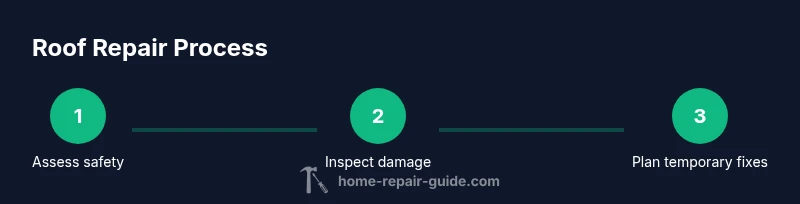
- 1
Assess safety and prepare the site
Check weather, clear the area, and set up ladders on solid, level ground. Wear PPE and have a partner to assist. If anything feels unstable, stop and reassess.
Tip: Never climb a roof in wet or windy conditions. - 2
Set up fall protection and access
Secure a fall-arrest system or harness when working on pitched roofs. Ensure the ladder is properly angled (4:1 ratio) and tied off if possible.
Tip: Always maintain three points of contact when on ladders. - 3
Ground and attic scan for leaks
From ground and in the attic, note daylight gaps, stains, or mold indicating leaks. Take photos for reference.
Tip: Document every lesion before you touch roof materials. - 4
Inspect shingles from the edge
Look for curling, missing, or cracked shingles. Check for granule loss in gutters, which signals deterioration.
Tip: Avoid stepping on edges; use existing ladder access points for safer exploration. - 5
Check flashing around penetrations
Examine flashing around chimneys, vents, and chimney stacks for gaps or corrosion. Reseal or replace as necessary.
Tip: Flashing is a frequent leak path—prioritize this area. - 6
Temporary leak control if needed
If active leaks persist, place a tarp and use roof cement to seal small cracks temporarily.
Tip: Temporary fixes buy time but do not replace professional repair. - 7
Document and plan for repairs
Record damaged areas with notes and photos, identify material needs, and shortlist qualified roofers if professional help is required.
Tip: Include warranty considerations in your plan. - 8
Obtain and compare quotes
Reach out to at least three roofers, request written estimates, and verify insurance and licenses.
Tip: Ask for a detailed scope and material breakdown. - 9
Decide on DIY vs professional repair
Evaluate safety, skill, and code requirements. Reserve DIY for non-structural, low-risk tasks.
Tip: Know your limits; large or complex jobs should be handled by pros. - 10
Clean up and monitor
Remove debris, store tools securely, and monitor after rain for any new leaks. Schedule follow-up inspection if needed.
Tip: Keep records of repairs and maintenance for future reference.
FAQ
Can I repair a leaky roof myself, or is a professional required?
DIY repairs are possible for small, non-structural leaks with proper safety and knowledge. For active leaks involving flashing, structural damage, or multiple shingles, hiring a licensed roofer is advisable to avoid further damage.
DIY fixes work for small leaks if you stay safe, but consult a pro for flashing or structural issues.
What safety gear is essential for roof work?
Essential gear includes a secure ladder, fall protection, safety glasses, gloves, and non-slip footwear. Always work with a partner and avoid working in wet or windy conditions.
Wear a harness and sturdy gloves, and never work alone on a steep roof.
How do I find a trustworthy roofer near me?
Check licenses and insurance, request written quotes, and read references or reviews. Ask about warranties and the exact scope of work before signing a contract.
Look for licensed roofers with clear warranties and written estimates.
What should I look for in a roof repair warranty?
Warranties should cover both materials and workmanship for a defined period. Understand what triggers coverage and whether tear-outs or partial repairs are included.
Seek both materials and workmanship warranties with defined terms.
How long does a typical roof repair take?
Duration depends on damage extent and weather. Minor leaks may take a few hours; larger repairs could require days, especially if shingles or flashing need replacement.
Most fixes vary; expect longer timelines for significant damage.
Is a temporary tarp enough for an active leak?
A tarp can slow water intrusion but is not a cure. Use tarps with proper securing and still arrange a professional assessment promptly.
Tarps help temporarily, but you still need a proper repair.
Should I replace shingles or only fix flashing?
If most shingles are damaged or if the underlayment is compromised, replacement may be necessary. Flashing repairs are often sufficient for localized leaks around vents or chimneys.
Often flashing fixes leaks, but widespread shingle damage may require replacement.
What precautions should I take after completing repairs?
Inspect after rain, keep a maintenance log, and schedule periodic checks. Address any new issues promptly to prevent recurrent leaks.
Check the repair after rain and keep notes for future maintenance.
Watch Video
Key Takeaways
- Prioritize safety before any roof work.
- Document damage and compare multiple quotes.
- Know when to DIY and when to hire a pro.
- Proper maintenance extends roof life and protects the home.