Roof Emergency Repair: Quick Stabilization Guide for Homes
Learn how to respond to a roof emergency with safety-first steps, temporary containment, expert contractor guidance, and long-term repair planning. A trusted, step-by-step approach from Home Repair Guide.


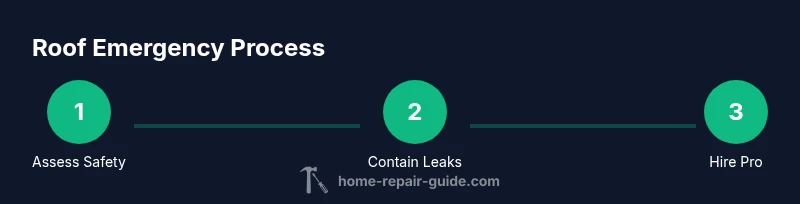
In a roof emergency, the goal is to stop water intrusion and protect the structure until a permanent repair can be done. If you notice active leaks, fallen shingles, or damaged flashing during a storm, perform immediate safety steps, tarp the area if possible, and call a licensed roofer for a permanent fix.
What qualifies as a roof emergency repair
A roof emergency repair is defined as any temporary action taken to prevent further damage to the home when a sudden roofing failure is imminent or underway. According to Home Repair Guide, the primary goal is to stop water intrusion, protect interior spaces, and stabilize the structure long enough to schedule a permanent fix. Severe weather events such as a thunderstorm, hurricane-strength winds, hail, or falling debris can trigger urgent needs. You may notice exposed underlayment, missing shingles, loose flashing, or a sagging roof deck; in many cases the attic reveals active dripping or a damp ceiling patch even before you can observe the exterior damage. While this work is critical, it should be limited and done with a focus on safety and containment. Do not climb a ladder during high winds or on a slippery surface, and avoid paths that expose you to potential falls or electrical hazards. If you have to inspect, do so from the ground with binoculars and call for help if anything looks risky. A documented record—photos, dates, and weather notes—helps with insurance claims and guides the repair contractor toward a precise, efficient plan.
Immediate safety steps you should take
The moment you detect a roof emergency, safety comes first. Safety basics include moving people and pets away from the affected area, avoiding wet surfaces, and staying clear of power lines. If interior spaces are at risk, locate and shut off the nearest breaker controlling the affected area only if you can do so safely. Place clean containers under drips to minimize water damage and cover valuables with towels or plastic. From the attic, use a tarp to reduce moisture penetration without blocking vents. Document damage with timestamped photos and notes to assist insurers and contractors. This stage is about containment and safety, not full repairs. Remember to avoid dangerous maneuvers—never stand on ice or wet shingles and never crawl onto a compromised roof during a wind event.
If the storm continues, monitor the situation from a safe distance and call for professional guidance. The goal is to preserve your home’s envelope and limit expense while you arrange a permanent fix.
Common causes of roof emergencies
Roof emergencies arise from a mix of weather, wear, and installation issues. High winds can lift or peel back shingles and flashing; hail can dent or crack shingles and dent metal flashing; ice dams form when warm roof sections melt and refreeze at the eaves, causing leaks. Debris from storms—trees, branches, or roofing materials—can pierce the roof surface, creating openings for water intrusion. Poor installation or aging sealants also contribute to sudden failures, especially in regions with extreme temperature swings. In many cases, a combination of factors—like aging underlayment plus a heavy rainstorm—produces a sudden emergency. By understanding these common causes, homeowners can recognize risk factors and act quickly to minimize damage. The Home Repair Guide team emphasizes that proactive inspections and timely maintenance reduce the likelihood of a roof emergency requiring expensive repairs.
Quick fixes you can perform safely
If you must act before a professional arrives, focus on safe, temporary containment. Place a tarp over the damaged area, securing the edges with weights or lumber boards and tying with rope to a sturdy anchor. Use roofing cement or sealant to cover small gaps around flashing or joints that are accessible without stepping onto the roof. Keep the tarp size larger than the damaged area to prevent wind flaps. From inside the attic, you can apply plastic sheeting to intercept dripping water, but avoid blocking vents or creating condensation traps. Document everything: take photos, note weather conditions, and keep the tarp and tools accessible for the arriving contractor. Remember, these steps are meant to stabilize your home, not complete a permanent repair. Safety is the top priority at all times.
When to call a professional and how to choose one
Not every roof issue is a safe DIY job. If there is active leakage during a storm, structural sag, or if you are uncertain about safety, contact a licensed roofing contractor immediately. When choosing a pro, verify licenses and insurance, ask for references, and request written estimates that specify materials, scope, and timelines. Check whether permits are required and if the contractor can coordinate with your insurer for claim processing. It’s reasonable to ask about warranties and the contractor’s emergency response capabilities. Compare at least three bids and look for contractors who explain their approach to both temporary stabilization and long-term repair. The goal is a contractor who communicates clearly, delivers on safety, and offers transparent pricing.
Temporary tarps and temporary measures
Tarps are a critical temporary measure for roof emergencies. Select a tarp that is larger than the damaged area, ideally 6–10 feet wider in every direction. Cut to size with scissors or a knife, then secure edges with 2x4 boards and sturdy rope or bungee cords. Attach the tarp to fascia or gutters using nails or screws from outside the building, ensuring the edges are taut to resist wind uplift. Cover the entire affected zone and avoid creating a slippery surface; never walk on a tarped area. This approach buys time for proper assessment and scheduling a permanent repair while minimizing interior water intrusion. Keep a log of weather and the tarp’s condition and plan for a professional assessment within 24–72 hours after stabilization.
Long-term repair planning after an emergency
Once the immediate danger is contained, shift to planning a permanent fix. Obtain professional assessments from at least two licensed roofers. Compare not just price but the proposed repair scope, the materials, the installation method, and warranty terms. Discuss whether a full roof replacement or localized repairs are appropriate, factoring in the age of the roof, climate, and energy efficiency considerations. Coordinate with your insurer and prepare documentation—photos, contractor reports, and receipts—to support your claim. Develop a written schedule with milestones and a contingency plan for weather delays. Investing in upgrades like higher-quality flashing, better ventilation, or attic insulation can reduce future emergency risks. The Home Repair Guide team notes that deliberate planning and timely maintenance dramatically lowers long-term costs and avoids repeated emergencies.
Cost considerations and budgeting for roof emergencies
Roof emergencies carry cost implications beyond the initial repair. Costs vary with roof size, type, and extent of damage, as well as the local labor market. Tarps and temporary measures are inexpensive compared with full replacement, but professional assessment and permanent repairs can run higher, especially in adverse weather windows. Use a budget that accounts for emergency funds, insurance deductibles, and potential permit fees. Seek itemized bids that include labor, materials, disposal, and warranty terms. While exact prices are location-dependent, planning for a range helps prevent sticker shock when a contractor presents options. The Home Repair Guide analysis shows that proactive budgeting and timely maintenance reduce the financial impact of roof emergencies and support faster recovery.
Preventive maintenance to reduce future emergencies
Preventive maintenance is the best defense against roof emergencies. Schedule annual or biannual roof inspections to catch wear and damage early. Keep gutters clear to prevent water backing up under the shingles, trim overhanging branches, and ensure proper attic ventilation to reduce moisture buildup. Address small issues promptly—loose flashing, curling shingles, or minor flashing leaks—before they become large leaks. Consider upgrading roofing materials or applying reflective coatings in hot climates, which can extend life and improve energy efficiency. A simple maintenance plan saves money and stress over time, helping you avoid major emergencies and protect your home’s integrity.
Tools & Materials
- Ladder (extensible, in good condition)(Stable, non-slick feet; avoid metal ladders near power lines)
- Roofing tarps(6 mil or thicker; choose a tarp larger than damaged area)
- Rope or sturdy cord(Weather-resistant; 1/4 inch or thicker)
- Plywood boards (2x4s)**(Used to weight tarps and provide edge support)
- Utility knife(Sharp blade; replace blades as needed)
- Roofing cement/sealant(For small patches around flashing or joints)
- Hammer or staple gun(Secure edges of tarps to structure)
- Safety gear (gloves, goggles)(Protect hands and eyes during work)
- Flashlight or headlamp(Power outages common during emergencies)
- Camera or smartphone(Document damage for insurance)
- Weather radio or phone with weather app(Monitor storm updates)
Steps
Estimated time: 2-6 hours
- 1
Assess safety and hazards
Survey the scene from safe ground. Identify downed power lines, unstable ladders, and other hazards. Do not climb onto a wet or damaged roof during a storm; call for professional help if you’re unsure.
Tip: If anything looks risky, postpone any roof work and prioritize safety. - 2
Protect interior spaces with temporary containment
Move valuables away from the leak and place containers to catch drips. If possible, cover the affected ceiling and attic openings with plastic sheeting from inside to reduce moisture intrusion.
Tip: Document the interior damage with photos for your insurer and contractor. - 3
Secure the exterior with tarps
Cut a tarp larger than the damaged area and position it over the compromised section. Use 2x4 boards to weight the edges and rope to anchor the tarp to a secure structure.
Tip: Place weights along the bottom edge to prevent wind uplift. - 4
Seal minor leaks where accessible
Apply roofing cement or sealant to small gaps around flashing or joints that you can reach safely. Avoid large, structural repairs during an emergency; focus on containment.
Tip: Do not over-seal; prioritize areas that leak most aggressively. - 5
Ensure tarp edges stay taut and secure
Re-tension the tarp if you notice flapping; check fastenings after strong winds. Ensure tarps do not rest on shingles where they could cause damage.
Tip: Avoid walking on tarps; use a ladder or safe access point if you must move across the roof edge. - 6
Document damage and contact insurers
Take clear photos from multiple angles, note dates and storm conditions, and keep receipts for any temporary materials bought. This supports prompt claims and contractor planning.
Tip: Create a simple damage log with time-stamped entries. - 7
Choose and contact a licensed roofer
Request written bids from at least two contractors, verify licenses and insurance, and ask about emergency response times and warranties.
Tip: Ask for a phased plan: emergency stabilization, temporary repair, and permanent repair schedule. - 8
Plan for permanent repair after stabilization
Work with the chosen contractor to outline a permanent solution, including materials, permit requirements, and a realistic timeline.
Tip: If possible, schedule a post-storm inspection to catch hidden issues early.
FAQ
How do I know if I should tarp the roof during an emergency?
If active leaks threaten interior spaces or the roof shows significant exposure to weather, tarping is a prudent temporary measure. Ensure edges are secured and avoid creating new hazards. Always prioritize safety and call for professional assessment as soon as possible.
If leaks threaten your interior or the roof is visibly exposed, use a tarp as a temporary measure and call a pro for a permanent fix.
Can I fix a roof emergency myself?
Some containment steps can be done safely, such as tarping and temporary sealing of small gaps. However, major repairs, structural work, and electrical or water-damaged areas should be handled by a licensed roofer to avoid personal injury and further damage.
Some containment tasks are possible, but major repairs should be done by a licensed roofer.
How long can a temporary tarping solution hold?
Temporary tarping can hold for a few days to a couple of weeks depending on weather and wind. It is not a substitute for permanent repair, which should be scheduled as soon as practical following a safety assessment.
Tarps can buy you days to weeks, but permanent repair should be scheduled promptly.
What should I ask a roofing contractor after a roof emergency?
Ask about licensing and insurance, timelines, materials, warranties, and whether the contractor can help coordinate with your insurer. Request written estimates and compare the scope of work carefully, including temporary vs. permanent solutions.
Ask about licenses, warranties, timelines, and insurance and get written estimates.
Will homeowners insurance cover roof emergencies?
Coverage varies by policy and cause. Many policies cover storm-related damage but may require deductible payment. Always review your policy details and file promptly with documentation and contractor estimates.
Coverage depends on your policy and storm-related causes; check details and document everything.
What are signs of hidden roof damage after an emergency?
Look for moisture trapped in insulation, staining on ceilings, warped decking, or damp attic areas. A professional inspection is essential to uncover issues not visible from the exterior.
Hidden damage includes moisture in insulation and ceiling stains; a pro inspection is key.
Watch Video
Key Takeaways
- Identify emergencies quickly and prioritize safety
- Contain water ingress with tarps and secure edges
- Document damage for insurers and contractors
- Choose licensed professionals with clear timelines
- Plan for permanent repair and preventive maintenance