Gutter Repair: A Practical Step-by-Step Guide for Homeowners
Learn to inspect, repair, and maintain gutters to prevent water damage. This Home Repair Guide tutorial explains DIY fixes, safety, and ongoing upkeep for durable gutters.


You will learn how to diagnose common gutter problems, perform safe DIY repairs, and determine when professional help is needed. This guide covers inspecting for leaks, cleaning out debris, reseating hangers, sealing joints, and replacing damaged sections. By the end, you’ll have a durable gutter system that channels water away from your home. Includes safety tips, material considerations, and a step-by-step plan.
What gutter repair covers
Gutter repair addresses leaks, sagging sections, and faulty downspouts to protect your home from water damage. The goal is to keep rainwater flowing away from the foundation, fascia boards, and basement. Most common repairs target leaks at seams, holes in the trough, sagging sections where the slope has altered, loose hangers, and blocked downspouts. In many homes, you’ll also need to address damaged fascia or corrosion at elbows and end caps. When Home Repair Guide discusses gutter repair, we emphasize evaluating both the gutter and the surrounding structure: warped fascia, rotting wood, and loose connections can undermine repairs and lead to repeated leaks. Before you start, plan which sections require reseating, sealing, or replacement, and check for proper slope (typically 1/16 inch per 10 feet). Remember that gutters come in different materials—aluminum, vinyl, steel, copper—and each has different repair approaches and longevity. For safety and results, choose the method that matches your material and home design, and keep in mind that outdated or severely damaged systems may require full replacement rather than patching. According to Home Repair Guide, gutters are a critical line of defense for your home, and repairing them promptly can prevent costly water intrusion.
Signs your gutters need repair
Early detection of gutter problems saves time and money. Look for visible sagging or separating sections, water dripping from joints after a rain, and staining or peeling paint along the fascia. If you notice rust, holes, or crushed portions where the gutter no longer holds its shape, plan for a fix before the problem worsens. Clogged downspouts lead to pooling water at the base of your home and can cause runoff that erodes soil or leaks into foundations. Also inspect the hangers and brackets; loose fasteners let gutters bow and pull away from the fascia, creating gaps that let leaks travel along seams. Regular inspections after heavy storms are wise, and addressing small issues quickly prevents larger, costlier repairs later. A thorough check should cover the entire run of gutters, including elbows and end caps, to ensure everything works as a single system.
DIY vs. professional gutter repair
DIY gutter repair is often feasible for basic issues like cleaning, reseating loose hangers, resealing minor leaks, and replacing small damaged segments. It requires careful ladder work, proper safety gear, and the right tools. If the gutters run high, are severely corroded, or involve complex metalwork (like copper), it may be safer and more cost-effective to hire a professional. Consider local building codes, the ladder setup you use, and whether your roof pitch makes roof access risky. Home Repair Guide recommends weighing the cost of rental tools and time against the value of a lasting fix by a pro, especially when fascia wood is damaged or the gutter system is part of a larger drainage issue. When in doubt, consult a gutter specialist who can assess material, slope, and downspout configuration for a durable solution.
Step-by-step approach to common repairs
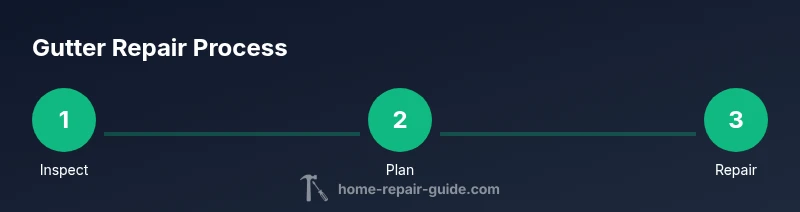
A practical approach to gutter repairs combines diagnosis, cleaning, and securement. Start by inspecting for leaks at joints and seams, then clean out debris to reveal the true condition. Re-secure or replace loose hangers to restore the correct slope. Use compatible sealant on small leaks and reseal end caps or elbows as needed. For damaged sections, cut out the bad segment and replace with a matching piece, ensuring a tight seal and proper alignment. After any repair, run water through the system to confirm drainage is smooth. Always work from a stable ladder and wear eye protection when handling metal parts. If you detect structural damage to the fascia or roof edge, stop and call a professional to avoid compromising the roof.
Tools, safety, and maintenance practices
Maintenance is the long-term savings here. Clean gutters at least twice a year and after major storms to prevent debris buildup, which accelerates wear. Replace defective hangers before they fail completely. Consider installing gutter guards or micro-mesh covers to reduce debris but ensure the guards are appropriate for your gutter type. Check for proper drainage by observing water flow during a rain test; adjust slope as needed. When working on ladders, maintain three points of contact, secure the ladder on stable ground, and never lean over the edge. If you encounter persistent leaks that do not respond to resealing, assess the overall condition and potential replacement rather than patching.
Material guides: aluminum, steel, vinyl, copper
Different materials require different repair strategies. Aluminum gutters are common and relatively easy to patch with rivets or sealant; vinyl is lightweight but can crack in cold weather and may need more careful sealing. Steel gutters are sturdy but prone to rust; repairs often involve rust treatment and priming before painting. Copper gutters offer longevity and a distinctive look, but repairs may require specialized fittings. Always match fasteners and sealants to the material to prevent galvanic corrosion. If you’re unsure, consult manufacturer guidance for your gutter type and consider color-matching paint to protect exposed metal after repairs.
Emergency fixes and seasonal considerations
If a storm leaves your gutters severely bent or detached, perform a temporary stabilization using zip ties or temporary bracing until you can complete a proper repair. In winter, avoid applying sealants that require curing time in freezing temperatures; instead, focus on clearing ice dam buildup and ensuring downspouts are open. Spring and fall provide the best windows to complete a thorough gutter overhaul, allowing time to dry and for paint to cure after repairs. Proactively plan ahead for heavy rainfall seasons and schedule maintenance to keep gutters functioning reliably throughout the year.
Tools & Materials
- Stable ladder rated for weight and height(Extend at least 3 feet above the gutter edge)
- Work gloves(Grip and protect hands while handling metal)
- Safety goggles(Protect eyes from debris and sealant splashes)
- Putty knife or tin snips(For scraping old sealant and cutting metal (if needed))
- Caulk gun with gutter sealant or silicone sealant(Choose weather-resistant sealant compatible with gutter material)
- Gutter screws or rivets and a driver or rivet gun(Use corrosion-resistant fasteners matched to material)
- Hangers/brackets replacement kit(New hangers to re-support sagging sections)
- Replacement gutter section or patch kit(Optional for damaged spans; ensure exact width)
- Bucket or tarp, and hose or water spray bottle(To test drainage after repair)
- Tin snips or metal file(Trim edges to a clean fit if replacing sections)
Steps
Estimated time: 1-3 hours
- 1
Inspect and plan
Survey gutters from ground level and from a safe ladder. Identify leaks, loose hangers, corrosion, and damaged sections. Plan the repair sequence and gather matching materials before climbing down.
Tip: Always start with the simplest fix (tighten hangers or reseal joints) before replacing sections. - 2
Clean and dry the gutters
Remove leaves and debris with gloved hands or a scoop. Rinse with water and let dry completely to see true leaks and openings.
Tip: Dry surfaces ensure sealants adhere properly for lasting repairs. - 3
Secure hangers and reseat sections
Tighten or replace loose hangers. Re-align sagging spans to restore a uniform slope toward downspouts.
Tip: Maintain slope of about 1/16 inch per 10 feet for proper drainage. - 4
Seal leaks and joints
Apply compatible sealant along seams, end caps, and around penetrations. Smooth with a finger or tool to ensure a watertight bead.
Tip: Allow sealant to cure as per manufacturer instructions before testing. - 5
Repair or replace damaged sections
Patch small holes with patch kits or cut and replace a damaged span with a matching piece. Seal both ends well to prevent leaks.
Tip: When replacing, cut straight and align seams tightly to avoid future leaks. - 6
Test and finalize
Run water through the system or wait for a rain event to verify drainage and seal integrity. Address any new leaks promptly.
Tip: Check downstream areas to ensure water isn’t escaping near foundation.
FAQ
What is gutter repair and when is it needed?
Gutter repair involves fixing leaks, re-aligning sections, and replacing damaged parts so water drains away from the home. It’s needed when leaks, sagging, or corrosion are observed, or after severe storms. Timely repairs prevent foundation and fascia damage.
Gutter repair means fixing leaks, realigning parts, and replacing damaged sections to keep water away from your home. Do repairs when you see leaks or sagging to protect your foundation.
Can I perform gutter repairs myself?
Yes, many basic repairs are suitable for DIY, especially cleaning, reseating hangers, and sealing leaks. More complex work or large-scale replacements may require a professional, particularly if it involves ladder safety or structural damage to the fascia.
Many basic gutter repairs can be DIY, like cleaning and resealing. For complicated work or roof access, consider a professional.
How often should gutters be inspected?
Inspect gutters at least twice a year and after major storms. Look for leaks, loose hangers, corrosion, and blockages. Regular checks help catch issues before they cause damage.
Check gutters twice a year and after big storms to catch leaks and blockages early.
What tools are essential for gutter repair?
Essential tools include a sturdy ladder, gloves, safety glasses, sealant, caulk gun, screw or rivet gun, and replacement hangers or sections. Always match materials to your gutter type.
Keep a ladder, gloves, sealant, and a rivet gun handy for most gutter repairs.
What are warning signs of dangerous gutter damage?
Warning signs include persistent leaks after resealing, visible cracks or holes, sagging gutters pulling away from the house, and rust or fascia rot. If you see structural damage, stop repair and seek professional help.
Look for leaks that won’t seal, cracks, sagging, rust, or rotted fascia; stop and call a pro if you see structural damage.
Should I use guards or covers with gutters?
Gutter guards can reduce debris buildup, but they require proper installation and compatible sizing. Confirm guard type matches your gutter material and climate for long-term performance.
Gutter guards can help, but choose the right type and install them correctly for your gutters.
Watch Video
Key Takeaways
- Inspect gutters regularly and address leaks early
- Choose repairs based on material and extent of damage
- Secure hangers to restore proper slope and drainage
- Test after repairs to verify water flow
- Consider maintenance upgrades like guards to reduce future work