Repair Well Pump: A Practical Step-by-Step Guide for Homeowners
Learn to diagnose and repair a well pump safely with a practical, step-by-step approach. This Home Repair Guide tutorial covers electrical checks, pressure tank and switch setup, and maintenance to prevent future failures.


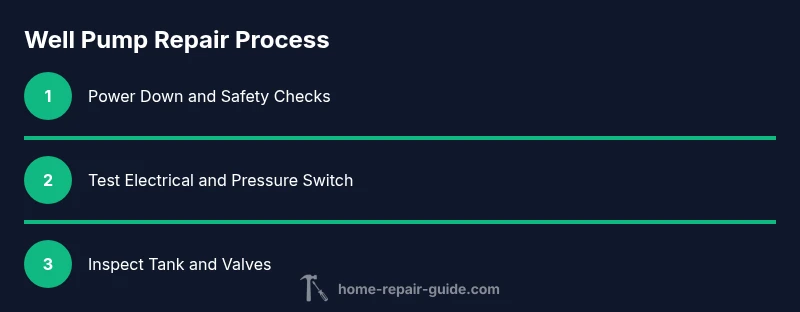
You will learn to diagnose and repair a well pump safely. You'll verify power, inspect the pressure tank and switch, test the pump and valves, and perform controlled replacements as needed. This guide emphasizes stepwise checks, essential tools, and safety precautions to prevent electric shock or water leaks. Follow the steps, take notes, and test the system thoroughly after each adjustment.
Why a Well Pump Fails and What Repair Entails
The well pump is the heart of your home's water supply. When it fails, you may notice no water, weak pressure, or unusual noises. According to Home Repair Guide, many issues trace back to electrical supply problems, a misadjusted pressure switch, or a failing pressure tank. Understanding these causes helps you plan a safe repair rather than guessing. This section explains the typical failure modes and why repairing them matters for reliability and water efficiency. You’ll learn to recognize symptoms, distinguish between simple fixes and component replacements, and assign realistic timeframes so you can decide whether to tackle the job yourself or call a professional. Real-world homes often encounter slow pressure rises or sudden loss of water; the reason is frequently straightforward, but a careful approach prevents unnecessary parts replacement. A cautious homeowner can gain confidence by testing each part in sequence and documenting results for future maintenance. Home Repair Guide's approach emphasizes safety first, followed by methodical checks, so you can complete the work with minimal downtime and disruption to your household.
Diagnosing Common Causes Before You Start
Before you touch any equipment, map the problem with methodical checks. Start with the basics: is there power to the pump and is the circuit breaker in good condition? If power is present but the pump won't start, listen for motor hums or grinding sounds that indicate electrical faults or worn bearings. Next, inspect the pressure switch and gauge. A misadjusted or stuck switch is a frequent culprit for drops in pressure or cycling on and off. In many homes, the pressure tank has lost its air charge or developed a leak, which makes the system unable to build consistent pressure. Home Repair Guide analysis shows that tanks with improper air charge are a leading cause of fluctuating pressure. Finally, check the check valve and foot valve at the well; a failure here can allow backflow and make the pump work harder than necessary. Document observations and test results; these notes will guide the repairs or a pro’s visit. If you feel uncertain or the system shows signs of water contamination, stop and call a licensed plumber or pump technician.
Safety, Prep, and the Right Mindset
Repairing a well pump involves electrical, plumbing, and water systems. Prioritize safety at every step. Begin by turning off power at the main disconnect and then at the circuit breaker feeding the pump; use a non-contact voltage tester to confirm zero potential before touching conductors. Wear protective gloves and eye protection, and keep children and pets away from the workspace. Gather the necessary tools and materials before you start to avoid mid-work trips to the toolbox. Clear the area around the well and tank to prevent accidental spills or leaks. Develop a plan: identify the symptoms, isolate the problem, and perform checks in a logical order. Remember that many pump failures are caused by simple, low-cost components rather than a whole pump replacement. If you encounter stored pressure in the tank, release it slowly through the air valve. Home Repair Guide recommends documenting every step and testing after each action to prevent repeating work.
Electrical Checks and Switch Adjustments
Electrical checks are foundational. Start by verifying the power is off, then test the pump's wiring and pressure switch with a multimeter or a dedicated tester. A blown fuse or tripped breaker is an obvious fix, but many times the issue is a faulty pressure switch that won't engage the motor. If the switch is dusty, corroded, or physically damaged, replace it with a compatible model and recalibrate the cut-in and cut-out pressures according to your water needs and the tank size. After installing any electrical component, double-check connections, replace the cover, and restore power to confirm operation. If the motor hums but does not start, you may be dealing with a seized bearing, worn capacitor, or a failing start switch. In this case, you’ll need a more detailed assessment or professional service.
Pressure Tank, Air Charge, and Water Pressure
The pressure tank stores energy to keep water pressure stable between pump cycles. A common issue is loss of air charge, which causes short cycling and reduced flow. Use a tire pressure gauge to measure the air pressure with the tank depressurized, then set the air charge to 2 psi below the home's cut-in pressure (typically around 38–40 psi for many systems). After charging, re-seal the tank and re-test. If the tank shows signs of rust, corrosion, or leaks, it may need replacement. The next check is the pump’s ability to maintain target pressure. If the gauge reads unstable or the system can't reach setpoints, you may need to recalibrate the pressure switch or replace the pressure tank accumulator. Keep a log of readings and shutoffs to monitor performance over time.
Inspecting the Pump and Valves for Leaks and Wear
Inspect the pump casing for signs of leaking seals, worn impellers, or corroded discharge ports. A leaking seal can reduce efficiency and cause air infiltration. For well pumps with a bronze body or stainless steel design, check the power cord for cracks and inspect the motor for overheating. If you observe backflow through the check valve, install a new valve and ensure a proper seating with Teflon tape on threaded connections. For barefoot testing, avoid running the pump dry; always ensure there is water in the line before powering up. Consult a manual for the exact torque specs and replacement parts for your pump model.
Replacing Components and Re-testing the System
When a component is truly faulty, replacement is the most reliable path. This includes a corroded pressure switch, a faulty capacitor, or a seized motor bearing. Source compatible parts from a reputable supplier and follow the manufacturer’s instructions. After replacement, reassemble connections, restore power, and run a thorough test: watch the pressure gauge as the system builds pressure, listen for unusual noises, and observe water flow from fixtures. If the water quality is compromised, flush the lines and analyze well water for contaminants. Record the results of each test so you can compare performance over time.
Maintenance, Validation, and When to Call a Pro
Prevention saves time and money. Schedule regular checks of the pressure tank, switch settings, valve seats, and electrical connections. An annual inspection can catch deterioration before it disrupts water supply. Keep spare parts on hand for quick fixes and consider installing a surge protector if your well pump is exposed to power surges. If the pump continues to struggle after basic repairs, or if you hesitate about any electrical work, contact a licensed plumber or pump technician. The Home Repair Guide team emphasizes safety and thorough testing; our verdict is that proactive maintenance minimizes downtime and protects your home’s essential water supply.
Tools & Materials
- Safety gloves(nitrile recommended; avoid latex if you have allergies)
- Safety glasses(eye protection against splashes and debris)
- Non-conductor voltage tester or multimeter(to confirm power is off)
- Wrench set and adjustable pliers(for fittings and clamps)
- Screwdrivers (flathead and Phillips)(for switches, caps)
- Pipe wrench(for tight unions and check valve)
- Teflon tape and pipe sealant(for threaded connections)
- Pressure gauge(optional if your system lacks one)
- Air compressor and tire gauge(for charging the pressure tank)
- Replacement pressure switch(only if diagnosed faulty)
- Replacement check valve or impeller seals(as needed based on inspection)
Steps
Estimated time: 60-120 minutes
- 1
Power down and secure the area
Turn off the circuit breaker and the outdoor disconnect; verify zero voltage with tester. Remove access panels and keep children away from the workspace. This prevents accidental shocks while you inspect components.
Tip: Always double-check power with the tester before touching any wires. - 2
Test for power and reset if needed
Check for power at the switch using a meter. If power exists but the pump won’t start, inspect wiring for loose connections or damaged insulation. If you find a resettable breaker, reset it and re-test after waiting 30 seconds.
Tip: Avoid pulling on wires; use appropriate insulated tools. - 3
Inspect pressure tank and air charge
Relieve any stored pressure, measure the air charge, and set it 2 psi below the cut-in pressure. Re-seal the tank after charging and re-test the system. A bad air charge commonly causes short cycling and unstable pressure.
Tip: Use a tire gauge for accuracy and document the target pressure. - 4
Test the pressure switch settings
Disconnect power, adjust the cut-in and cut-out settings according to your system specifications, then re-connect power and observe the switch operation. If the switch sticks or fails to engage the motor, replace it with a compatible unit.
Tip: Make small adjustments and test incrementally to avoid overshoot. - 5
Inspect pump and valves for leaks
Look for leaks around seals, gaskets, and discharge ports. Tighten fittings as needed and replace worn seals. If a check valve leaks, replace it and reseat threads with Teflon tape.
Tip: Never run the pump dry; fill the line with water before testing. - 6
Replace faulty components
Install new components only after confirming a specific fault (switch, capacitor, ring seal, or impeller). Follow manufacturer torque specs and store the old parts for reference.
Tip: Keep track of part numbers and installation dates. - 7
Reconnect power and perform system test
Restore power and run taps in the home to observe pressure build and fall. Listen for abnormal noises and verify steady water flow. If issues persist, you may need a professional assessment.
Tip: Test multiple outlets to ensure uniform pressure. - 8
Document results and plan follow-up maintenance
Record readings, replacement parts, and dates. Schedule annual checks and consider a maintenance calendar to prevent future failures.
Tip: A simple maintenance log helps track system health over time.
FAQ
What are the most common signs that my well pump needs repair?
No water, low pressure, unusual noises, or frequent cycling are typical indicators. Leaks around valves or fittings also signal issues.
Look for no water, weak pressure, strange noises, or constant cycling as typical signs.
Can I repair a well pump myself, or should I hire a pro?
Some minor tasks, like replacing a pressure switch or reseating connections, can be DIY. Electrical work and well-tumping components may require a licensed professional.
Small tasks are doable for many homeowners; for electrical or well components, consider a pro.
How do I test the pressure switch safely?
Power off, access the switch, and verify continuity with a meter. Adjust setpoints gradually if needed and retest after each change.
Turn off power, test with a meter, and adjust slowly if required.
What maintenance steps prevent future well pump failures?
Regularly check air charge, pressure settings, seals, and leaks. Keep the area clean and replace worn parts before they fail.
Do routine checks and replace worn parts before they fail.
When should I replace the pressure tank?
Replace if the tank rusts, bulges, leaks, or cannot hold air. A failing tank often causes cycling and pressure drops.
Replace rusted or leaking tanks that can't hold air.
Is it dangerous to work on a well pump?
Yes. Electrical and pressurized water systems pose hazards. Use proper PPE, follow safety steps, and seek professional help if unsure.
It can be dangerous; take precautions and call a pro if unsure.
Watch Video
Key Takeaways
- Identify root causes before replacing parts.
- Prioritize safety and proper testing after each step.
- Maintain a log of readings for ongoing reliability.
- Know when to call a professional to prevent hazards.