Repair Pool Pump: A Comprehensive Step-by-Step Home Guide
Learn to diagnose and repair a pool pump with practical steps. This Home Repair Guide tutorial covers tools, failures, and maintenance for reliable operation.


In this quick guide, you’ll learn how to diagnose and repair a pool pump with a practical, step-by-step approach. You’ll identify common failure modes, assemble the right tools, and execute a safe repair that restores circulation. This plan targets homeowners and renters who want durable fixes and better long-term pool performance.
How a pool pump works and key terms
A pool pump is the heart of your circulating system. It draws water from the pool through the skimmer and main drain, passes it through the filter, and pushes it back into the pool through return lines. Understanding a few terms helps you diagnose problems quickly: the impeller is a small, high-speed blade inside the pump that accelerates water; the seal and gasket prevent leaks where the pump meets the motor; the volute is the housing that directs water. Water flow begins with the water entering the skimmer, moving through the strainer basket to remove debris, and then entering the pump basket where the impeller sits. The motor drives the impeller; when it spins, it creates suction that draws water in and pressure that pushes it out through the discharge. If air enters the system, you may see air in the strainer, reduced flow, or bubbles in return jets. Leaks around the lid, housing joints, or seals indicate worn o-rings or shaft seals and can cause energy waste and short cycling. Regular checks help you catch wear early before a failure. Home Repair Guide emphasizes that even small seal leaks can add up over a season, so addressing leaks early saves water and energy. This knowledge sets the foundation for the hands-on repair steps that follow.
Diagnosing common issues: noise, leaks, pressure changes
Most pool pump problems fall into a few predictable categories. A loud grinding or squealing noise often signals bearing wear or a failing motor. Chattering or humming without the pump actually starting may indicate a seized impeller or electrical fault. Leaks are usually visible at the lid O-ring, pump housing joints, or the shaft seal; even tiny leaks raise air in the system and reduce prime. Low flow or reduced pressure is commonly caused by a clogged impeller, dirty strainer basket, or air leaks that siphon away suction. If you notice air in the pump housing or visible bubbles in the return lines, inspect the lid o-ring first, then trace lines for cracks or loose fittings. Always ensure the strainer basket is clean and the filter backwash cycles are not misconfigured. The Home Repair Guide team notes that diagnosing early helps prevent costly repairs and minimizes downtime for your pool. For accurate results, run the pump with all covers secured and observe the gauge on the filter for abnormal pressure spikes. Based on Home Repair Guide analysis, the most frequent failures involve worn seals and debris-clogged impellers, so start there when diagnosing.
Safety and electrical basics: working with pool pumps safely
Electrical safety is non-negotiable when repairing pool pumps. Always power down at the circuit breaker before touching any wiring, and lock out the switch to prevent accidental re-energizing. If you must work near water, keep dry hands, use insulated tools, and wear non-slip footwear. Disconnecting power and draining the pump housing prevents electric shock and short circuits. Read the manufacturer’s manual for the correct torque on electrical connections, and never bypass a ground fault or RCD. If you smell burning, hear sizzling, or notice melted insulation, stop immediately and consult a qualified electrician. Before testing, confirm that the GFCI or outdoor outlet is functioning and that a residual current is not leaking to ground. The Home Repair Guide team recommends a conservative approach: address obvious issues first, and escalate to professional help when dealing with belt-driven motors or capacitor faults.
Tools, replacement parts, and where to source them
Begin with a clean workspace and a well-lit area around the pump. Typical tools for pool pump work include a set of screwdrivers (Phillips and flat), an adjustable wrench, locking pliers, and a torque wrench for electrical terminations. A fresh O-ring kit for the lid and the pump seals is essential, as are replacement impeller parts if the rotor is damaged. Teflon tape is useful for threaded connections, and a small pump seal lubricant helps you seat seals smoothly without pinching. Keep a spare basket, gasket, and any ride-along components so you can complete the job in one pass. If your pool uses a large-capacity pump or an energy-efficient model, you may need a specialty tool to access the impeller nut. Source replacements from reputable pool supply stores or manufacturers’ catalogs to ensure compatibility. Always compare the pump model number, capacitor rating, and seal size to the replacement kit. The Home Repair Guide team notes that planning ahead with a parts list reduces downtime and improves repair outcomes.
Repair planning and maintenance: when to repair and when to replace
Not every pump problem warrants a full replacement. If the motor hums but won’t start, you may be looking at a capacitor issue or a stuck rotor that can be freed with proper care. If the impeller is corroded or the shaft seal leaks significantly, replacement parts or a new pump may be more cost-effective than ongoing repairs. Evaluate the age of the equipment, energy efficiency, and the cost of parts versus a replacement unit with a similar flow rate. Routine maintenance—cleaning baskets, inspecting seals, and testing pressure—extends life and reduces unexpected downtime. Consider keeping a simple maintenance schedule: monthly visual checks, quarterly seal inspection, and annual professional inspection for high-use pools. The Home Repair Guide team emphasizes documenting repairs with photos and notes to inform future service and help you budget for replacements when needed.
Seasonal maintenance and energy efficiency: keeping the pump in top shape
Seasonal care helps preserve pump efficiency and water clarity. In the offseason, winterize the pump by draining water from the housing and protecting exposed seals from cold. During the peak season, clean debris from skimmers and baskets, check the seal O-rings, and ensure that the pump is properly primed. A well-sealed system reduces air leaks, saving energy and improving pump life. Consider evaluating energy efficiency: a modern variable-speed pump can reduce electricity usage substantially, but even a single-speed unit benefits from routine cleaning and seal maintenance. The Home Repair Guide analysis shows that proactive maintenance leads to fewer emergency repairs and lower operating costs over time.
Final checklist before powering up: avoid common mistakes
Before restarting, verify that all screws are tightened to the manufacturer’s torque specification, the electrical connections are secure, and the pump lid O-ring is seated properly. Reconnect power and slowly bring the system online, watching for unusual noise or leaks. Check the pressure gauge on the filter; a sudden spike or drop indicates issues in the suction or discharge lines. If you observe air bubbles, re-check the lid seal and any suction-source connections. Remember to keep children and pets away during testing and to never run the pump without a sealed lid or with a missing basket. Following these steps helps you avoid common mistakes and extend the life of your pool pump.
Tools & Materials
- Locking pliers(Holding nuts and hoses steady during disassembly)
- Screwdriver set (Phillips and flat)(For screws on pump housing and lid)
- Adjustable wrench(Use for unions and fittings)
- Teflon tape(Seal threaded connections)
- O-ring and seal kit for pump(Lid O-ring, shaft seal, gasket as needed)
- Replacement impeller (if needed)(Only if the impeller shows wear or clogging)
- Bucket or tray(Keep removed parts organized)
- Multimeter (optional)(For basic electrical checks)
Steps
Estimated time: 60-90 minutes
- 1
Power down and prepare
Switch off the circuit breaker feeding the pool pump and disconnect all power sources. Verify there is no voltage at the motor terminals using a non-contact tester or multimeter. Water and electricity are a dangerous combination, so take a moment to confirm safety before touching any components.
Tip: Use a lockout-tagout device to prevent accidental re-energizing during the repair. - 2
Access the pump and inspect the seal
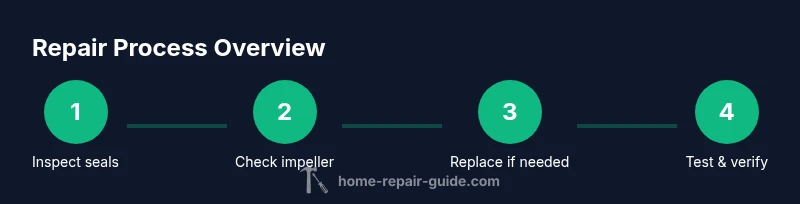
Remove the pump lid and inspect the O-ring for cracks or deformation. Clean the groove and replace the O-ring if needed. If you can see moisture or dampness around the seal, plan to replace the shaft seal as part of the repair.
Tip: Lube the new O-ring lightly with pool-safe silicone grease to ensure a proper seal. - 3
Check the impeller for clogs
Remove the impeller cover plate and inspect the impeller blades for debris or a jam. If debris is present, clear it gently and spin the impeller by hand to ensure it rotates freely. A clogged impeller reduces suction and can overheat the motor.
Tip: Do not force the impeller; if it is hard to turn, there may be bearing damage that requires professional service. - 4
Inspect and replace seals or gaskets
Inspect the shaft seal for wear and replace the seal kit if you observe leakage at the shaft. Replace any worn gaskets on the discharge and suction connections. Reassemble the housing and ensure all caps and screws are snug to avoid future leaks.
Tip: Always replace both sides of the seal kit even if only one side shows wear. - 5
Check electrical components
Verify wiring connections are tight and free of corrosion. If the motor hums but won’t start, test the capacitor (if accessible) with a multimeter that has a capacitance test function. Replace a faulty capacitor only if you are comfortable with capacitors, or consult a licensed electrician.
Tip: Do not touch capacitor terminals after disconnection; discharge residual charge safely with the correct procedure. - 6
Reassemble and test
Reassemble the pump housing, insert the basket, reseal the lid, and reconnect power. Prime the system if necessary and observe the pump for a full cycle. Check for leaks and verify proper water flow from the returns. Turn on the system gradually to verify normal operation.
Tip: Take photos during disassembly to aid reassembly and avoid cross-wiring.
FAQ
What are the most common signs a pool pump needs repair?
Look for loud noises, leaks around seals, reduced water flow, air in the lines, and motor overheating. These indicate wear on seals, impellers, or bearings and merit inspection.
Common signs include loud noises, leaks, reduced flow, air in lines, and overheating—each points to wear in seals, impellers, or bearings.
Can I repair a pool pump myself or should I hire a pro?
Many routine issues, like seal replacement or impeller cleaning, are doable with basic tools and safety precautions. Electrical faults or motor replacement may require a licensed electrician or service technician.
Many seal and impeller repairs are doable yourself if you follow safety steps; electrical issues may require a pro.
How long does a typical pool pump repair take?
A straightforward seal or impeller replacement can take 1-2 hours, while more complex electrical checks or motor replacements may take longer. Plan for a few hours if you are less experienced.
Most repairs take between one and two hours for simple fixes, longer for electrical or motor work.
What maintenance prevents pump failure?
Regularly clean strainer baskets, inspect O-rings for cracks, check for leaks, and winterize the pump when the pool is not in season. Periodic professional inspections help catch wear early.
Keep baskets clean, check seals, and winterize when not in use; periodic checks help catch wear early.
Is it safe to operate with a loose lid or damaged seal?
No. A loose lid or damaged seal can cause air leaks, reduce suction, and present safety hazards. Replace seals promptly and re-tighten all fasteners during reassembly.
No—operate only with secure seals to prevent leaks and hazards.
Watch Video
Key Takeaways
- Power down before servicing; safety first.
- Inspect seals and impeller for wear or clogs.
- Replace worn O-rings and seals to prevent leaks.
- Test the system slowly and observe for leaks and proper flow.
- Consider efficiency upgrades if the pump is old