Car A/C Condenser Repair: A Practical Step-by-Step Guide for Homeowners
Learn how to inspect, source parts, and safely approach car A/C condenser repair. This guide covers symptoms, diagnosis, replacement vs. repair options, and when to call a professional for refrigerant handling and system recharge.


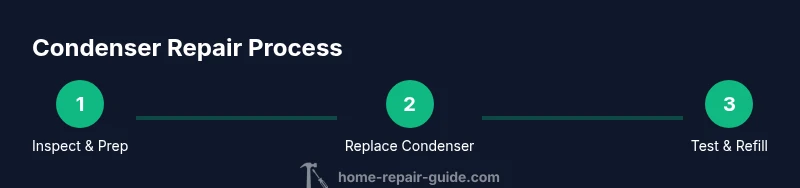
This guide helps you understand how to inspect, plan for, and replace a faulty car a c condenser repair. You’ll identify symptoms, source a compatible condenser, and follow safe removal and installation steps. Note that handling refrigerant requires licensing in many areas, so plan professional recharge if needed.
Understanding the car a c condenser repair and its role in cooling
According to Home Repair Guide, the car A/C condenser is a critical heat exchanger that sits at the front of the vehicle, just behind the grille. It mirrors the function of a radiator but works with refrigerant rather than engine coolant. When refrigerant absorbs heat from the cabin, it is condensed back into a liquid by the condenser. Common causes of failure include impact damage, blocked fins from road debris, corrosion, and leaks in the connections. A failing condenser often leads to reduced cooling performance, higher cabin temperatures, and higher pressures in the system. For homeowners attempting a car a c condenser repair, recognize that many symptoms—weak airflow, warm air, and recurring refrigerant smells—signal a condenser problem rather than a simple fan issue. The Home Repair Guide team emphasizes planning, safety, and clear sourcing to avoid misdiagnosis and costly fixes.
Signs your condenser may need attention
Visible signs of condenser trouble include bent or broken cooling fins, oil stains at hose connections, and obvious coolant leaks near the front end. Pressure readings that stay high on both high- and low-side gauges can indicate a restricted flow or a failed condenser. In older vehicles, debris buildup from bugs, sand, or salt can clog fins and impede heat transfer. Remember that diagnosing A/C concerns can be nuanced: a compressor or expansion valve could mimic condenser symptoms. Start with a visual inspection, listen for unusual noises when the A/C is active, and confirm that airflow through the radiator remains unrestricted. That is the first step toward an accurate assessment and cost-aware planning.
Preparation and safety for homeowners
Before attempting any condenser work, set the vehicle on a level surface, engage the parking brake, and use wheel chocks. Disconnect the battery to minimize electrical risks while you work around the engine bay. Wear eye protection, gloves, and long sleeves to guard against sharp fins and hot components. If you must open refrigerant lines or discharge the system, know that refrigerant handling is regulated in many places and should be performed by a licensed technician. This guide focuses on inspection, part sourcing, and safe removal/installation practices that you can perform without compromising safety or legality.
Replacement vs repair: making the right call
Condenser damage from impact or corrosion often makes repair impractical. In many cases, replacement is the more reliable path and can prevent recurring failures in the same area. If a condenser shows minor cosmetic damage but no leaks and heat transfer is still adequate, some technicians consider cleaning and minor repair techniques as a temporary measure. Always compare the cost of a new condenser, the labor time, and the potential need for related parts (hoses, o-rings, and mounting hardware). The trade-off between a DIY replacement and professional service should factor in system integrity, warranty coverage, and local regulations about refrigerant handling.
What a homeowner can reasonably achieve
A homeowner can perform a safe inspection, source a compatible condenser, and manage the exterior removal/installation sequence with the right tools and guidance. The actual refrigerant evacuation, recharge, and pressure testing should be left to a licensed technician to comply with environmental and safety regulations. By assembling the replacement parts, documenting the existing clamp positions, and reinstalling the new condenser with correct torque on mounting bolts, you set up a successful outcome while avoiding damage to the engine bay.
Transitioning to professional service when needed
If you encounter refrigerant smell, a persistent leak, or uncertain pressure readings, plan a stopgap solution and schedule a professional recharge and leak check. Even with a successful condenser replacement, the system must be evacuated and recharged under controlled conditions. The Home Repair Guide team recommends prioritizing safety and compliance over shortcuts, ensuring the vehicle remains reliable and compliant with local laws.
Tools & Materials
- Vehicle jack and jack stands(Support vehicle securely; never rely on a jack alone.)
- Wheel chocks(Place behind wheels to prevent rolling.)
- Socket set (metric and standard)(Various sizes for bolts and clamps.)
- Screwdrivers (Phillips and flathead)(For removing trim and components.)
- Pliers and adjustable wrench(Disconnect hoses and clamps safely.)
- Safety glasses and gloves(Protect from sharp fins and hot surfaces.)
- Replacement condenser(Ensure model matches VIN and year.)
- O-rings and mounting hardware kit(Replace any seals affected by removal.)
- Leak dye and UV flashlight (optional)(Helps locate leaks during inspection.)
- Refrigerant recovery and recharge equipment (optional)(In many regions, handling refrigerant requires certification.)
Steps
Estimated time: 2-4 hours
- 1
Prepare workspace and safety gear
Park on a level surface, engage the parking brake, and chock the wheels. Put on safety glasses and gloves. Disconnect the battery to minimize electrical risk before touching engine bay components.
Tip: Use a headlamp to clearly see the condenser and surrounding hoses. - 2
Relieve and avoid refrigerant exposure
If you must access gas lines, do not vent refrigerant. Use proper recovery tools or arrange for a licensed technician to recover refrigerant before removing components.
Tip: Never open high-pressure lines without proper equipment. - 3
Access and disconnect the condenser
Remove the grille and fans as needed to expose the condenser. Loosen mounting bolts and carefully detach the inlet/outlet hoses and electrical connectors.
Tip: Document clamp positions for easier reassembly. - 4
Remove the old condenser
Carefully remove the condenser from the front of the radiator. Check for bent fins and inspect mounting brackets for damage that may need replacement.
Tip: Protect the radiator and other nearby components from impact. - 5
Install the new condenser
Align the new condenser with the mounting points and reinstall hoses and connectors with new O-rings. Torque bolts to factory specs and reattach the grille and fans.
Tip: Lubricate O-rings with clean refrigerant oil if permitted by your kit. - 6
Inspect for leaks and reassemble
Do a visual leak check and ensure there are no loose clamps. Reassemble all panels and clear area of tools before starting the engine.
Tip: Leave refrigerant recharge to a pro if you are not certified. - 7
Test cooling performance with professional recharge
Start the vehicle and run the A/C on max cooling. Watch for cold air output and listen for unusual noises. Do not attempt to recharge without proper equipment; schedule a professional service.
Tip: If you detect warm air, stop and call a technician for a proper evac and recharge.
FAQ
Is it safe to drive the car with a suspected condenser leak?
Driving with a suspected condenser leak can reduce cooling efficiency and may pose refrigerant exposure risks. If you notice persistent leaks, overheating, or reduced cooling, limit driving and arrange professional service for leak repair and system recharge.
If you suspect a condenser leak, limit driving and get it checked soon. It can be unsafe to operate long-term.
Can I repair a damaged condenser instead of replacing it?
Minor damage or clogged fins may be addressed, but most structural leaks or bent cores require replacing the condenser to restore reliable cooling. Compare repair feasibility with the cost of replacement and warranty implications.
Repair can work for minor issues, but replacement is often the safer, more reliable option.
Will I need to recharge the refrigerant after replacing the condenser?
Yes. After a condenser replacement, the system must be evacuated and recharged using the correct refrigerant type. This step should be performed by a licensed technician following environmental regulations.
Expect a professional recharge after replacement to comply with regulations.
How long does a condenser replacement typically take?
Typical replacement and inspection can take several hours depending on vehicle make and accessibility. A professional shop may offer a same-day service, but labor time varies by model.
Most shops estimate a few hours for parts replacement and system check.
What maintenance helps prevent condenser failure?
Regularly inspect the grille and fins for debris, clean the front end, and address minor leaks promptly. Using a protective guard or bumper design helps reduce front-end impact damage that can affect the condenser.
Keep the front clean and inspect for damage to prevent future failures.
Watch Video
Key Takeaways
- Assess condenser symptoms before opening the system.
- Replace rather than repair when damage is significant.
- Document steps and use correct torque and seals.
- Schedule professional recharge to comply with regulations.