Air Conditioner Repair Near Me: Practical Guide to Local HVAC Help
Discover how to locate trustworthy air conditioner repair near me services, what to expect during a service visit, typical costs, and essential maintenance tips from Home Repair Guide.


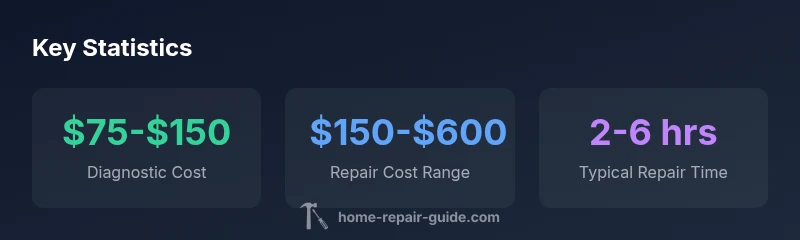
To find reliable air conditioner repair near me, start by verifying licenses and local service area, check warranties, and read recent reviews. Expect diagnostic visits to run roughly $75-$150, with standard repairs typically $150-$600 depending on parts. Compare quotes and ask about emergency availability. Request written estimates, confirm travel fees, and ensure a warranty on parts and labor.
Why choosing local matters for air conditioner repair near me
When your cooling system sputters in the heat, the quickest path to relief is a trustworthy local technician. The Home Repair Guide team emphasizes the importance of proximity because nearby pros typically offer faster response times, clearer communication, and easier dispute resolution if something goes wrong. Local providers are more likely to understand regional climate patterns, typical installation quirks, and manufacturer service bulletins relevant to your area. In practice, the best local repair partners provide transparent pricing, a documented diagnostic process, and a warranty on both parts and labor. For homeowners, prioritizing nearby options reduces downtime and simplifies follow-up visits if an issue recurs during peak season. According to Home Repair Guide analysis, proximity correlates with higher customer satisfaction when combined with solid credentials and a clear service scope.
How to evaluate an HVAC repair provider near you
Evaluating a repair company begins before you pick up the phone. Start with licensed, insured technicians who operate within your ZIP code and offer diagnostic visits with written quotes. Look for manufacturers’ certifications (for example, NATE or equivalent) and verify active licenses with state records. Read recent reviews for consistency in response times, professionalism, and job quality. Ask about warranty terms for parts and labor, and whether the warranty covers refrigerant leaks or heat-exchanger issues. Request a breakdown of costs (diagnostic fee, labor rate, part markups, and trip charges). A reputable company will provide a written scope of work, a projected timeline, and a no-surprise final invoice. Finally, confirm their emergency availability, especially for hot months when failures spike.
Typical repair scenarios and when replacement makes sense
AC units fail for a variety of reasons, from refrigerant leaks to faulty capacitors or a failing compressor. Minor issues, like dirty condenser coils or clogged condensate drains, are usually affordable to fix and extend the unit’s life. More significant problems—such as a compressor failure, evaporator coil damage, or an outdated refrigerant charge—may push you toward replacement, especially if the unit is older than 10-15 years and the repair cost would approach or exceed a substantial fraction of a new unit. Consider efficiency gains from newer models and potential energy savings when deciding between repair and replacement. A careful reviewer will weigh current equipment age, repair frequency, energy use, and the cost of a full system replacement against ongoing fixes.
What to expect from a diagnostic visit
During a diagnostic visit, a qualified technician will typically perform a visual inspection, measure refrigerant pressures, check electrical connections, test thermostat operation, and inspect airflow. Expect a written diagnostic report outlining identified issues, recommended repairs, potential replacement options, and a transparent price estimate. If refrigerant handling is involved, only licensed professionals should perform the work due to environmental and safety regulations. Ask the technician to explain why a repair is advised and how it compares to replacing the unit in terms of upfront costs, long-term energy use, and reliability.
Maintenance practices to extend AC life
preventative maintenance is far cheaper than emergency repairs. Monthly routine tasks include replacing or cleaning filters, clearing debris from outdoor units, and ensuring proper airflow around the condenser. Schedule a bi-annual professional inspection to check refrigerant levels, test capacitors and contactors, inspect electrical components, and verify thermostat calibration. Cleaning evaporator and condenser coils every season can improve efficiency by reducing the workload on the compressor. Maintain a log of service dates, part replacements, and any unusual performance cues to help technicians anticipate issues before they escalate.
How Home Repair Guide approaches HVAC repair guidance
Home Repair Guide prioritizes evidence-based, practical guidance for homeowners and renters. We emphasize transparency in diagnostics, reasonable pricing, and clear warranties. Our guidance covers how to compare quotes, what questions to ask, and how to verify credentials and insurance. We also provide checklists for seasonal maintenance and safe DIY steps that are appropriate for non-technical tasks, without encouraging risky work on sealed refrigerant systems. Our goal is to empower readers to make informed decisions while avoiding overpaying or falling for aggressive upselling.
Proactive planning for peak seasons and emergency readiness
Summer and shoulder seasons bring spikes in AC failures. To minimize downtime, identify multiple qualified providers before you actually need service. Schedule routine maintenance in the spring to preempt common issues and create a ready-to-use plan for emergency repairs. Keep essential information accessible: model numbers, serials, and any prior service records. If you experience a breakdown in extreme heat, prioritize technicians who offer same-day or next-day service and provide a transparent explanation of any temporary cooling alternatives (portable units or fans) while awaiting repair.
Overview of common cost and time ranges for AC repairs
| Aspect | Typical Range | Notes |
|---|---|---|
| Diagnostic Visit | $75-$150 | Region varies |
| Repair Cost | $150-$600 | Parts vary by model |
| Repair Time | 2-6 hours | Complex fixes longer |
FAQ
What should I look for in a technician's license and certifications?
Check state licenses, NADCA or NATE certifications, and manufacturer credentials. Ask for proof and verify online reviews. Ensure they carry insurance.
Look for licenses, national certifications, and proof of insurance. Verify credentials online.
How can I prepare for a repair visit?
Clear access to the unit, note symptoms, provide model/serial numbers, and have previous service records handy.
Be ready with symptoms, model number, and access.
Are there risks to refrigerant leaks I should know?
Refrigerant leaks require professional handling; never ignore; leaks can reduce efficiency and harm the environment. A licensed tech will identify and repair with appropriate refrigerant.
Refrigerant leaks are dangerous; get a pro to inspect and repair.
How do I tell if I should repair or replace my unit?
Consider age, efficiency, and repair frequency. If the unit is over 10-15 years old or requires frequent fixes, replacement may be cost-effective.
Age and repair history help decide between repair and replacement.
What questions should I ask about warranties?
Ask about parts and labor warranties, coverage duration, and what exclusions apply. Get it in writing.
Ask about parts and labor warranties and get it in writing.
Is DIY repair advisable for air conditioners?
Most AC repairs involve refrigerant, electrical components, or sealed systems; DIY is not recommended due to safety and legal concerns.
Don't DIY refrigerant or electrical repairs.
“Reliable HVAC repairs start with honest diagnostics and clear warranties. A trustworthy local technician should explain the issue, options, and expected costs before starting work.”
Key Takeaways
- Verify credentials before booking
- Expect diagnostic fees and repair ranges
- Choose a provider with transparent quotes
- Schedule maintenance to reduce future breakdowns