Which Type of Puncture Repair Is Best: A Practical Comparison
A thorough, objective comparison of puncture repair methods for tires and tubes. Learn when to use bead-sealant, plugs, patches, or replacement, with practical steps and safety guidance from Home Repair Guide.


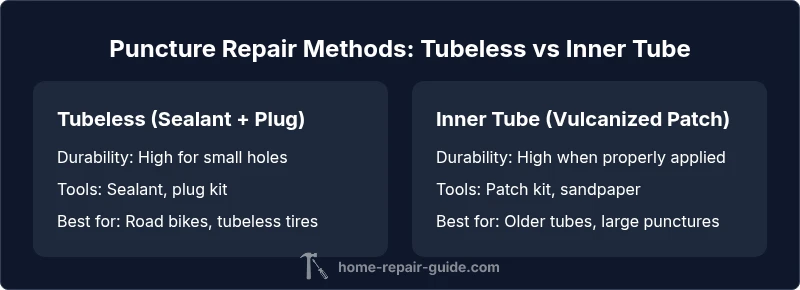
TL;DR: The best puncture repair method depends on tire type, puncture size, and the goal (quick fix vs. lasting seal). For tubeless tires, starting with sealant plus a plug can be durable, while inner tubes often benefit most from vulcanized patches. The right choice balances durability, ease, and safety given your situation.
Puncture Repair Basics
When homeowners ask which type of puncture repair is best, the answer hinges on the tire system (tubeless vs inner tube), puncture size, and whether you’re aiming for a temporary field fix or a durable, long-term seal. The Home Repair Guide team emphasizes a calm assessment: identify where the puncture occurred, the tire’s age, and whether the wheel was driven on while flat. For tubeless setups, you’ll usually rely on sealant to seal micro-punctures and then consider a mechanical repair if the hole is sizeable. For inner tubes, a vulcanized patch provides a reliable, lasting repair when applied correctly. Safety first: if the tire shows cords, bulges, or the wheel is compromised, replacement is safer than repair. This section also introduces the core decision factors that influence the best approach.
According to Home Repair Guide, context matters as much as technique. The most durable solution isn’t always the most convenient, and expertise often compensates for imperfect field conditions. Your approach should align with your vehicle type, tire construct, and the expected usage pattern.
In this guide, we’ll break down methods, provide practical steps, and compare outcomes so you can choose with confidence.
-1
Feature Comparison
| Feature | Bead-Sealant Method (Tubeless) | Plug-and-Patch Method (Tubeless or Tube-in-Tailure) | Vulcanized Patch (Inner Tube) | Sealant-Only for Tubeless |
|---|---|---|---|---|
| Durability of Repair | High when puncture is small and sealant engages; may require rework for larger holes | Moderate to high depending on hole size and plug integrity | High for a properly applied patch on a healthy tube | Medium; depends on sealant longevity and tire integrity |
| Ease of Use in Field | Moderate; requires tire removal or bead-breaking in some scenarios | Moderate; plug insertion can be quick but finding the hole is essential | Moderate; patches are straightforward but tube removal can be needed | High; no patching tools needed, but patch quality governs reliability |
| Best For | Tubeless tires with small punctures; road and performance setups | Medium punctures in tubeless or tubed tires where quick field fixes are needed | Inner tubes with accessible punctures; reliable long-term repair | Punctures in tubeless tires where sealant alone can suffice |
| Tools Required | Sealant, insertion tool, possibly tire levers, patch kit (if needed) | Plug kit, sealant compatibility check, tire levers | Patch kit, sandpaper, reinforcement (nerve to remove tube) | Sealant, cleanup cloth, tire lever for tubeless setups |
Upsides
- Durable for small punctures with tubeless systems
- Relatively low cost for DIY procedures
- Portable field-ready solutions for road trips
- Bead-sealant methods reduce need for tire removal in many cases
Disadvantages
- Not always reliable for large or irregular holes
- Sealant can dry out or degrade over time
- Improper technique can cause leaks or unsafe tires
- Some methods require removing the wheel for best results
Bead-sealant and plug-and-patch approaches are the most versatile for tubeless tires; vulcanized patches remain the gold standard for inner tubes.
Choose tubeless-friendly methods for everyday use, but be prepared to switch to a patch if the hole is large or the tire shows damage. For inner tubes, vulcanized patches offered by DIY kits are typically the most reliable option when applied correctly.
FAQ
What is the most durable puncture repair method for tubeless tires?
For tubeless tires, a durable repair often involves sealant to arrest the leak, followed by a mechanical plug if the puncture is small and the puncture hole is in an area where sealing is reliable. If the hole is large or the bead area is damaged, replacement is usually safer. Always verify the tire’s integrity after repair.
In tubeless tires, sealant plus a plug works well for small holes, but assess the patch area carefully to ensure safety.
Can I repair a tubeless tire in the field without removing the wheel?
Field repairs are possible with tubeless tires using sealant plus a plug, often without removing the wheel. However, if the tire bead seat is compromised or the hole is large, remove the wheel for a more reliable repair or replacement.
Yes, you can sometimes fix a tubeless tire on the bike with sealant and a plug, but bigger damage needs wheel removal.
Should I patch an inner tube from the inside or outside?
Vulcanized patches are typically applied to the inside of an inner tube for a strong, lasting seal. Some users apply patches from the outside, but interior patches tend to be more reliable and less prone to peeling.
Patch from the inside for best lasting results on inner tubes.
When is it safer to replace rather than repair a tire?
Replace when there is severe sidewall damage, multiple large punctures, cords exposed, or aging tires with thinning tread. Repairs should be limited to small punctures away from the sidewall and performed by someone with the right tools.
If the tire has serious damage or is old, replacement is the safer choice.
Are DIY puncture repairs safe for long-term use?
DIY puncture repairs can be safe if performed correctly and within the limitations of the repair method. Always follow manufacturer guidance, use proper tools, and inspect the tire after repair. If any doubt remains, consult a professional.
DIY repairs can be safe when done right, but don’t gamble with tire safety—get a pro if unsure.
What signs indicate a repair failed and tire needs replacement?
Signs include slow leaks that won’t seal, bubbling near the repair, visible damage beyond the patched area, or a tire that refuses to hold air after the repair. In such cases, replacement is advised.
If the tire won’t hold air after a repair or shows new damage, replace it.
Key Takeaways
- Assess tire type before choosing a repair method
- For tubeless tires, start with sealant and consider a plug for small holes
- Inner tubes benefit most from vulcanized patches when feasible
- Always prioritize safety; replace tires with structural damage or aging tires
- Keep a basic DIY puncture kit handy for field repairs