How to Use a Puncture Repair Kit: Step-by-Step Guide
Learn how to use a puncture repair kit to fix bicycle inner tubes. This step-by-step guide covers patch types, prep, curing times, and testing for a reliable, ride-ready repair.


You can repair a punctured bicycle inner tube with a puncture repair kit in about 15-30 minutes. Gather a patch kit, tire levers, a pump or CO2 inflater, sandpaper or a small file, and clean rags. This guide walks you through locating the hole, preparing the surface, applying a patch, curing time, and reseating the tube for safe riding.
How to use puncture repair kit: choosing the right patch
According to Home Repair Guide, a puncture repair kit is designed to seal small holes in bicycle inner tubes quickly, using adhesive patches and prep materials. When you choose a patch, look for a patch size that fully covers the hole and a backing material compatible with the patch compound. Self-adhesive patches are convenient, but some riders prefer glue-on patches for a more secure seal. For larger or irregular holes, a patch with a reinforced center and a curved edge tends to seal better. Before applying, ensure the surrounding area on the tube is clean and dry, free from oils or dust. Home Repair Guide also notes that the quality of your prep work often determines durability more than the patch type itself.
Tools and safety you should have before you start
Before you dive in, gather the essential tools and safety gear. A proper puncture repair kit, two tire levers, a pump or CO2 inflator, sandpaper or a small metal file, clean rags, gloves, and a portable light will keep you efficient. Wear eye protection if you’re working near sharp wheel edges. Keep a spare tube and a patch kit in your bicycle toolkit for on-the-road repairs. Also, inspect the rim tape for damage to avoid future punctures; worn rim tape is a leading cause of tube punctures.
Patch types: glue-on vs. self-adhesive and patch sizes
Patch selection matters for long-term durability. Glue-on patches require applying a thin layer of cement to both the patch and the tube, waiting a few seconds for tack-to-sticky, then pressing firmly. Self-adhesive patches skip the cement but require firm pressure to ensure full adhesion. For slow leaks or small holes, a single well-placed patch is usually sufficient; for larger punctures or irregular edges, use a patch with a larger surface area or multiple patches in a cross pattern. The patch should extend at least 3-4 mm beyond the hole on all sides. After applying, press the patch outward from the center to the edges to remove air bubbles. Allow the adhesive to cure as per the patch’s instructions.
Inspecting the tire and locating the puncture
If you can’t see a hole, it’s time to locate it. Inflate the tube slightly and listen for a hiss, or submerge the inflated tube in water to watch for air bubbles. A clear, consistent bubble trail points to the puncture location. Mark the spot with a small marker or chalk, then set the tube aside and dry it before patching. If you detect multiple bubbles, you might have multiple punctures that require separate patches or even replacement.
Preparing the puncture site and applying the patch
Once the puncture is located, roughen a circular area around the hole with sandpaper or a metal file to create a good bonding surface. Wipe away dust and oils with a clean rag. If using glue-on patches, apply a thin coat of cement to the tube for better adhesion; wait the recommended tack time. Position the patch so the hole sits in the patch’s center and press firmly for 10-20 seconds, then rub from the center outward to remove any trapped air. If using self-adhesive patches, press with steady pressure and avoid peeling back the patch during the initial seconds of adhesion.
Reassembling, seating, and testing the repair
Reinsert the patched tube into the tire, then seat the bead evenly around the rim. Reinstall the wheel on the bike (or rotate the wheel if you’re working off the bike). Slowly inflate the tube to about half your normal riding pressure to check for leaks, then fully inflate to your recommended pressure. Inspect the tire surface for any punctures near the patch and ensure the patch is firmly seated. If you see air leaks after inflation, repeat the patching process or replace the tube. Finally, test-ride the bike in a safe area to confirm stability.
Maintenance tips and common mistakes
Maintain a routine check of your patch after a few rides to ensure it hasn’t peeled. Common mistakes include skipping surface cleaning, using too much or too little patch adhesive, and rushing the patch cure time. Always ensure the tube and patch are dry and clean before applying adhesive, and never inflate too quickly after patching. Carrying a spare tube and patch kit is a practical habit for riders who commute or train regularly.
How to extend puncture resistance on rides
To reduce future punctures, inspect tires for embedded glass or sharp stones and replace worn tires before they fail. Keep rim tape intact to protect the tube from spoke ends. Run the correct tire pressure for your weight and terrain, and consider using tires with puncture-resistant layers for high-traffic routes. Regular maintenance, including rim and tire inspections, can dramatically decrease the frequency of roadside repairs.
Tools & Materials
- Puncture repair kit (patches, cement or adhesive)(Choose glue-on or self-adhesive patches; ensure kit includes multiple patch sizes)
- Two tire levers(Plastic levers preferred to avoid pinching tube)
- Bicycle pump or CO2 inflator(Low-volume, high-pressure pump is ideal)
- Sandpaper or small file(Grip roughening surface around hole)
- Rag or alcohol wipes(Clean surfaces before patching)
- Gloves(Keep hands clean and dry)
- Spare inner tube(Carry as a backup for roadside repairs)
- Marker or chalk(Mark puncture location)
- Spare patch kit adhesive remover(Optional for cleanup)
Steps
Estimated time: 30-45 minutes
- 1
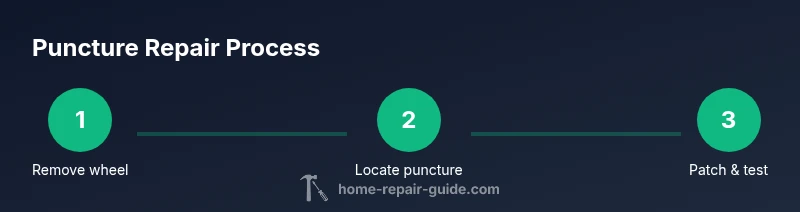
Remove wheel and deflate tire
Take the wheel off the bike if needed. Deflate the tire completely and push the bead away from the rim to give access to the tube.
Tip: Keep chain away from the frame to avoid damage; inspect for sharp edges. - 2
Remove the tube from the tire
Using tire levers, pry the bead over the rim and slide the tube out from between the tire and rim.
Tip: Be gentle to avoid pinching the tube during removal. - 3
Locate the puncture
Inflate the tube slightly; listen for hiss or submerge in water to watch for bubbles indicating punctures. Mark the hole once found.
Tip: If you can't locate it, check for hidden punctures after patching. - 4
Prepare the puncture site
Roughen a small circular area around the hole with sandpaper or file; wipe clean with rag.
Tip: Ensure the patch has good contact; remove oils and dust. - 5
Apply the patch
For glue-on patches: apply a thin cement layer, wait briefly, place patch centered over hole and press firmly; for self-adhesive patches: press firmly for 10-20 seconds.
Tip: Rub from center to edge to remove air bubbles. - 6
Reassemble and test
Place tube back in tire, reseat bead, reinflate to half pressure, then to full. Check for leaks and ensure patch holds before riding.
Tip: If air leaks persist, replace the tube or patch again.
FAQ
What is a puncture repair kit used for?
A puncture repair kit is used to seal small holes in bicycle inner tubes so you can reuse the tube instead of replacing it. It typically includes patches, cement or adhesive, and a roughening tool.
A puncture repair kit seals small holes in a bike tube so you can reuse it instead of buying a new tube.
Can patch kits fix all punctures?
Patch kits work well for small holes and clean cuts. Large holes, sidewall damage, or punctures near the valve stem often require tube replacement.
Patch kits work for small holes; large damages usually need a new tube.
How long does the cement take to cure?
Cement cure time depends on the patch, but you should wait until the cement feels tacky and dry to the touch before applying the patch. Follow the patch’s instructions for exact timing.
Cement cure time varies; wait for tackiness as directed before patching.
Is it safe to ride after patching?
Yes, if the patch is firmly attached and the tube holds air after testing. Do a quick test ride in a safe area before longer rides.
Ride carefully after a successful leak test and patch.
What if the puncture is near the valve stem?
Punctures near the valve stem can be unreliable with patches. If possible, replace the tube or patch from the stem side after inspecting the rim for sharp edges.
Valve-stem punctures can be tricky; consider tube replacement.
Watch Video
Key Takeaways
- Inspect rim tape and tire edges to prevent future punctures.
- Choose patch type based on puncture size and placement.
- Test inflation slowly after patching to confirm seal.
- Carry a spare tube and patch kit for maintenance.