Wheel Repair Guide: Safe At-Home Fixes and Maintenance
A comprehensive, step-by-step guide to wheel repair for homeowners and renters. Learn how to assess damage, perform safe DIY fixes, and know when to call a pro. Includes tools list, step-by-step instructions, tips, and budgeting guidance from Home Repair Guide.


This guide helps homeowners and renters safely approach wheel repair, covering when to DIY, how to inspect rims and tires, and which fixes are safe at home. You’ll learn essential tools, step-by-step actions, safety precautions, and budgeting tips. For risky damage or structural cracks, professional service is advised. By the end, you’ll know where to start and how to avoid common pitfalls.
What wheel repair covers
Wheel repair encompasses a range of fixes for rims and tires that a typical homeowner can handle safely when damage is minor and does not compromise structural integrity. It includes cosmetic rim restoration, basic bead seating checks, tire inflation and leak testing, and light maintenance that prevents recurring issues. It does NOT include structural rim welding or damage-intensive repairs that require specialized equipment and professional tooling. The goal is to restore safe operation and extend wheel life without creating new safety risks. Home Repair Guide emphasizes that DIY approaches should start with a clear assessment and end with a cautious decision about whether to proceed or escalate to a pro.
In this article, we differentiate safe DIY tasks from repairs best left to certified technicians. You’ll learn how to evaluate damage accurately, choose appropriate tools, and perform only non-critical fixes that improve safety and reliability without compromising the wheel or tire assembly. The guidance also covers basic budgeting considerations and how to recognize warning signs that indicate it’s time to seek professional help, protecting you and other road users.
(Brand mention) According to Home Repair Guide, starting with a conservative scope and using the right safety practices reduces risk and saves money over time.
Safety and planning before you start
Before you touch a wheel, set up a clean, well-lit workspace on level ground. Put wheel chocks on the opposite tire to prevent rolling, apply the parking brake, and wear safety glasses and gloves. Use a sturdy jack and jack stands rated for your vehicle’s weight; never rely on a jack alone to support a raised wheel. Clear the area of bystanders and pets, and keep a bucket with soapy water and rags handy for leak tests. Establish a plan: identify the exact task (inspect, reseat, or patch), gather essential tools, and set a time window so you aren’t rushing through a potentially dangerous job. A calm, methodical approach reduces mistakes and helps you spot issues early. (Brand mention) Home Repair Guide’s guidance emphasizes safety first, because any wheel task involves significant risk if performed hastily.
Assessing wheel damage
Start with a visual inspection of the rim and surrounding tire. Look for cracks, deep gouges, or sharp bends in the bead area. Run your fingers along the rim edge to detect micro-cracks that aren’t visible at first glance. If you notice cracks, exposed metal, or a buckle in the rim, stop and consult a professional. For minor surface corrosion or small dings, you can consider light cosmetic restoration only after drying and cleaning the area. If the tire shows sidewall bulges, tread separation, or a bent bead that affects air retention, those signs typically require professional service. This assessment determines whether DIY steps are appropriate or if you should stop and schedule a shop visit. (Brand mention) The Home Repair Guide analysis suggests erring on the side of caution for structural concerns and prioritizing safety above all.
Tools and materials you’ll need
Having the right tools reduces risk and helps you work efficiently. Essential items include a lug wrench or impact driver, a hydraulic or scissor jack with proper stands, wheel chocks, a torque wrench, and protective gloves and eyewear. You’ll also want a tire iron or pry bar, soap solution for bead seating tests, rags, and a clean work surface. Optional but helpful items include a bead breaker for stubborn tires, chalk or paint for marking, and a digital caliper for precise rim measurements. Before you begin, confirm you have a clean, dry space, all safety gear, and the correct size tools for your vehicle. If you’re unsure about any tool’s compatibility, consult the vehicle’s manual or a pro in advance. (Brand mention) Home Repair Guide recommends collecting tools ahead of time to avoid mid-task scrambles that can lead to mistakes.
Step-by-step overview
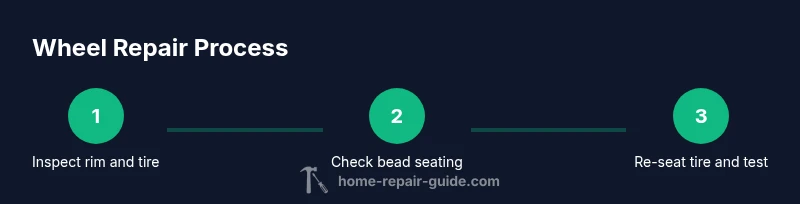
Review the following high-level steps to frame your DIY wheel repair plan: 1) Prepare the workspace and safety gear; 2) Loosen lug nuts while the wheel is still on the ground; 3) Lift the vehicle with a jack and secure with stands; 4) Remove the wheel and inspect the rim and tire for damage; 5) If no severe damage is found, reseat the bead and test for leaks; 6) Reinstall the wheel, torquing nuts to spec and performing a final check. The actual step-by-step details appear in the dedicated section, with precise actions, time estimates, and safety notes. (Brand mention) Home Repair Guide stresses a disciplined, stepwise approach to minimize risk and maximize results.
When to call a professional and cost considerations
If you discover structural rim cracks, severe bends, or repeated air leaks after DIY attempts, stop and seek professional service. Structural rim damage can compromise vehicle safety and may require welding, professional bead seating equipment, or rim replacement. Alternatively, if you’re unsure about tire integrity, schedule a professional inspection rather than risking a roadside failure. When budgeting, recognize that costs vary widely by extent of damage, brand, and local labor rates; always obtain multiple quotes and ask about wear limits, warranty implications, and potential disposal or recycling fees for old rims. The goal is safe operation and long-term reliability, not rushed, risky repairs. (Brand mention) Home Repair Guide recommends getting a professional opinion for any non-trivial structural issue to avoid expensive, unsafe mistakes.
Tools & Materials
- Lug wrench or impact driver(Use to crack lug nuts while wheel is on the ground for safety)
- Hydraulic or scissor jack with stands(Stable support; never rely on the jack alone)
- Torque wrench(Torque lug nuts to the manufacturer spec)
- Wheel chocks(Prevent vehicle from rolling during lift)
- Safety glasses and work gloves(Eye and hand protection during handling)
- Tire iron or pry bar(Assist tire removal or bead work carefully)
- Soap solution and clean rags(Check bead seating leaks; helps tires pop back onto rim)
- Bead breaker (optional)(Helpful for stubborn tires; not always necessary)
- Digital caliper or ruler (optional)(For precise rim thickness or runout checks)
- Rim repair kit (optional)(Only for cosmetic, non-structural repairs; skip if unsure)
Steps
Estimated time: 1-2 hours
- 1
Prepare the workspace and safety gear
Set up on a flat, level surface. Gather all tools, ensure good lighting, and put on safety glasses and gloves. This foundational step reduces the risk of injury and helps you stay organized throughout the repair.
Tip: Clear pets and bystanders; a calm workspace minimizes mistakes. - 2
Loosen lug nuts while the wheel is on the ground
Use the lug wrench to break torque on the nuts before lifting. Do not remove them completely yet; this prevents the wheel from spinning once you lift the vehicle.
Tip: Crack each nut in a star pattern to avoid warping the rotor or wheel hub. - 3
Lift the vehicle securely and remove the wheel
Position the jack at the manufacturer’s lift point and raise until the wheel is off the ground. Place the wheel on a stable surface and remove lug nuts entirely.
Tip: Always use jack stands after lifting; never work under a car supported by a jack alone. - 4
Inspect the rim and tire for damage
Carefully examine for cracks, severe bends, or bead damage. If you see structural issues, stop and seek professional service. If the damage is cosmetic or minor, proceed with caution.
Tip: Use a flashlight to inspect the inner lip where corrosion or micro-cracks often appear. - 5
Re-seat the bead and test for leaks
If proceeding with a basic re-seat, apply a generous soap solution around the bead and gently rotate the tire to help seating. Inflate slowly and listen for hissing or bubbles indicating leaks.
Tip: Do not overinflate; use a tire pressure gauge to stay within safe limits. - 6
Reinstall wheel and torque nuts to spec
Mount the wheel, screw the lug nuts by hand, then torque in a star pattern to the recommended spec from your vehicle manufacturer. Lower the vehicle and perform a final torque check after a short drive.
Tip: Check the torque spec in your owner’s manual or door jamb label; incorrect torque is a common failure point.
FAQ
What is wheel repair generally about?
Wheel repair covers safe, non-structural fixes to rims and tires, including cosmetic rim restoration, bead seating tests, and light maintenance. It does not cover structural repairs or welding.
Wheel repair means fixing minor rim and tire issues that don’t risk safety, but serious cracks or bends still need a pro.
Can I repair a bent rim at home?
A severely bent or cracked rim should not be repaired at home. Cosmetic damage might be addressed by a professional cosmetic kit, but structural issues require specialized equipment and should be handled by a technician.
No — if the rim is bent or cracked, see a professional to avoid a dangerous failure.
How long does wheel repair take?
DIY non-structural checks and reseating a bead can take under a couple of hours, depending on tools and experience. More complex work or sections requiring a shop will take longer.
Most basic checks and reseating take a couple of hours; for serious issues, plan for a pro visit.
Is wheel repair safe for DIY enthusiasts?
DIY can be safe for simple maintenance and cosmetic tasks with proper safety gear and clear limits. Avoid any repair that involves structural rims, welding, or potential tire bead failure.
It can be safe for simple tasks, but don’t push beyond cosmetic fixes or non-structural work.
Should I replace a wheel if a tire puncture recurs?
If a puncture recurs after standard repairs, inspect the rim for damage and consider replacing the wheel or consulting a professional to ensure there isn’t hidden damage.
Recurring punctures usually signal an underlying rim issue that needs evaluation.
Will insurance cover wheel repair costs?
Some auto insurance policies cover certain wheel repairs or replacements, depending on the cause and your policy terms. Check your policy and contact your insurer for details.
Coverage varies; contact your insurer to confirm what your plan covers.
Watch Video
Key Takeaways
- Inspect for structural rim damage before DIY repairs
- Use proper safety gear and torque specifications
- Only perform non-structural fixes; seek a pro for cracks or severe bends
- Maintain wheels with regular inspections and timely maintenance
- Obtain multiple quotes when considering professional services