VW Repair Near Me: Find Trusted Local Volkswagen Specialists
Learn how to find reliable VW repair near me, evaluate shops, compare quotes, and protect yourself with warranties and genuine parts. A practical, step-by-step guide from Home Repair Guide to help homeowners and renters.


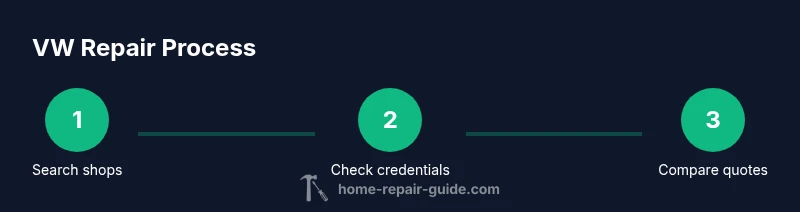
By following a simple, local search plan, you can reliably find VW repair near me. Start with dealer-authorized shops and proven independents, then compare credentials, equipment, and warranties. Gather multiple quotes in writing, ask the right questions, and confirm parts quality before authorizing any work. This Home Repair Guide overview provides a clear, actionable path.
Finding VW Repair Near Me: What It Really Means
If you search for the exact phrase v w repair near me, you’re usually looking for a trustworthy local shop that understands Volkswagen models, common issues, and factory repair procedures. The challenge is not just proximity, but the shop’s ability to diagnose quickly, source authentic parts, and stand by labor with a fair warranty. According to Home Repair Guide, the most reliable searches blend proximity with proven credentials and transparent pricing. Start with a short list of nearby shops and plan time to visit or call for a preliminary assessment. This approach helps homeowners and renters compare apples to apples rather than chasing cheapest price alone.
What to look for in the first contact: clear communication, willingness to discuss your model year, and the ability to share a rough diagnostic approach before you commit. A good shop will ask for essential details (VIN, engine code, mileage) and explain what data they need to prepare an accurate estimate.
How to Evaluate VW Repair Shops: Credentials, Equipment, and Warranty
Choosing the right VW repair shop goes beyond a clean lobby. Look for factory-trained technicians or ASE-certified mechanics who specialize in European makes. Ask about the equipment they use—scanner tools compatible with VW group vehicles, up-to-date software, and access to OEM parts. A credible shop will provide written estimates, outline recommended repairs with expected outcomes, and explain warranty terms for both parts and labor. If a shop cannot quote in writing or refuses to discuss warranties, treat it as a red flag.
Remember that warranty terms can vary widely by region and by whether the work is performed by authorized dealers or independent specialists. Home Repair Guide recommends asking about and documenting warranty coverage before work starts.
Common VW Repair Services and Why They Matter
Volkswagen models share many design features, but performance varies by engine type and generation. Routine maintenance (oil changes, brake service, and cooling system checks) keeps risk of major failures low. Complex repairs—timing belt or chain work, fuel system repairs, or transmission diagnostics—often require dealer-level software and specialized tools. Transparent pricing distinguishes good shops from the rest: ask for a breakdown of parts vs. labor and request OEM vs. high-quality aftermarket parts. While some repairs can be expensive, a trusted shop will explain cost drivers and offer alternatives or phased repair plans.
How to Compare Quotes and Ask the Right Questions
When you receive written estimates, compare line items: parts, labor rate, estimated hours, and diagnostic fees. Ask about parts sourcing (OEM vs aftermarket), expected warranty on parts and labor, and whether shop supplies a loaner vehicle or shuttle. Ensure the estimate includes all anticipated work and note exclusions. If a quote seems unusually low, probe the assumptions behind it and request a more detailed scope of work. A thorough diagnostic report can prevent price surprises later.
Safety, Quality, and Customer Protections
Trustworthy VW repair shops comply with safety standards and enforce best practices for vehicle handling, calibration, and test drives. Look for shops that provide written estimates, clear communication timelines, and an itemized warranty policy. Ensure technicians follow VW-recommended service intervals and use manufacturer-approved diagnostic procedures. Safety should never be an afterthought; a good shop will explain potential risks and how they mitigate them during repairs.
AUTHORITY SOURCES
- https://www.nhtsa.gov/vehicle-maintenance
- https://www.consumerreports.org/cars-maintenance/
- https://www.energy.gov/eere/vehicles/articles/how-choose-car-mechanic
Tools & Materials
- Smartphone or computer with internet access(To search local VW repair shops, read reviews, and request quotes)
- Notebook or note-taking app(Record shop names, prices, and questions)
- VIN, model year, engine code (if available)(Helps shops tailor estimates)
- List of preferred services and budget(Guides comparison and negotiation)
Steps
Estimated time: Total time: 60-180 minutes (may vary based on number of shops and complexity)
- 1
Define vehicle needs and constraints
Identify the VW model and the most likely repair services you need. Note symptoms, urgency, and any budget constraints. This sets the baseline for evaluating shops and avoids unnecessary repairs.
Tip: Write down symptoms with dates and mileage to help technicians reproduce the issue. - 2
Search for local VW repair options
Use reputable sources (dealer networks and independent European specialists) and read recent customer reviews. Shortlist 5–7 shops within reasonable distance and prepare a contact plan to reach out for initial quotes.
Tip: Call ahead to confirm availability and whether they handle your exact model. - 3
Check credentials and capabilities
Ask about ASE certifications, VW specialization, and whether they have VW-specific diagnostic tools. Verify that they use OEM or high-quality aftermarket parts and have warranty options for labor and parts.
Tip: Look for a shop that can run VW-specific diagnostics and perform calibrations. - 4
Request written quotes
Provide your vehicle details and the symptoms. Request itemized quotes that separate parts, labor, diagnostic fees, and any fluids or consumables. Ask about warranty terms in writing.
Tip: Avoid accepting verbal quotes; insist on written estimates. - 5
Compare quotes and ask clarifying questions
Review the scope of work, parts type (OEM vs aftermarket), labor hours, and warranty. If a quote lacks detail, request a clearer breakdown and a timeline for completion.
Tip: Ask about potential price escalators and whether they offer phased repairs. - 6
Visit or discuss findings
If possible, visit the shop for a face-to-face discussion or schedule a video call. Assess communication quality, transparency, and professionalism in the diagnostic plan.
Tip: Take notes and compare the communication quality across shops. - 7
Make a decision and authorize work
Choose the shop that best aligns with credentials, price transparency, and warranty terms. Confirm the exact work scope before starting and obtain a signed authorization.
Tip: Keep a copy of the written estimate and any changes. - 8
Inspect the work and test drive
When repair is complete, review the bill line-by-line and test drive to verify the fix. Confirm that the issue is resolved and monitor for any reoccurrence.
Tip: Ask for a post-repair checklist or service report.
FAQ
How do I verify a VW repair shop's credentials?
Start by checking ASE or VW specialty certifications, asking for technician names, and confirming proof of training. Look for reviews mentioning VW reliability and service quality. Call the shop to verify credentials if needed.
Check for VW specialty credentials and read reviews; ask for technician names and training proof.
What should I ask before authorizing repairs?
Request a written, itemized estimate that separates parts and labor. Confirm warranty terms for parts and labor, and ask about OEM vs aftermarket parts. Ensure you understand the expected timeline and potential alternatives.
Get a written, itemized estimate and understand warranties and part quality before repairs.
How long do VW repairs typically take?
Repair duration varies by complexity and shop workload. Minor maintenance can be completed in a few hours, while major drivetrain work may take a day or more. Always confirm an estimated completion date in writing.
Duration depends on the job; confirm a written completion estimate.
Should I use a dealer or independent shop for VW repairs?
Dealers often have the deepest VW-specific knowledge and access to OEM parts, but independents can offer competitive pricing and similar diagnostics with proper equipment. Compare credentials and warranties to decide.
Dealer vs independent: weigh OEM parts, warranties, and costs.
What warranty should I expect on VW repairs?
Look for both parts and labor warranties with clear terms. A credible shop will provide a written warranty with coverage duration and conditions for voiding the warranty.
Expect a written parts and labor warranty with clear terms.
How can I ensure parts are genuine VW OEM?
Ask the shop to confirm the source of parts and whether they are OEM or high-quality aftermarket equivalents. Request receipts showing part numbers and supplier details.
Ask for part sources and receipts showing OEM or validated alternatives.
Watch Video
Key Takeaways
- Research local VW specialists and compare credentials.
- Get written estimates with clear scopes of work.
- Ask about parts quality and warranty terms.
- Verify technician VW certifications and equipment.
- Keep all service records for resale value.