Auto Repair Near Me for Volkswagen: A Practical Guide
Learn how to locate reliable auto repair near me volkswagen, compare shops, and avoid costly mistakes with Home Repair Guide's data-driven approach to VW maintenance and repair.


To find dependable auto repair near me volkswagen, prioritize shops with VW-certified technicians, transparent, itemized estimates, and clear warranty coverage. Local proximity matters for convenience and loaner-car options. Check recent VW-owner reviews, confirm diagnostic fees, and insist on a written estimate before any work begins. Also verify whether the shop uses genuine Volkswagen parts and offers a warranty on both parts and labor.
Why Volkswagen-Specific Expertise Matters\n\nVolkswagen vehicles employ a mix of advanced fuel systems, turbocharged engines, and DSG transmissions that require specialized knowledge and tools. Even routine maintenance can involve model-specific service bulletins and factory-recommended procedures that vary by year and region. According to Home Repair Guide, choosing shops with VW-specific training helps reduce misdiagnosis, unnecessary part replacements, and subpar repairs. The goal is not only to fix the current problem but to preserve long-term reliability and resale value.\n\nDiagnostics: A high-quality VW diagnostic session will read fault codes using VW-appropriate software, perform live data checks, and compare readings against manufacturer tolerances. Shops without proper tools may miss subtle indicators like misfires on certain cylinders or timing-sensor drift that can lead to repeat visits.\n\nLocating a shop that understands your exact model year can save you time and money. If you own a TSI engine, for example, you might benefit from a shop that has experience with turbocharging and cooling systems that are common on those engines. The right technician will also guide you on parts choices, such as OEM versus high-quality aftermarket parts, and explain warranty coverage on both parts and labor.
How to Assess VW-Certified Technicians\n\nWhen VW owners search for auto repair near me volkswagen, the certification status of the technician is a reliable signal of competence. Start by asking about VW-specific credentials, such as manufacturer certifications and training completed on your model. ASE certificates are valuable, but VW-backed programs carry more model-specific insight. A shop that invests in ongoing training will stay current with software updates, recall campaigns, and service bulletins. Inquire about the diagnostic tools they use; VW vehicles often require dealer-grade scanners and software to read advanced fault codes and live data streams. Where possible, request references from other VW owners and check online reviews that mention similar models or issues. Finally, confirm the shop’s policy on recall-related work and software updates, as these tasks can legally require dealer involvement in some regions. By validating credentials, you minimize the risk of misdiagnosis and ensure the shop has the capability to address complex VW systems, such as fuel injection, turbocharging, and electronic control units.
How to Compare Local VW Repair Shops\n\nComparison starts with proximity, but it quickly expands to trust signals and value. Create a short list of nearby shops that advertise VW expertise or mention model-specific services. Call ahead to confirm they have VW-certified technicians and the right tools. Request a written estimate that breaks down parts, labor, diagnostic fees, and any shop supplies. Compare warranty terms on both parts and labor; a longer warranty often indicates confidence in the repair. Review policies on loaner cars, courtesy inspections, and vehicle drop-off options outside business hours. Finally, look for consistency across multiple data points: consistent diagnostic fees, transparent markup on parts, and a track record of completing repairs on time. By triangulating credentials, pricing, and delivery, you can choose a shop that meets your VW's needs without surprise charges.
Red Flags to Avoid in VW Repairs\n- No transparent pricing or vague estimates. A legitimate shop will provide an itemized quote. \n- Diagnostic fees charged without a clear plan for credit toward repairs. \n- Pressure to approve unnecessary repairs or upsells; a good shop will present options and rationale. \n- Reports of frequent repeat visits for similar issues without a root cause fix. \n- Lack of VW-specific tools or training, or technicians with generic certifications only. \n- Refusal to honor manufacturer recalls or software updates when needed. \n- Dirtier workflows, disorganized paperwork, or poor warranty policies. \n- Delays without explanation or inability to provide a clear turnaround timeframe.
What to Expect During a VW Diagnostic Visit\nA typical diagnostic visit begins with intake questions about symptoms, driving conditions, and recent repairs. The technician will use VW-friendly scan tools to pull fault codes and examine live data such as fuel trims, ignition timing, and sensor readings. They may perform a road test, check for abnormal noises, and inspect related components like the intake system, turbocharger, or transmission connectors. After data collection, the shop should present a prioritized list of issues, suggested repairs, and transparent pricing. If the diagnosis reveals multiple problems, request a phased repair plan with cost estimates for each step. Throughout the process, ensure there is clear communication about expected timelines and warranty coverage for the work.
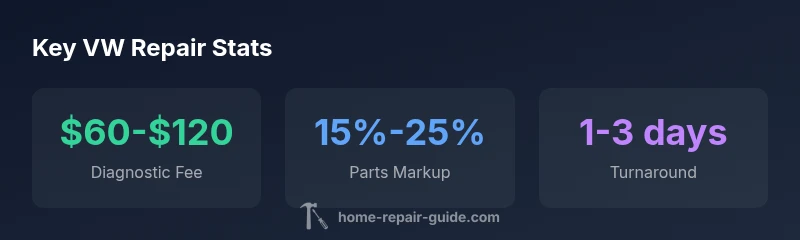
Cost Ranges and What Impacts Price\nCosts vary widely in VW repairs, influenced by the model, the specific system involved, and the parts selected. Diagnostic fees typically fall within a moderate range and can be credited toward repair if you proceed with the shop. Major repairs—such as turbocharger service, transmission work, or fuel-injection system overhauls—can run into higher ranges depending on parts availability and labor intensity. Labor hours may be affected by regional wage differences and the shop’s workload. OEM parts generally cost more than high-quality aftermarket equivalents, but they carry stronger warranties and closer alignment with VW specifications. In some cases, software updates or recalls may be covered by manufacturer campaigns, reducing out-of-pocket costs. The key is to obtain a written estimate that separates parts, labor, and any ancillary charges, and to ask about warranty coverage on both parts and labor for the work performed.
Parts Quality, Warranty, and Return Policies\nShops often offer a choice between OEM (Original Equipment Manufacturer) parts and aftermarket equivalents. OEM parts typically guarantee closer fit and performance but come at a premium; aftermarket parts may provide cost savings but vary in quality. When VW repairs involve electronics or critical drivetrain components, many owners prefer OEM or VW-approved parts to minimize risk and ensure compatibility with the vehicle’s software. Always confirm the warranty terms for both parts and labor, including what the warranty covers, duration, and whether labor is included if a follow-up repair is needed. Some shops offer a parts-return window, restocking fee details, or exchange policies for defective items. If a problem recurs, verify whether the shop will rework the issue under warranty without charging additional diagnostic fees. Clear documentation of parts used, serial numbers, and date codes helps protect you if quality concerns arise later.
DIY Checks Before You Visit a Shop\nBefore you head to the shop, perform a quick audit of obvious indicators that may affect VW repairs. Check the battery and charging system, inspect fluid levels and belts for wear, and note any warning lights or abnormal dashboard messages. Gather your maintenance records, recent service bulletins, and a summary of symptoms. Take photos of any visible damage or leaks and jot down the symptom timeline. When you call for a quote, have your vehicle’s VIN handy and be ready to discuss prior repairs and software updates. Finally, prepare a list of questions you want answered, including warranty terms, parts sources, and the anticipated repair timeline. Doing these checks ahead of time helps you hold the shop accountable and streamlines the diagnostic process.
Common VW service categories
| Category | What it covers | Typical costs (range) |
|---|---|---|
| Diagnostics | Initial fault code reading and live data checks | 60-120 |
| Maintenance vs Major Repair | Routine service vs major component repair | Varies |
FAQ
What defines VW-certified technicians?
VW-certified technicians have model-specific training and use tools designed for VW systems, including diagnostics for fuel, electrical, and transmission modules.
VW-certified technicians have model-specific training and the right tools to diagnose VW systems.
Are diagnostic fees required?
Many shops charge a diagnostic fee to cover time and software use. Some waive the fee if you proceed with repairs at the same shop.
Most shops charge a diagnostic fee, but it can be applied to repair if you proceed.
How can I verify parts quality for a VW repair?
Ask for part numbers, warranty details, and whether parts are OEM or VW-approved aftermarket. Confirm supplier sources.
Ask for part numbers and warranty details; request OEM or VW-approved aftermarket.
What should I do if I disagree with the estimate?
Request a written breakdown, ask for a second opinion, and compare with another shop. Ensure any changes are documented.
Ask for a written breakdown and a second opinion if you doubt the estimate.
How long does VW repair take on average?
Repair times vary by model and repair type. A simple repair may be a few hours; more complex work can take days. Always ask for a phased plan.
Times vary by model and job; ask for a phased plan.
Can I bring my own parts to a VW shop?
Some shops allow it, but many won't due to warranty and safety concerns. Check with the shop first and ensure the parts meet VW specs.
Some shops allow it, but check first and ensure parts are VW-spec.
“Choosing a shop with VW-specific training and transparent pricing is the best way to protect your investment in a Volkswagen. A well-qualified shop will diagnose accurately and stand behind its parts and labor.”
Key Takeaways
- Validate technicians with VW-specific training.
- Ask for written estimates before any repair.
- Prefer shops with transparent warranty policies.
- Compare diagnostic fees and turnaround times.
- Prioritize OEM or VW-approved parts with warranties.