Repair Lawn Equipment: A Practical Step-by-Step Guide
Learn practical, safe methods to diagnose and repair common lawn equipment. This comprehensive guide covers tools, step-by-step actions, and maintenance tips to keep mowers, trimmers, and blowers running smoothly.


Learn how to diagnose common lawn equipment failures, safely fix simple issues like dull blades, clogged carburetors, and dead batteries, and decide when to repair or replace parts. This guide covers tools, step-by-step actions, and maintenance tips to keep your equipment running. Whether you own a mower, trimmer, or cultivator, the principles apply.
Before you begin: safety and diagnosis
According to Home Repair Guide, the first step in repairing lawn equipment is to establish a safe work environment and verify basic operation. Clear the area of bystanders and fuel spills, disconnect power or spark sources, and consult the user's manual for model-specific safety warnings. The Home Repair Guide team found that many failures arise from overlooked safety steps and overlooked user error. A quick diagnostic checklist helps you separate simple fixes from more complex repairs, saving time and reducing risk. This block sets the tone for careful, methodical work and emphasizes PPE like gloves and eye protection as non-negotiable.
Common lawn equipment failures and quick fixes
Lawn equipment failures typically fall into fuel, air, or mechanical categories. A carburetor that won’t delivering fuel, a clogged air filter, dull or damaged blades, dead batteries, or worn belts are some of the most frequent culprits. Start with the simplest checks: verify fuel stability and freshness, inspect the air intake, and look for obvious wear on blades. The Home Repair Guide analysis shows many breakdowns stem from neglecting routine maintenance rather than sudden component failure. Use this section to identify symptoms and map them to likely causes before diving into parts replacement.
Repair strategies by device type
Different devices require tailored approaches. For a walk-behind mower, focus on the blade, carburetor, and spark plug; for a cordless trimmer, inspect the battery and motor brushes; for a leaf blower, check air intake and impeller alignment. In each case, follow safe disassembly, label fasteners, and replace worn parts with compatible components. This section provides device-specific strategies, common pitfalls, and practical tips you can apply to most small engines. The goal is reliable function without overspending on unnecessary parts.
Maintenance to prevent future breakdowns
Prevention is cheaper than repair. Create a simple maintenance routine: clean debris after every use, change or clean filters regularly, inspect belts and pulleys, and replace spark plugs and air filters at appropriate intervals. Keep a simple log of maintenance tasks so you know when to service each component. The guidance from Home Repair Guide emphasizes consistent, proactive care as the best defense against sudden failures and costly downtime.
Step-by-step quick diagnostic flow
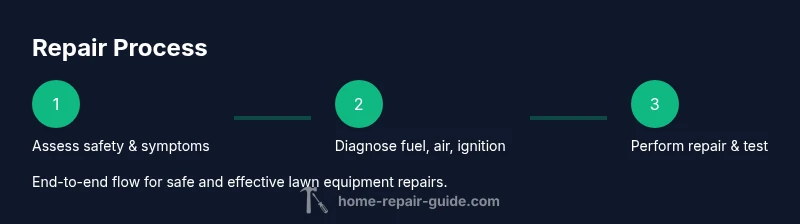
A structured approach saves time. Start with safety, then verify fuel and battery health, followed by a visual inspection of blades, belts, and filters. If the device still won’t run after these checks, move to a deeper inspection of ignition systems or carburetor components. This block helps you translate symptoms into concrete actions and reduces guesswork during repairs.
Safe handling and troubleshooting checklist
Always disconnect power sources, drain fuel when necessary, and work in a well-ventilated area. Use a magnetic tray to hold fasteners and keep track of replaced parts. When in doubt, consult the manual or seek professional help for complex issues like engine internals. This checklist serves as a concise, repeatable routine for every repair session.
Diagnosing fuel, spark, and air issues
Fuel problems include stale gasoline, clogged carbs, or blocked fuel lines. Spark issues involve fouled or worn spark plugs and weak ignition. Air issues revolve around dirty air filters and clogged intake pathways. Use basic diagnostic steps to confirm the root cause before ordering parts. The goal is to identify the actual failure and avoid unnecessary replacements.
Authority sources
For safety guidelines and professional references, consult: OSHA safety guidelines: https://www.osha.gov, University Extension resources: https://extension.illinois.edu, and Penn State Extension: https://extension.psu.edu. These sources provide foundational safety standards and maintenance practices that support practical lawn equipment repair workflows.
When to replace vs repair
Not all repairs are cost-effective. If a major engine component fails, parts are scarce, or repair costs approach or exceed replacement costs, replacement becomes the smarter choice. Consider reliability, safety, and anticipated remaining lifespan when deciding between repair and replacement. This decision is guided by practical maintenance metrics and budget considerations.
Tools & Materials
- Safety goggles(ANSI Z87.1 rating recommended)
- Work gloves(Leather or cut-resistant)
- Guarded eye protection(Extra protection when grinding or cutting)
- Screwdriver set (Phillips and flat-head)(Assorted sizes; magnetic tips help)
- Allen wrenches / hex keys(Common sizes for mower blades and covers)
- Wrench and socket set(Metric and standard sizes)
- Pliers (needle-nose and locking)(Gripping, bending, and removing parts)
- Torque wrench (optional)(Useful for reassembling with correct torque)
- Carburetor cleaner(If carburetor cleaning is needed)
- Fuel stabilizer and fresh gasoline(For fuel system restoration)
- Replacement blades or cutting hardware(Only if signs of dullness or damage)
- Air filter and spark plug replacement kit(Match model specifications)
- Oil and oil catch pan(For splash-free oil change)
- Multimeter (voltage/ continuity)(Advanced diagnostics for ignition)
- Replacement belts and sealant (if applicable)(Check model requirements)
Steps
Estimated time: 60-120 minutes
- 1
Prepare and safety-check
Power down the unit, disconnect battery or spark source, and ensure the area is ventilated. Gather your tools and refer to the manual for model-specific cautions. Take photos of fasteners and parts to aid reassembly.
Tip: Label fasteners as you remove them to avoid misplacement. - 2
Inspect blades and cutting system
Check for dull, bent, or chipped blades. Remove the blade according to the manual, inspect the blade adapter, and replace if damaged. Clean the underside of the deck to remove grass buildup that can cause overheating.
Tip: Keep blades balanced and reinstall with proper torque. - 3
Check fuel system and air intake
For fuel-powered units, drain stale fuel and replace with fresh gasoline and stabilizer. Inspect carburetor for varnish buildup and clean as needed. Inspect and clean air filters.
Tip: Never spray cleaner into hot carb parts; allow cooling first. - 4
Inspect ignition and electrical components
Examine the spark plug for fouling or wear; replace if necessary. Check battery condition and connections on electric start models. Use a multimeter to verify continuity where appropriate.
Tip: Disconnect the spark plug wire before handling to avoid shocks. - 5
Check belts, pulleys, and seals
Inspect belts for wear or cracking; replace if stretched. Check pulleys for wobble and secure fasteners. Replace seals if you detect leaks or cracks.
Tip: Rotate moving parts by hand to listen for grinding or binding. - 6
Reassemble, test run, and adjust
Reinstall components in the reverse order you removed them, ensuring proper alignment. Reconnect fuel and ignition, then start with a low idle test. Listen for unusual noises and perform a brief functional test.
Tip: Record any performance changes and follow up with a full test after 24 hours.
FAQ
Is it worth repairing lawn equipment myself or should I replace it?
This depends on the cost of parts, your skill level, and the unit's age. For newer machines with common wear, repair can be economical and extend the life of the tool. If major engine work is required or safety is compromised, replacement may be wiser.
Repair can be cost-effective for newer, common issues. If the repair is extensive or the machine is old, replacement might be better.
What basic tools do I need for lawn equipment repair?
A basic toolkit includes screwdrivers, pliers, wrenches, and a socket set. You’ll also want replacement spark plugs, air filters, and fuel stabilizer for common maintenance tasks.
A small set of screwdrivers, pliers, wrenches, a socket set, and some replacement parts will cover most fixes.
Why won’t my mower start after refueling?
Possible causes include stale fuel, a fouled spark plug, a clogged air filter, or a blocked carburetor. Start with the simplest fixes first: replace the spark plug, clean or replace the air filter, and ensure fresh fuel is used.
Stale fuel, a bad spark plug, or a clogged air filter are common culprits. Check those first.
How often should I perform routine maintenance on lawn equipment?
Perform a quick after-use clean, air-filter check, and blade inspection after each use. Schedule a more thorough service every 20–40 hours of operation or at least seasonally, depending on usage and climate.
Do quick checks after each use and a deeper service seasonally or after a set number of hours.
Can I safely repair engine internals myself?
Repairing engine internals usually requires specialized knowledge and tools. If you’re not trained, seek professional service or consider replacement parts intended for consumer repair.
Engine internals can be dangerous; consult a pro if you’re unsure.
What signs indicate it’s time to replace rather than repair?
Frequent, costly failures, missing safety features, or aging components with no readily available parts suggest replacement may be more economical and safer in the long run.
If repairs become frequent or parts are scarce, replace may be the wiser choice.
Watch Video
Key Takeaways
- Inspect safety gear before starting any repair.
- Diagnose fuel, air, and ignition issues systematically.
- Regular maintenance reduces unexpected breakdowns.
- Decide between repair and replacement based on cost and safety.
- Document steps and test thoroughly after repairs.