Repair and Service: A Practical Comparison for Homeowners
Explore a practical, objective comparison of repair and service options for home systems, including DIY fixes, professional maintenance, and cost considerations to help homeowners and renters decide.


When deciding between repair and service, start with a clear view of whether the issue is a simple, reversible malfunction or a sign of a larger, ongoing problem. DIY fixes work for small, safety‑neutral tasks, while professional service is typically needed for safety‑critical systems or issues that recur. This comparison helps homeowners and renters choose a path that balances cost, durability, and risk.
What repair and service mean in the home
Repair and service describe two complementary strategies for maintaining and restoring functioning systems from plumbing to appliances, electrical, and HVAC. In everyday language, repair is about fixing what’s broken; service refers to scheduled inspections, tune-ups, and proactive adjustments. This article uses the term repair and service to cover both on-site fixes and planned maintenance tasks. According to Home Repair Guide, a balanced approach reduces downtime, preserves safety, and extends equipment life. Understanding these concepts helps homeowners and renters decide when to fix, replace, or schedule a service visit. The scope includes DIY fixes for simple issues, professional diagnostics for complex problems, and maintenance plans that bundle visits, parts, and labor into predictable costs. The goal is durability, reliability, and protecting your investment.
The spectrum: DIY fixes vs professional service
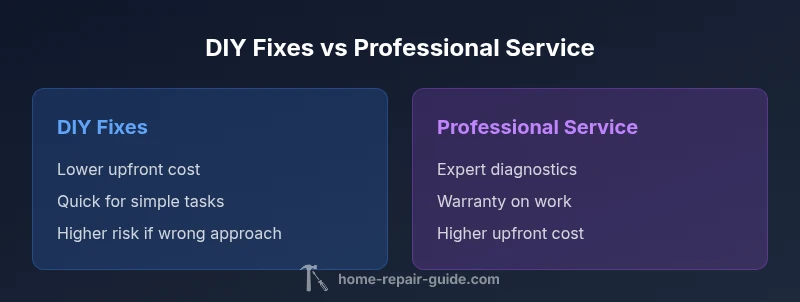
The most visible split in repair and service is between do‑it‑yourself tasks and professional intervention. DIY fixes typically cover minor nuisance issues, quick adjustments, or patchwork that preserves function without altering core components. Professional service goes beyond surface fixes to diagnose root causes, replace worn parts, and implement standard maintenance regimes. Based on Home Repair Guide analysis, a pragmatic approach combines both: DIY for controllable, low‑risk tasks and scheduled professional audits for systems with safety or longevity implications. This hybrid model also helps homeowners plan around busy seasons, equipment availability, and budget constraints. For renters, professional service can be essential to meet warranty terms and avoid liability if a repair involves safety standards.
Key decision criteria: safety, durability, and cost
Three criteria consistently drive repair vs service decisions:
- Safety: Systems like gas appliances, electrical panels, and high‑voltage components demand professional oversight.
- Durability: Proactive maintenance and timely component replacement extend life and prevent cascading failures.
- Cost: Short‑term savings from DIY can backfire if failure repeats or causes collateral damage. A service plan often offers predictable budgeting and reduced downtime. Home Repair Guide guidance emphasizes evaluating the risk of DIY vs the value of warranties and guarantees when choosing a path.
How to assess repair vs replacement and service plans
Follow a structured assessment to avoid reactive spending:
- Identify the root cause: is the symptom a reversible fault or a symptom of wear?
- Check safety implications: does the issue involve critical systems or potential hazards?
- List alternatives: repair, replacement, or service scheduling.
- Estimate total cost and downtime for each option, including future maintenance.
- Review warranties and service contracts for coverage and terms.
- Decide a path based on risk tolerance, budget, and time constraints. A well‑documented plan reduces surprise costs and supports smoother maintenance cycles.
Cost considerations: budgeting for repair and service
Repair and service costs vary by system, complexity, and region. DIY fixes often cost only materials, while professional service includes labor and parts. Home Repair Guide Analysis, 2026, notes that budgeting for a mix of one‑off repairs and ongoing maintenance tends to yield the best long‑term value, especially for appliances and essential systems. Create a simple annual maintenance budget that accounts for planned service visits, part replacement, and an emergency fund for unexpected failures. Keeping receipts and scheduling reminders helps maximize tax or warranty advantages where applicable.
Reliability and support: brands, warranties, and service networks
Reliability hinges on access to qualified technicians, clear warranty terms, and robust service networks. When you opt for professional repair, verify the technician’s license, insurance, and manufacturer certifications if applicable. Service plans often include labor warranties, parts guarantees, and scheduled visits which can reduce unexpected downtime. For DIY work, track parts quality and compatibility; maintain a log of fixes to support future service calls and ensure continuity of care for the system. A transparent service history improves decision making and accountability.
Managing outcomes: timelines, communication, and documentation
Clear communication is essential for successful repair and service outcomes. Before work begins, agree on scope, timelines, and cost ceilings. Document the diagnosis, recommended parts, and the steps to be taken, including safety considerations and potential risks. After work, obtain a written summary and any warranty information. Keeping a centralized file with receipts, warranties, and service dates helps you pace future maintenance and makes it easier to evaluate value over time. Home Repair Guide recommends building a simple maintenance diary to track performance and anticipate service windows.
Practical step-by-step guide: when to call in a pro
- Assess the risk: if there is potential for fire, gas leaks, or electrocution, call a professional immediately.
- Try safe, non‑invasive fixes for minor issues (e.g., unplug, reset, clean).
- If symptoms persist or recur, schedule a diagnostic visit from a qualified technician.
- Compare quotes and check warranties before approving replacements.
- If a system is beyond economical repair, discuss replacement options and long‑term service plans. The aim is to minimize downtime while preserving safety and reliability.
Comparison
| Feature | DIY Fixes | Professional Repair Service |
|---|---|---|
| What it covers | Small, reversible issues; routine maintenance you can perform | Diagnostics, parts replacement, and complex repairs by licensed technicians |
| Time to resolve | Often immediate for simple tasks | Variable; depends on technician availability and parts delivery |
| Risk and safety | Higher risk if misdiagnosed; some tasks can be safely attempted with guidance | Lower risk; professionals follow safety standards and codes |
| Quality and durability | Quality depends on skill and tool access | Typically restoration to spec with warranties and parts backstopped |
| Warranty and guarantees | Often no formal warranty for DIY fixes | Most services include parts and labor warranties |
| Best use case | Quick fixes, learning, and small maintenance | Complex failures, safety‑critical systems, and recurring issues |
| Overall value | Low upfront cost, high control | Better long‑term value with professional oversight and planned maintenance |
Upsides
- Repairs extend equipment life and delay replacement
- Service plans provide predictable budgeting and reminders
- Professional assessment can identify underlying issues early
- DIY fixes build skills and save money on small fixes
Disadvantages
- DIY repairs can risk safety and cause bigger problems
- Pro services cost more upfront and may require waiting
- Some issues require licensed professionals or parts warranty
A balanced approach works best: use DIY for simple, safe tasks and reserve professional service for complex or safety‑critical repairs.
This approach minimizes risk while maximizing durability and cost efficiency. A pro‑level service plan complements selective DIY fixes and helps protect warranties and long‑term performance.
FAQ
What should I repair myself vs hire a pro?
Consider DIY for non‑hazardous, simple tasks with which you are comfortable. Hire a professional for safety‑critical systems, complex diagnostics, or if the issue recurs after a DIY fix. Always assess warranties and local codes before proceeding.
DIY for small, safe tasks; hire a pro for safety‑critical or recurring issues.
How can I budget for repair and service over a year?
Set aside a baseline for routine maintenance and an emergency fund for unexpected repairs. Use service plans to spread costs and reduce downtime, and keep a log of repairs and warranties to guide future decisions.
Create a simple maintenance budget and use service plans to smooth costs.
What safety considerations matter for home repairs?
Always assess electrical, gas, and structural components with safety in mind. If you are unsure, pause and call a professional. Unauthorized DIY on critical systems can void warranties and increase risk.
Safety first: when in doubt, call a pro.
Do service plans cover service visits for appliances?
Most service plans include scheduled maintenance visits and some coverage for parts or labor, but details vary by provider. Read the terms carefully and ask about emergency visits, response times, and parts brands.
Check plan specifics for visit frequency and coverage.
How do I find a reliable repair technician?
Look for licensed technicians with verifiable certifications, clear warranties, and client reviews. Request written estimates, verify insurance, and compare with manufacturer recommendations when available.
Ask for licenses, warranties, and written estimates.
Key Takeaways
- Use DIY for small, safe tasks to save time and money
- Leverage professional service for safety‑critical systems and recurring issues
- Budget for a mix of routine maintenance and unforeseen repairs
- Document service history to improve future decisions
- Choose service plans that include clear warranties and scheduling