How to Repair a Flat Tire: A Step-by-Step Guide
Learn how to repair a flat tire safely with a comprehensive, step-by-step guide. From safety checks to patching or replacing, this Home Repair Guide tutorial covers tools, techniques, and when to seek help.


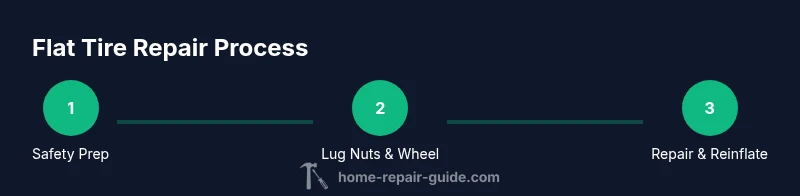
By following this guide, you can safely repair a flat tire and return to the road. Start by pulling over to a safe location, gather the right tools, and use proper jacking and patching techniques. Decide between a temporary plug or full replacement based on tire condition, then re-inflate and test before resuming travel. With the right safety gear and a calm, deliberate approach, you can complete the repair without worsening the damage.
Why Repair a Flat Tire Safely Matters
A flat tire demands careful handling to prevent further damage to the wheel, balance, and suspension. The Home Repair Guide team emphasizes safety first: locate a safe pull-off, turn on hazards, and avoid rushing. According to Home Repair Guide, improper jacking or tire removal can cause rim damage or a dangerous blowout. A methodical approach reduces risk and keeps you out of traffic. In this guide we’ll cover both DIY patching and when replacement is the better choice, so you can decide what works for your tire, vehicle, and skill level.
As you work through these steps, remember that tire repair quality affects vehicle handling and safety on the road. If you’re ever unsure, it’s wise to err on the side of caution and consult a professional. The Home Repair Guide team encourages homeowners and renters to treat tire repairs as a serious maintenance task, not a quick hack.
Tools and Materials You'll Need
Before you begin repairing a flat tire, assemble a reliable toolkit and a spare or patch kit. This section lays out what you’ll use, what’s essential, and what can wait until a later date. The Home Repair Guide approach emphasizes planning: gathering the right items saves time and minimizes mistakes. Keep a repair kit in your trunk along with a tire pressure gauge for quick checks after any patch or replacement.
Key items include a jack, lug wrench, wheel chocks, a patch/plug kit, a spare tire, and a tire pressure gauge. Optional but helpful items include gloves for grip and protection, a flashlight for low-light conditions, and a reflective vest for roadside visibility.
Assess the Damage and Decide Your Repair Option
Not every puncture is repairable, and some damage makes replacement unavoidable. Start by locating the puncture or sidewall damage and checking the tire’s condition. If the sidewall is damaged or the puncture is large or near the shoulder, replacement is usually the safer option. If the tread is intact and the puncture is repairable, you may proceed with a patch or plug. This decision affects tire performance and safety, so weigh the pros and cons carefully. The Home Repair Guide team notes that patching should ideally occur from the inside for tubeless tires to ensure a reliable seal.
Always verify that the remainder of the tire isn’t distorted or fractured, and consider if the vehicle’s load, speed, and planned distance justify repair versus replacement.
Safety First: Preparing Your Vehicle
Safety preparation sets the tone for a successful repair. Park on a flat, stable surface, engage hazard lights, and apply the parking brake. Place wheel wedges or chocks on the diagonally opposite wheel to prevent rolling. If you’re on a busy road, use reflective markers or a roadside emergency package to alert other drivers. The Home Repair Guide approach stresses saying inside and outside the car: keep hands clear of hot components and never place your body under a raised vehicle without a stable stand.
Removing the Wheel and Accessing the Tire
With safety steps completed, you can access the tire. Loosen the lug nuts slightly while the vehicle still rests on the ground. Position the jack at the manufacturer’s recommended lift point and raise the vehicle until the tire is just clear of the ground. Remove the lug nuts completely and take the wheel off, placing it flat so it doesn’t roll. Inspect the wheel for corrosion or damage and check the tire bead for debris. The process of removing the wheel is a critical moment for leverage; take your time to avoid slippage.
Patching, Plugging, or Replacing: What to Choose
Choose your repair path based on tire condition and manufacturer guidance. Patching from the inside creates a strong seal against air leakage, while external patches can address certain types of punctures. Plugging can be a quick temporary fix for small punctures in the tread area, but it is not a permanent solution for all tire types. If the puncture is in the sidewall, if the tire has been driven while flat, or if there is structural damage, replacement is the safest option. The Home Repair Guide team recommends aiming for a repair that preserves tires where feasible while prioritizing safety and reliability.
Re-Installing the Wheel, Mounting, and Inflation
Reinstall the wheel with the lug nuts by hand to prevent cross-threading, then lower the car until the tire just contacts the ground. Tighten lug nuts in a star pattern to ensure even seating. Recheck the inflation pressure with a gauge and adjust to the vehicle’s recommended PSI as listed in the owner’s manual. A proper rebuild should leave the tire with minimal lateral movement and consistent bead seal.
Checking for Leaks and Road Readiness
After inflation, inspect the tire and wheel assembly for leaks or gurgling sounds. Spin the wheel to check for abnormal wobble or imbalance. If you notice any leak continuing after inflation, stop and remove the tire to reassess the patch or plug and reseat the bead. For most drivers, a short test drive at moderate speeds is a prudent final check before returning to regular use. The Home Repair Guide team cautions that a tire repair is not a substitute for a professional inspection if you notice permanent deformation or frequent loss of pressure.
When to Seek Professional Help
If you’re uncertain about any step, or if the damage is extensive, seek professional help promptly. A certified tire technician can assess the tire’s structural integrity and ensure the repair meets safety standards. If you’re stranded on a highway or in bad weather, contact roadside assistance rather than attempting a risky repair. The Home Repair Guide team advises homeowners and renters to treat any tire repair as a potential repair or replacement decision that may require professional tools and expertise.
Preventing Flats: Maintenance Tips
Regular tire maintenance reduces the chances of flats. Keep tires inflated to the recommended pressures, rotate tires as advised, and inspect for embedded objects and tread wear. Replace worn tires before the tread reaches the minimum depth and schedule annual professional inspections if you drive in harsh or variable conditions. The Home Repair Guide approach emphasizes proactive maintenance, a key part of responsible home repair and road safety.
Quick-Start Flat Tire Checklist
- Pull over safely and turn on hazards.
- Gather tools: jack, lug wrench, patch kit, spare tire, pressure gauge.
- Loosen lug nuts before lifting.
- Lift the car with the jack at the correct point.
- Remove wheel and inspect tire condition.
- Patch/plug or replace as needed.
- Reinstall wheel and tighten lug nuts in a star pattern.
- Inflate to the correct PSI and test for leaks.
- Lower the car and perform a brief road check.
- Stop and seek professional help if you have any doubts.
Quick-Note on Safety and Legality
Always follow local laws and the vehicle manufacturer’s instructions. If you’re not confident about your ability to perform the repair safely, contact professional road service. The most important rule is to never compromise your safety or the safety of others on the road.
Tools & Materials
- Spare tire or patch/plug kit(Essential for tire repair or replacement)
- Lug wrench(For loosening and tightening lug nuts)
- Floor jack or scissor jack(Choose a jack rated for your vehicle’s weight)
- Wheel chocks(Place diagonally opposite the tire being worked on)
- Tire iron or breaker bar(Optional heavy-duty lever)
- Tire pressure gauge(Check PSI to manufacturer spec)
- Gloves and flashlight(Improve grip and visibility)
- Owner’s manual(Locate exact lift points and torque specs)
- Rags or cloths(Clean bead area and patch surfaces)
Steps
Estimated time: 60-120 minutes
- 1
Pull over to a safe location
As soon as you notice a flat, steer smoothly to the shoulder or a safe turnout. Engage hazard lights and apply the parking brake. If possible, place wheels chocks on the opposite side to prevent movement.
Tip: Keep a reflective triangle in your kit for visibility at night. - 2
Activate safety precautions
Turn on hazard lights, activate emergency indicators, and ensure bystanders stay away from traffic. Avoid lifting the car on a slope; if the ground is uneven, don’t proceed.
Tip: Set wheel wedges on both sides of the vehicle to prevent rolling. - 3
Gather tools and spare kit
Collect the jack, lug wrench, patch kit, spare tire, and a pressure gauge. Confirm you have gloves and a flashlight for low light conditions. Having everything ready reduces time under stress.
Tip: Check patch kit expiration and inspect sealant if used. - 4
Loosen lug nuts while on the ground
Before lifting, loosen lug nuts about a quarter turn so they won’t seize when the wheel is in the air. Do this while the vehicle sits on a stable surface and is not yet lifted.
Tip: Loosen nuts in a star pattern to avoid warping the wheel. - 5
Position and use the jack
Place the jack at the manufacturer-approved lift point near the flat tire. Ensure the jack is level and stable before raising the vehicle slightly until the tire clears the ground.
Tip: Never get under the vehicle when only the jack is supporting it. - 6
Lift and remove the wheel
Raise the car enough to remove the tire without it rubbing the ground. Remove lug nuts completely and pull the wheel straight toward you.
Tip: Keep lug nuts in a secure location so they don’t roll away. - 7
Inspect tire and wheel
Check the tire’s tread and sidewalls for damage or punctures and inspect the bead area for debris. If the puncture is in the sidewall or there is extensive damage, replacement is safer.
Tip: Look for objects embedded in the tread that caused the puncture. - 8
Choose patch/plug or replacement
If repair is repairable, decide between a patch, plug, or replacing the tire. Follow tire manufacturer guidance and local regulations to ensure roadworthiness.
Tip: Patches from inside the tire are generally more durable for tubeless tires. - 9
Apply patch or install spare
If patching, apply according to the patch kit’s instructions after ensuring the bead area is clean. If using a spare, mount the wheel, hand-tighten the lug nuts, and prepare to lower the vehicle.
Tip: Avoid over-tightening during initial hand-tightening to prevent cross-threading. - 10
Reinstall the wheel and tighten
Return the wheel to the hub, hand-tighten lug nuts in a star pattern, then lower the car. Finish tightening in a star pattern to spec with a torque wrench.
Tip: Use a torque wrench and follow the exact torque specification in your manual. - 11
Inflate and verify
Inflate the tire to the recommended PSI on the door jamb or owner’s manual and verify there are no leaks. Spin the wheel slowly to check for wobble or misfit.
Tip: Recheck pressure after a short drive, as tires can heat up and pressure can rise slightly. - 12
Test drive and final checks
Take a short test drive to feel for vibrations or pulling. Re-inspect lug torque and tire pressure at the first safe opportunity. If anything feels off, stop and reassess.
Tip: If you notice continued air loss, stop and seek professional service.
FAQ
Is it safe to drive on a flat tire?
No. Driving on a flat tire can cause rim damage and blowouts. If you must move, do so very slowly to a safe location and seek help.
No. Driving on a flat tire is unsafe and can cause serious damage. Move slowly to a safe place and get professional help.
What tools do I need for a DIY tire repair?
Basic tools include a jack, lug wrench, spare tire, patch/plug kit, wheel chocks, and a tire pressure gauge. Optional items can improve safety, like gloves and a flashlight.
You need a jack, lug wrench, a spare tire, patch kit, wheel chocks, and a gauge. Optional gloves and a flashlight help a lot.
Can I repair tubeless tires at home?
Tubeless tires can be repaired with an inside patch or plug, depending on the puncture location and tire condition. Sidewall or large damage usually requires replacement.
Tubeless tires can often be repaired from inside or with a plug, but sidewall damage or large punctures usually mean replacement.
What if the tire is damaged near the sidewall?
Sidewall damage is typically not repairable. If you notice any sidewall deformation, replace the tire instead of patching.
If the damage is near the sidewall, replacement is usually necessary; patches aren’t reliable there.
How soon should I replace a repaired tire?
If the puncture was successfully repaired and the tire maintains pressure, you can continue driving to a shop for a professional inspection, but replacement may be necessary if tread wear is high or a second puncture occurs.
Drive to a shop for a professional inspection after a repair; consider replacement if tread is worn or another puncture occurs.
What if I don’t have a patch kit?
If you lack a patch kit, use a spare tire if available, or call roadside assistance. Driving on a questionable patch is dangerous without proper tools.
If you don’t have a patch kit, use the spare or call roadside help; don’t drive on a questionable patch.
Watch Video
Key Takeaways
- Prioritize safety before repair actions.
- Assess tire damage carefully to choose patch vs. replacement.
- Torque lug nuts in a star pattern to spec.
- Check tire pressure after repair and re-test tension.
- Seek professional help for sidewall damage or uncertainty.