PC Repair Near Me: A Practical Guide for Local Help
Discover how to find reliable PC repair near me, compare local shops, and understand common services to budget for fast, quality computer repairs. Learn evaluation criteria, service options, and preparation tips from Home Repair Guide.


PC repair near me options include local shops, in-home service, and remote diagnostics. Start with a diagnostic assessment to confirm the issue and obtain a clear quote. Look for shops that provide upfront pricing, transparent turnaround times, and a warranty on parts and labor. For reliable service, compare a few local providers and verify credentials.
Why local PC repair near me matters
Choosing a local PC repair provider is about speed, convenience, and accountability. When you search for pc repair near me, you’re selecting a partner who can diagnose, repair, and support your computer in a timeframe that fits your schedule. According to Home Repair Guide, the best local shops combine transparent pricing, in-person assessments, and a clear warranty on parts and labor. Proximity matters for data privacy and minimal downtime—the closer the technician, the faster you can regain productivity and return to tasks that rely on reliable computing. In addition, local knowledge often means familiarity with common regional hardware issues and faster access to compatible replacement parts. This section explores why proximity matters and how to evaluate options without sacrificing quality. Home Repair Guide emphasizes the value of a clear intake process, so you know what to expect from the very first contact.
How to evaluate local PC repair shops
Evaluating a local repair shop boils down to three core areas: credentials, transparency, and support. Start by checking certifications (e.g., recognized PC repair programs), warranties on labor and parts, and the shop’s policy on data handling. Read customer reviews for consistency in communication, turnaround times, and outcomes. Ask about diagnostic fees and whether they waive them if a repair is completed. Request a written estimate that items parts, labor, and any potential additional costs. A reputable shop should also provide a realistic timeline and a plan for data protection, such as backups or on-site diagnostics that minimize data exposure. Based on Home Repair Guide research, a strong local partner will combine a thorough diagnostic with a clear, written plan and multiple options for resolution.
In-home vs in-shop vs remote diagnostics
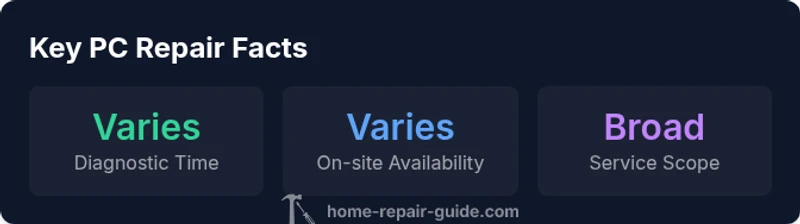
There are distinct trade-offs between in-home, in-shop, and remote diagnostic services. In-home visits maximize convenience and reduce transport risk but may be limited by on-site parts availability and environmental factors. In-shop diagnostics typically offer faster turnaround when parts need to be tested or installed with specialized tools, plus a controlled environment for testing. Remote diagnostics can be a great first step for software issues, malware cleanup, or performance tuning, often with lower upfront costs. The right choice depends on your problem, your device’s condition, and your tolerance for downtime. A reputable provider will discuss options openly, outline expected timelines, and confirm whether remote work is sufficient or if an in-person visit is necessary.
Common PC repair scenarios and outcomes
Typical PC repair scenarios range from boot failures and software corruption to malware infections and hardware degradation. Software problems often respond well to diagnostics, clean installations, or driver updates, with minimal downtime. Malware removal may require system restoration and user education on safe browsing. Hardware issues—such as failing power supplies, RAM faults, or hard drive problems—might require component replacement or data migration. In many cases, a repair can restore performance and extend the device’s useful life, but the outcome depends on the age of the machine and the availability of compatible parts. A reliable shop will set expectations, provide a test plan, and verify results with you before finalizing any work. From a Home Repair Guide perspective, the focus should be on transparent communication and verifiable improvements.
Cost considerations and budgeting tips
Cost considerations for PC repair vary widely based on the problem, device age, and whether new parts are needed. Expect a diagnostic fee in most scenarios, plus labor and any required parts. Some issues may be resolved with software fixes that incur little to no hardware cost, while others may require an upgrade or replacement that increases expense. A prudent budgeting approach is to request a written estimate before work begins, understand whether diagnostic fees are credited against future repair, and ask about ongoing maintenance options that can prevent recurrent problems. Home Repair Guide recommends comparing multiple quotes and clarifying warranty coverage on parts and labor to avoid surprises.
Preparation tips for a successful repair visit
Preparing adequately increases the likelihood of a smooth repair experience. Back up important data before handing over the device, disable full-disk encryption if the shop needs access, and remove any sensitive accounts from automatic sign-in. Gather model information, serial numbers, and a list of symptoms with timestamps. Provide the technician with a clear description of recent changes or software installs. If you have essential files, discuss data protection and backup restoration during the intake. Finally, ensure you have a plan for how you’ll handle downtime, whether that means using a backup device or coordinating a loaner with the shop.
What to do if repair fails or device downtime
If a repair fails or your device experiences downtime after service, contact the shop promptly and request a written failure report and a plan for remediation. Reputable shops will investigate the root cause, offer corrective actions, and may provide a warranty extension or free follow-up diagnostic within a reasonable window. Document all communications and keep receipts or service orders for reference. If needed, seek a second opinion from another local provider and compare the proposed fixes and timelines. Home Repair Guide advises maintaining open communication with the service provider and understanding your warranty rights.
Common PC repair service types
| Service Type | What It Covers | Notes |
|---|---|---|
| Diagnostic Scan | Identify issues and root cause | Time varies by device |
| Software Troubleshooting | OS errors, malware removal | May require reboot and updates |
| Hardware Repair | Component replacement, motherboard/RAM | Part availability may affect timing |
FAQ
What should I expect during a diagnostic visit?
During a diagnostic, the technician assesses symptoms, tests system components, and identifies the root cause. You’ll receive a written scope of work and a transparent estimate before any repair. If data risk is involved, they should discuss options for backups and protection.
Expect an assessment of symptoms, tests, and a clear repair plan with a written estimate.
Is it better to use a local shop or remote service?
Local shops often provide hands-on diagnostics and faster parts access, while remote service can handle software issues quickly without on-site visits. For hardware problems, a local shop is typically preferable to ensure proper testing and safe handling of components.
Local shops are usually best for hardware problems; remote service works well for software issues.
How can I protect my data during repair?
Back up essential data before handoff and discuss data protection policies with the shop. Ask about in-shop data handling, quarantine of sensitive files, and whether the diagnostic or service includes a data backup option.
Back up data first and confirm data protection practices with the shop.
What are the signs that a repair isn’t worth it?
If the estimated cost approaches or exceeds the device’s value, or if the shop cannot provide a transparent plan with clear warranties, re-evaluate. Look for a second opinion before committing to expensive repairs.
If costs outweigh device value or plans are unclear, get a second opinion.
How long do repairs usually take?
Turnaround varies by issue and parts availability. Software fixes can be completed within hours, while hardware replacements may take several days if parts need to be ordered. Always request an estimated timeline in writing.
Turnaround depends on issue and parts; ask for a written timeline.
What if my device is out of warranty?
Out-of-warranty devices often incur standard diagnostic and labor charges. Ask about warranties on new parts and any service guarantees. Compare with the cost of replacement when repairs are expensive.
Expect standard charges; compare repair vs replacement costs.
“Reliable PC repair starts with a transparent assessment and clear communication about scope, cost, and turnaround.”
Key Takeaways
- Compare local shops for upfront diagnostic quotes
- Ask about on-site vs in-shop service options
- Prepare your device and data before a visit
- Check warranty terms on parts and labor