Nearest Automobile Repair Shop: A Practical Guide
A data-driven guide from Home Repair Guide to finding the nearest automobile repair shop, evaluating reliability, and getting clear estimates—empowering homeowners and renters to choose confidently.


According to Home Repair Guide, finding the nearest automobile repair shop can dramatically reduce downtime and stress during car trouble. This quick answer provides actionable steps to locate the closest, reputable shop, verify basic capabilities (diagnostics, brakes, and essential services), compare estimates, check credentials, and schedule service quickly—so you can get back on the road with minimal delay.
Why the Nearest Automobile Repair Shop Matters
When your car breaks down, the nearest automobile repair shop becomes more than a convenience—it can be a lifeline for reducing downtime, tow costs, and the stress of unexpected repairs. A nearby shop is likely to offer quicker vehicle throughput, easier follow-up visits, and better scheduling flexibility for urgent services like brake work or emission retests. The Home Repair Guide team emphasizes that proximity should be evaluated alongside capacity and credibility. In dense urban environments, a driver can typically reach multiple reputable shops within a short drive, while rural areas may require planning in advance. Regardless of setting, the goal is to identify the nearest automobile repair shop that also demonstrates diagnostic capability, transparent pricing, and dependable warranties. By prioritizing both location and trust signals, you minimize risk and keep your vehicle in reliable hands.
For homeowners and renters alike, knowing how to locate the nearest automobile repair shop quickly translates into practical advantages: reduced wait times, fewer miscommunications, and clearer expectations about parts and labor. This approach helps you avoid shopping purely on distance or price alone, and instead creates a balanced decision framework that favors both proximity and quality.
As you evaluate options, remember that the nearest automobile repair shop can vary by neighborhood, traffic patterns, and time of day. The most reliable choice often blends a short drive with a proven track record of transparent diagnostics and fair pricing. In short, proximity matters, but it pairs best with credibility and service capability.
Bringing this mindset into your search will pay off when emergencies strike or routine maintenance becomes overdue. Your objective is to identify a few nearby shops that meet essential criteria—then compare estimates, warranties, and scheduling options to confirm you’ve found the right fit.
Defining 'Nearest' vs 'Reliability' and 'Availability'
The term nearest is geographic in nature, but it should harmonize with reliability and availability. A shop two miles away that cannot diagnose your issue within a reasonable timeframe may be less useful than a twenty‑mile shop with a rapid diagnostic lane and transparent pricing. When evaluating proximity, consider road conditions, typical wait times for appointment, and whether the shop offers after-hours or emergency service. It’s also smart to check whether the shop has express lanes for common jobs (oil changes, brake repairs, tire mounting), which can shorten turnaround even when distance is longer. In practice, map out a short list of candidate shops within reasonable driving distance and score them on diagnostics capability, warranty terms, pricing transparency, and appointment availability. This approach helps you choose the nearest automobile repair shop that truly meets your needs, rather than simply settling for the closest option.
Distance should be weighed against service quality. If a nearby shop lacks diagnostic equipment or a transparent warranty, a slightly farther shop with a proven track record may save time and money in the long run. Use a simple scoring rubric: proximity (30%), diagnostics capability (30%), pricing transparency (20%), and appointment availability (20%). The goal is a balanced choice that honors both location and credibility.
For a typical homeowner or renter, this means prioritizing shops that offer clear estimates and patient explanations, even if they’re not the absolute closest. Your final pick should be a shop you’re comfortable contacting quickly and trusting with your vehicle’s health.
This section helps you avoid the trap of assuming distance alone equals value. Proximity is a component of convenience; reliability is the foundation of long-term satisfaction. A nearby shop with strong communications and fair pricing remains a smart shorthand for a well‑managed repair experience.
Signals of a Reputable Shop Near You
Locating the nearest automobile repair shop is only half the task; evaluating credibility is the other half. Look for clear signs of reliability that can be verified quickly. First, check credentials: ASE certification or equivalent recognitions indicate standardized training and ongoing education. A visible warranty policy—both parts and labor—demonstrates accountability. Transparent, itemized estimates posted before work begins signal honesty about pricing. A well-organized counter or service desk, legible signage, and a clean, well‑lit workspace are subtle indicators of professional operations. Ask about diagnostic facilities and whether the shop uses modern scan tools compatible with your vehicle brand and model. Many reputable shops also publish turnaround estimates for common jobs, so you can gauge scheduling availability.
Customer testimonials and independent reviews also help, but cross-check details like warranty terms and parts sourcing. A reputable shop will discuss parts options (OEM vs aftermarket) and provide a written plan that outlines steps, anticipated diagnostics, and a clear price range. Finally, assess communication: friendly staff who answer questions directly, provide follow‑up contact, and document your vehicle’s symptoms; these behaviors are often as important as the shop’s physical appearance.
When you identify a few nearby options with these credibility signals, you’ll increase the likelihood that the nearest automobile repair shop you choose will meet expectations for job quality, timeliness, and transparency.
How to Locate the Nearest Automobile Repair Shop Efficiently
Start with a map-based search focusing on your zip code or neighborhood. Enter the keyword nearest automobile repair shop and apply filters for distance, hours, and customer ratings. Prioritize shops that display clear, published hours and a dedicated service desk. Cross-reference results with independent review sites to confirm consistency in experiences—look for lower one- and two-star clusters and read the context of those reviews. Phone ahead to confirm appointment availability and to ask whether they handle your specific issue, such as transmission concerns, brake work, or electrical diagnostics. If you drive a newer vehicle requiring advanced diagnostics, verify that the shop has the necessary scan tools and software updates. Finally, note down at least two to three options and compare them using a simple rubric: distance, hours, diagnostics capabilities, pricing transparency, and warranty terms. This approach helps you efficiently locate the nearest automobile repair shop that also offers strong service quality.
Digital tools can streamline this process further: save locations in a single list, set reminders for follow-up, and use voice search when you’re on the go—ensuring you stay focused on safety while you navigate to the right shop.
To maximize benefit, allow time for a quick pre-visit call. A short conversation can confirm whether the nearest automobile repair shop can diagnose your issue and provide a fair estimate, reducing the risk of misalignment on arrival.
How to Evaluate Pricing and Get Accurate Estimates
Pricing transparency is a cornerstone of trust when you’re comparing the nearest automobile repair shops. Ask for a written estimate that itemizes parts, labor, taxes, and shop supplies. If the shop uses core charges or disposal fees, get those itemized too. When possible, request a range rather than a single figure in the initial discussion, particularly for diagnostic work where results may drive the final scope. Compare not only the bottom line but also the included warranties, the estimated time to completion, and the availability of ongoing maintenance plans.
Be cautious of unusually low estimates that exclude essential items or vague language about “diagnostics.” Ask for what would trigger price increase and how changes will be communicated. Reputable shops will provide a transparent breakdown and a clear scope of work, with an anticipated warranty on parts and labor. If you have an existing maintenance history, share it to avoid duplicative diagnostic fees. Finally, consider total cost of ownership: longer work that prevents future failures may offer greater value than a cheaper, one-off fix. The right nearest automobile repair shop will deliver clear, accurate estimates and stand behind their price with credible warranties.
What to Prepare Before Visiting a Shop
Before you head to the nearest automobile repair shop, gather essential documents and notes. Bring your vehicle’s VIN, current registration, and proof of insurance if requested for certain procedures. Prepare a concise symptom log—when the issue occurs, conditions (driving, braking, acceleration), and any dashboard warnings. If you’ve had prior service for the same problem, collect invoices or service history to help the technician diagnose quickly. Create a brief checklist of questions: What are the potential causes? What is the proposed scope of work? What are the estimated parts and labor costs? Are aftermarket parts acceptable, and what are the warranty terms? If you’re dealing with a time-sensitive repair, share your deadline and request a clear plan with milestones.
Having this information ready reduces back-and-forth and helps your chosen shop provide an accurate estimate. It also signals that you’re organized and value their time, which often leads to better customer service and smoother coordination when you arrive at the nearest automobile repair shop. If you use a vehicle history app or digital records, have them accessible as well for quick reference during the visit.
In addition, bring a preferred method of communication in case the shop needs to contact you for updates. Whether you prefer text, email, or phone calls, consistent communication improves satisfaction and helps you track progress on the repair job at the nearest automobile repair shop.
Digital Tools and Resources to Compare Shops
Leveraging digital tools can dramatically streamline your search for the nearest automobile repair shop. Map apps, car forums, and independent review sites offer a wealth of insights. Use filters for distance, hours, and certifications (like ASE). Create a short list of candidates and compare their published hours, diagnostic capabilities, and warranty terms side by side. Many shops offer online appointment scheduling and price quotes—take advantage of these features to minimize back-and-forth. If a shop doesn’t publish estimates or warranties online, call to confirm before you commit.
Integrating tools into your workflow helps you stay organized. Save each shop’s address, hours, and contact info in a single notes app or spreadsheet. Record your quote comparisons and attach notes about your vehicle’s symptoms for reference. For homeowners and renters, these tools translate to a faster path to the nearest automobile repair shop while keeping you in control of the decision process.
Remember to verify the recency of reviews, focusing on shops with recent, credible feedback. Look for patterns: consistent communication, transparent pricing, and timely updates. The combination of local knowledge and digital efficiency makes locating the nearest automobile repair shop a practical, repeatable process.
By embracing digital resources alongside in-person due diligence, you can dramatically improve outcomes when finding a nearby auto service provider.
Common Pitfalls and How to Avoid Overpay and Scams
Even with a strong nearby option, it’s easy to fall into common traps. Beware of shops that push unnecessary services or pressure you into expensive options without a transparent explanation. Red flags include vague warranties, “diagnostic fee” that isn’t credited against the final bill, and estimates that change dramatically after the work begins. To avoid these issues, insist on written estimates with line items and request a parts/labor breakdown. If the shop claims a certain diagnosis is needed but cannot explain it clearly, ask for a second opinion or a diagnostic printout. Be wary of strong upsell language or pressure to sign before fully understanding the scope.
Additionally, don’t rely solely on proximity to judge value. The nearest automobile repair shop may not offer the best long-term solution if the job requires specialized equipment or technicians. Compare a few nearby options and weigh price against credibility, warranty, and communication. A well‑informed choice reduces the risk of paying extra, receiving poor workmanship, or facing ambiguous post-repair follow-ups at the nearest automobile repair shop.
Finally, protect yourself with documentation. Save every estimate, invoice, and service note, and keep the records for your future visits. Good shops will welcome this transparency and keep you informed throughout the repair process at the nearest automobile repair shop.
When Distance Matters Most: Emergencies and Planning Ahead
In emergencies, proximity can be the decisive factor in your vehicle’s safety and your schedule. When urgent failures occur—like loss of steering, brake system issues, or a disabled alternator—being able to reach the nearest automobile repair shop quickly is crucial. Prepare a short list of reliable options within a reasonable drive, including shops with after-hours or emergency service. Even when time is tight, you should still seek credibility signals: written estimates, a transparent warranty, and a clear explanation of the diagnostic steps. For non-urgent repairs, plan ahead by scheduling routine maintenance at a nearby shop to keep your vehicle healthy and avoid last-minute scrambles.
Distance remains important, but credibility should not be sacrificed for speed. The best strategy is to combine both: identify a couple of nearby, trusted shops and verify their service capabilities before you need them. Having this playbook ready means you’re prepared to respond quickly and effectively when the next repair arises at the nearest automobile repair shop. Regular maintenance with trusted providers also reduces the chance that you’ll be stuck choosing purely on proximity during a stressful repair moment.
In the end, the optimal approach blends proximity with proven competency. This balance ensures you can locate the nearest automobile repair shop that offers reliable diagnostics, transparent pricing, and dependable service when you need it most.
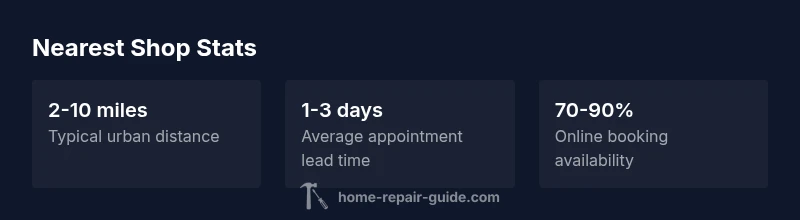
Distance to nearest auto repair shop by setting
| Scenario | Typical Distance to Nearest Shop | Notes |
|---|---|---|
| Urban | 2-5 miles | High density, many options |
| Suburban | 5-15 miles | Moderate options, traffic considerations |
| Rural | 15-40 miles | Fewer shops, plan ahead |
FAQ
How do I find the nearest automobile repair shop?
Start with map apps and search for nearby shops, then filter by distance and services. Read recent reviews and confirm the shop offers the diagnostics you need. Always request a written estimate before work begins.
Use maps to locate nearby shops, then check reviews and get a written estimate before any service.
What should I look for in the nearest automobile repair shop?
Look for certified technicians, visible warranties, clear price estimates, and updated diagnostic equipment. A clean, well‑organized shop and responsive staff are also strong credibility signals.
Check for certifications, clear pricing, good communication, and current diagnostic tools.
How can I compare prices without compromising quality?
Ask for itemized estimates that separate parts from labor, compare warranty terms, and verify if aftermarket parts are acceptable. Don’t choose solely based on price; weigh credibility and diagnostics capabilities.
Get itemized quotes and compare warranties, not just the price.
Is distance more important than reputation?
Distance matters for convenience, but reputation and reliability should drive decisions. A slightly farther shop with strong reviews and transparent pricing often yields better outcomes long term.
Don’t choose distance over trust—quality matters more in the long run.
What if I need emergency service?
If possible, choose a shop that offers after‑hours or emergency service and has clear emergency protocols. Keep a short list of nearby options ready for urgent situations.
Prefer shops with emergency options and clear communication.
Are online reviews trustworthy?
Reviews can be valuable when read in aggregate. Look for patterns across multiple sources and verify details such as warranty terms and service outcomes.
Use multiple sources and look for consistent themes.
“Proximity is important, but reliability and transparency drive long‑term value. Always verify credentials, warranties, and communication before authorizing any work.”
Key Takeaways
- Identify a shortlist of nearby shops with credible signals.
- Compare transparent estimates and warranties before authorizing work.
- Verify credentials and diagnostic capabilities, not just distance.
- Ask about express lanes for quicker turnover on common repairs.
- Plan ahead for emergencies by knowing trusted nearby options.