Is It Safe to Repair a Bent Rim? A Practical Guide
Discover whether repairing a bent wheel rim is safe, when replacement is needed, and how to evaluate risk. Practical guidance from Home Repair Guide today.


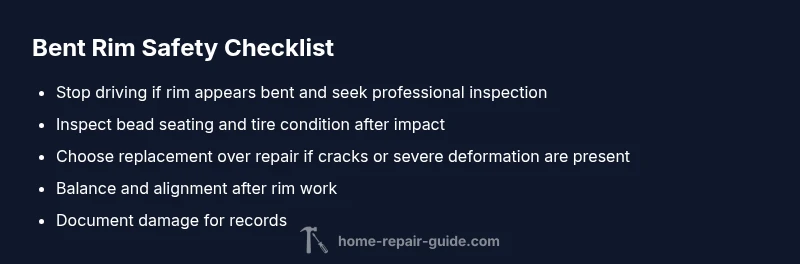
Is it safe to repair a bent rim? According to Home Repair Guide, repair is rarely safe and professional evaluation is essential. A bent rim can compromise tire bead seating, wheel balance, and structural integrity, increasing blowout risk. The safest path is replacement or professional straightening if possible. Do not drive on a rim that shows a visible bend, even if the tire appears to seal.
Why a Bent Rim Demands Attention
A bent or out-of-round wheel rim is more than a cosmetic issue. The rim is the foundation that the tire bead seals against, and even small deformations can cause air leaks, bead slippage, and uneven tire wear. In addition, a bent rim disrupts the wheel’s balance, which translates to steering vibration and potentially unsafe handling at highway speeds. According to Home Repair Guide, the safest approach is a professional assessment to determine whether a repair is feasible or if a replacement is necessary. If the bend is severe or there are cracks, the only safe option is a new rim. For homeowners, this means prioritizing safety over a quick fix and avoiding DIY repairs that could mask the true damage.
Key risks include tire bead failure, loss of air pressure, and reduced control in emergency maneuvers. Visual inspection is not enough; a professional will also check for radial runout, bead integrity, and any hidden cracks that aren’t obvious from the outside. The Bottom Line: a bent rim is a red flag, not a puzzle to solve with a wrench and a spreader bar.
When DIY Is Not Advisable: Safety First
DIY rim straightening or bending repair is strongly discouraged by most repair professionals. Even small misalignments can transfer force into the tire bead, causing slow leaks or sudden deflation. If you’re tempted to attempt a fix, you risk creating a crack that worsens with driving. The Home Repair Guide team emphasizes that safe handling requires specialized tools and calibration equipment to verify wheel geometry and runout. A misaligned rim can also affect brake rotor alignment and hub bearings, leading to premature wear or failure. Safety first means recognizing the limits of a home workshop and choosing a professional path when a rim is compromised.
Always stop driving if you notice a wobble, loud thuds, or pulling to one side after an impact. In those moments, your focus should be on securing the vehicle and arranging professional inspection rather than pursuing a DIY repair that could jeopardize you and others on the road.
How to Inspect a Bent Rim Safely
Before deciding on repair or replacement, perform a careful inspection when you can do so safely off the road. Look for obvious bends, creases, or cracks on the outer and inner rims. A straight edge or a calibrated wheel alignment tool can reveal runout. Check the bead seat area for dents that could prevent a proper tire seal. If you can remove the tire safely, inspect the tire bead and the rim seat for damage. Do not attempt reseating a bead or mounting a tire if you see a bend or crack. If you detect any deformation, arrange for a professional wheel shop to inspect.
Remember to check for related issues such as wheel lug nut torque and hub mounting integrity, which can be affected by an impact event.
Professional vs DIY: Making the Right Choice
Professional evaluation is critical when a rim is suspected of being bent. A shop can measure rim runout with a dial indicator, assess bead seating, and determine whether a straightening process is viable. If the rim is severely bent, cracked, or if bead damage is present, replacement is the recommended option. Shops may offer a straightening service for minor bends, but this often depends on the rim material, extent of damage, and the vehicle’s safety requirements. DIY alternatives typically do not restore the original curvature and can lead to cumulative damage over time.
What Happens in a Rim Repair or Replacement
Rim repair options depend on damage severity. Minor bends may be corrected using professional wheel straightening equipment, followed by a thorough inspection for cracks. More severe damage often requires rim replacement, which ensures structural integrity and safe tire mounting. If the rim is replaced, a new wheel must be properly balanced and aligned to avoid vibrations and uneven tire wear. In some cases, the tire itself may need to be replaced if bead seating has been compromised. When in doubt, err on the side of safety and choose replacement over repair to preserve road manners and occupant safety.
Costs and Budgeting Tips
Cost considerations vary by rim type, vehicle, and region. In general, rim repair or replacement can be a significant investment, particularly for alloy or specialty rims. It’s wise to obtain a written estimate that itemizes the rim, mounting, balancing, and alignment services. If the wheel is rebuilt or straightened, ask about warranty coverage and the potential impact on tire warranties. Homeowners should plan for the possibility of a full rim replacement, which could involve sourcing a compatible wheel and ensuring proper fitment.
Prevention and Maintenance Tips
To minimize future rim damage, drive with caution over potholes and speed bumps, especially in poor road conditions. Regularly check tire pressure and inspect rims after impact events. Schedule periodic wheel balancing and alignment services to maintain even wear and stable handling. Use high-quality tires and avoid aggressive tire mounting procedures. Finally, maintain a small repair toolkit in the vehicle that can help you safely document incidents and communicate them to a professional.
Steps
Estimated time: 2-6 hours
- 1
Pause and secure safety
If you notice vibration or warning signs after an impact, safely move to a stable location and engage hazard lights. Do not continue driving if the steering feels unpredictable or if there is a visible rim deformity. Assess the scene and plan the next steps.
Tip: Keep a reflective triangle and gloves in the trunk for safe roadside checks. - 2
Lift and secure the vehicle
Use a proper jack on a flat surface and place jack stands under the vehicle before removing the wheel. Loosen lug nuts while the car is on the ground, then lift and support the wheel securely to prevent movement while you inspect.
Tip: Never rely on the jack alone to support the vehicle; always use stands. - 3
Inspect the rim and tire
Visually inspect the rim for bends, cracks, or creases. Remove the tire if safe to do so and look for bead damage and bead seating issues. Use a straight edge or feel the rim with gloved hands to detect runout.
Tip: Take clear photos from multiple angles to document damage for the shop. - 4
Consult a professional
If you see a bend or suspect bead damage, arrange a professional wheel shop evaluation. Do not attempt to fix a bent rim with tools at home. A pro can confirm whether straightening is possible or if replacement is required.
Tip: Ask for a written estimate that includes mounting, balancing, and alignment. - 5
Decide on repair or replacement
Based on the shop’s assessment, decide whether to repair the rim or replace it. If the rim is cracked or the bead is compromised, replacement is the safer choice. Ensure proper balancing and alignment after the service.
Tip: Ensure the tire is inspected for leaks and replaced if the bead seal is compromised. - 6
Test and reassemble
Reinstall the wheel and torque lug nuts to specification. Lower the vehicle, then perform a cautious test drive to verify there are no vibrations or handling issues. If anything feels off, return to the shop for a recheck.
Tip: Balance and alignment should be rechecked after any rim work to prevent uneven wear.
Diagnosis: Vibration, steering pull, or unusual noise after hitting a pothole or curb.
Possible Causes
- highVisible bend or out-of-round rim
- mediumTire bead is damaged or unseated
- lowWheel hub or axle bending from impact
- lowSuspension alignment issue triggered by impact
Fixes
- easyStop driving and visually inspect the rim; photograph damage if safe, then seek professional evaluation
- easyHave a shop check bead seating and tire seal; confirm no bead damage or air leaks
- mediumIf a bend is confirmed, pursue rim replacement or professional straightening
- mediumAddress any suspension/alignment issues after rim work
FAQ
Is it ever safe to repair a bent rim at home?
No, rim repair typically requires specialized equipment and assessment. At-home attempts can mask the damage and create safety risks. Always consult a professional.
No—rim repair is best left to professionals who have the right equipment and training.
What are signs that a rim is bent?
Visible bend, wheel vibration, steering pull, and unusual tire wear are common indicators a rim may be bent. Unusual noises after impact warrant inspection.
You’ll often feel vibration or pulling, and there may be a visible bend.
Will repairing a bent rim void tire warranty?
Repair work can affect warranty coverage. Check with your tire and vehicle manufacturer and the shop performing the work.
Repair work can impact warranties; check with the provider.
How do shops decide between repair and replacement?
They assess bend severity, bead seating, cracks, and overall safety. If damage compromises rim integrity, replacement is recommended.
If the rim’s integrity is compromised, replacement is safer.
What maintenance tips help prevent rim damage?
Drive carefully over potholes, maintain proper tire pressure, and inspect rims after impacts. Regular balancing and alignment help prevent accelerated wear.
Drive carefully, check pressure, and inspect rims after impacts.
Watch Video
Key Takeaways
- Avoid DIY rim repairs when a bend is detected
- Professional assessment is essential for safety
- Replacement is often safer than repair for severe damage
- Balance and alignment are critical after rim work