Rim Repair Near Me: Practical Wheel Guide
Find reliable rim repair near me with Home Repair Guide. Learn which rim damages are repairable, typical cost ranges, turnaround times, and how to choose a trustworthy local shop.


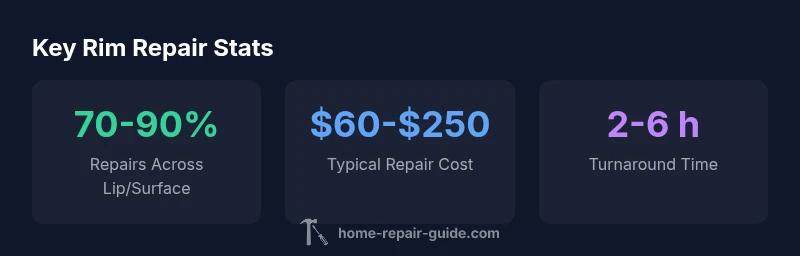
Rim repair near me refers to local shops that fix bent rims, curb rash, or cracked wheels. Most repairs are possible when damage is limited to the lip or surface, while structural cracks may require replacement. Costs vary by damage and wheel type, and a certified shop should verify alignment and warranty coverage.
What Rim Repair Involves and Why It Matters
Rim repair near me encompasses a range of services aimed at restoring wheel integrity and performance without replacing the entire wheel. Modern rims are typically aluminum or steel alloys, each with different repair implications. The goal is to return the wheel to its original contour, ensure a true bead seat for the tire, and preserve structural strength. According to Home Repair Guide, most wheel damage arises from curb impacts, pothole strikes, and corrosion buildup from exposure to road salts. When a repair is feasible, a technician will inspect both the cosmetic lips and the base rim to determine if the damage is local or structural. The key is safety: a compromised rim can lead to tire failure or loss of control at highway speeds. When you search rim repair near me, prioritize shops with documented certifications, transparent warranties, and a willingness to share before-and-after photos. The Home Repair Guide team emphasizes that safety and reliability should drive the decision, not just price or turnaround time.
Common Rim Damage and Repairability
Not all rim damage is created equal. Cosmetic damage like curb rash affects appearance but not necessarily performance, and it is often repairable with refinishing, repainting, or coating. Lip bends, which distort the wheel’s edge that seals with the tire bead, may be corrected through straightening or resurfacing, provided the bead seat remains intact. Structural cracks, heat-related distortions near mounting points, or extensive corrosion are red flags that may require rim replacement rather than repair. The ability to repair also depends on wheel design, alloy composition, and whether the wheel carries a run-flat or performance rating. Home Repair Guide highlights that a professional inspection is essential to distinguish cosmetic flaws from problems that compromise safety. When you call a local shop, ask for a written assessment and photo documentation of the damage before proceeding with any service.
How Professionals Repair Rims: Methods and Limits
Professional rim repair employs several techniques aimed at restoring shape and surface integrity. Lip straightening uses hydraulic or mechanical force to coax a bent lip back toward its original contour, followed by resurfacing to correct any high spots. Cosmetic refinishing can address curb rash and oxidation, with careful sanding, primer, paint, and a protective clear coat. For aluminum rims, localized welding may be used to repair cracks, but this approach has strict limits: welds must pass a pressure and fatigue test, and heat distortion must be managed to avoid further warping. Steel rims behave differently and may tolerate welded repair better, but corrosion resistance and wheel life remain concerns. The decision to repair depends on the damage’s location relative to the bead seat, the rim’s design, and the tire brand and size involved. A reputable shop will clearly outline what is possible, what isn’t, and the expected longevity of the repaired wheel.
DIY vs Professional Repair: Risks and Rewards
DIY rim repair is generally discouraged for anything beyond cosmetic touch-ups. Even seemingly minor lip dents can alter the wheel’s balance, runout, and tire seal, creating safety risks. Professional repair involves calibrated equipment, torque standards, and fatigue testing to ensure the wheel can safely carry load over time. The risk of making a small issue worse is real; professional technicians can identify hidden flaws that DIYers might miss, such as hairline cracks that could propagate under stress. If cost or time is a constraint, a DIY approach for cosmetic refinishing could be viable only for non-structural rims and on wheels not equipped with performance or run-flat tires. Always consult a qualified technician if there is any doubt about structural integrity. The safety implications of improper repair far outweigh the initial savings.
The Costs, Warranties, and Durability You Should Expect
Rim repair costs vary widely based on damage type, wheel design, and local labor rates. Cosmetic work is typically less expensive than structural repair or complete lip replacement. Warranties for repaired rims commonly cover workmanship and coating for a limited period, while coverage for the tire itself remains separate. In most cases, durability hinges on the repair’s quality and whether the rim was properly prepped, welded (if applicable), and finished. If the wheel has seen previous repairs, the cumulative effect on wheel strength should be evaluated. For many drivers, the decision to repair vs. replace is influenced by the rim’s price, the tire’s compatibility, and the vehicle’s safety profile. The Home Repair Guide analysis suggests you compare multiple quotes, verify the shop’s certification, and request a detailed warranty policy before committing. This helps ensure you get a durable fix rather than a short-term cosmetic improvement.
How to Find a Trustworthy Rim Repair Shop Near You
Choosing the right rim repair shop is a mix of practical checks and trusted recommendations. Start by looking for shops with ASE or manufacturer certifications, which indicate adherence to industry standards. Read multiple customer reviews to gauge consistency in quality and turnaround times. Ask for before-and-after photos of similar rim repairs and request documentation of the repair method used, particularly for structural fixes. A good shop will provide a transparent quote, explain the process, and offer a written warranty. Local familiarity can be an advantage: a shop that understands common pothole damage in your area will be better prepared to address the issues you’re likely to encounter. If you have a fleet or multiple vehicles, ask about scale pricing and long-term support. Home Repair Guide recommends compiling a short list of candidates and evaluating them based on certifications, warranties, and evidence of prior successful repairs.
What to Expect During a Rim Repair Visit
During your visit for rim repair near me, expect a thorough inspection of both the wheel and tire condition. Technicians check rim runout, bead seat integrity, and signs of heat damage, which could indicate prior over-inflation or aggressive braking. A typical diagnostic includes measurements with precision gauges, photos, and a written assessment outlining recommended repairs and accompanying costs. If welding or extensive resurfacing is needed, the shop should provide a time estimate and safety considerations. After the work is completed, a test fit with the tire bead to verify a proper seal is performed, followed by a wheel balance check. You should leave with a clear invoice, any warranty documentation, and tips on future maintenance to prolong rim life. A trustworthy shop will also advise on tire pressures, load limits, and driving habits that protect rims in the long term.
Maintenance Tips to Extend Rim Life
Prevention is the best strategy for rim longevity. Maintain correct tire pressure to minimize heat and stress on the wheel. Avoid aggressive curb encounters by practicing careful parking and maneuvering near curbs. Regular wheel alignment checks help prevent uneven wear and early rim damage. For aluminum rims, applying a protective clear coat or wax can deter corrosion and make future refinishing easier. If you drive in harsh winter climates, consider anti-corrosion agents and rust inhibitors on exposed rims after the season ends. Finally, schedule routine inspections, even if the tire is still in good condition, to catch small issues before they become costly problems. This proactive approach aligns with Home Repair Guide’s emphasis on safety and durability.
Rim repair scenarios comparison
| Issue Type | Repair Type | Typical Time |
|---|---|---|
| Bent lip | Lip straightening / resurfacing | 2-4 hours |
| Cosmetic curb rash | Cosmetic refinishing and sealing | 1-2 hours |
| Cracked rim | Structural repair or replacement | N/A |
| Corrosion damage | Resurfacing with protective coating | 2-5 hours |
FAQ
Is rim repair near me a safe option for damaged wheels?
Yes, for non-structural damage a professional rim repair can restore appearance and performance. Structural cracks likely require replacement. Always choose a certified shop and verify warranty.
Yes—non-structural rim damage can be safely repaired by a certified shop, but cracks usually mean replacement. Verify warranty.
Can any rim be repaired, or are some too damaged?
Not all rims are repairable. Chewed lip, cracks near mounting holes, or heavy corrosion can be unsafe to repair and may require replacement.
Some rims cannot be safely repaired; a professional inspection decides.
How long does rim repair take?
Most repairs take a few hours; complex cases may require a day or more at the shop.
Usually a few hours, some cases take longer.
What warranties cover rim repairs?
Warranty terms vary by shop, typically 6 to 24 months, covering workmanship and coating. Check specifics with the provider.
Warranties vary by shop; ask for written terms.
DIY rim repair – should I attempt it?
DIY is not recommended for structural damage. Non-structural cosmetic fixes are possible but require proper tools and safety.
Don’t DIY structural rim repairs; leave it to pros.
How do I verify a shop's qualifications?
Look for ASE or manufacturer certifications, read reviews, review before-and-after photos, and confirm warranty terms.
Check certifications, reviews, and warranty terms.
“Rim repairs can restore wheel integrity and alignment when damage is limited to the lip or cosmetic surface. But structural cracks or deep corrosion often require replacement.”
Key Takeaways
- Inspect rims professionally before deciding on repair or replacement.
- Choose certified shops and compare warranties for durability.
- Costs vary by damage type; expect cosmetic work to be cheaper than structural repair.
- Rim repair near me strategies should prioritize safety and long-term reliability.