How to Repair Fortnite: A Troubleshooting Guide 2026
Learn a practical, step-by-step approach to repairing Fortnite issues on Windows and macOS, from file verification to reinstall. This guide emphasizes safe troubleshooting, driver updates, and network fixes to minimize crashes and lag.


By the end of this quick guide, you will know how to repair fortnite by diagnosing common issues, validating game files, updating drivers, adjusting settings, and reinstalling when necessary. The steps cover Windows and macOS, offering a repeatable procedure to reduce crashes, lag, and connection problems, so you can return to playing with confidence.
Fortnite repair workflow basics
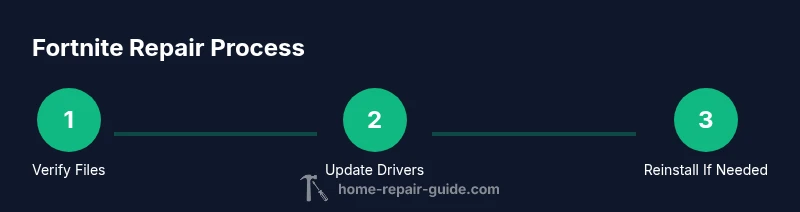
This section introduces the repair workflow you’ll use if Fortnite exhibits crashes, lag, or connection issues. Following a structured approach makes digital repair feel like home maintenance: methodical, repeatable, and safe for your computer and account. According to Home Repair Guide, a good repair session starts with a quick baseline check, then moves into file verification, driver updates, setting adjustments, and, if needed, a clean reinstall. If you’re wondering how to repair fortnite, begin by noting the exact problem (crash, lag, or disconnect) and the platform you’re using. Treat the issue like a small project: define the goal (stable gameplay), identify dependencies (network, software, hardware), and proceed with a minimal set of steps before escalating. A calm, documented approach reduces downtime and helps you replicate success on future patches.
Fortnite repair workflow basics
This section introduces the repair workflow you’ll use if Fortnite exhibits crashes, lag, or connection issues. Following a structured approach makes digital repair feel like home maintenance: methodical, repeatable, and safe for your computer and account. According to Home Repair Guide, a good repair session starts with a quick baseline check, then moves into file verification, driver updates, setting adjustments, and, if needed, a clean reinstall. If you’re wondering how to repair fortnite, begin by noting the exact problem (crash, lag, or disconnect) and the platform you’re using. Treat the issue like a small project: define the goal (stable gameplay), identify dependencies (network, software, hardware), and proceed with a minimal set of steps before escalating. A calm, documented approach reduces downtime and helps you replicate success on future patches.
Tools & Materials
- Stable internet connection(Baseline speed; wired Ethernet recommended when possible)
- PC or Mac computer(Ensure it meets Fortnite’s minimum requirements for best troubleshooting results)
- Fortnite installed via Epic Games Launcher(Keep the launcher updated and the game library accessible)
- Latest graphics drivers(Update from NVIDIA, AMD, or Intel directly)
- Operating system updates(Windows Update or macOS updates for compatibility)
- Firewall/antivirus exceptions(Allow Fortnite and Epic Games Launcher through firewall)
- Backup copy of save data(Optional but recommended before reinstall)
Steps
Estimated time: 60-90 minutes
- 1
Prepare your environment
Close unnecessary background apps, ensure a stable network, and collect your Epic Games credentials. Document the exact problem you’re seeing (error codes, timestamps, or symptoms) to guide the rest of the process.
Tip: Have your account credentials and a recent backup plan ready before making changes. - 2
Verify Fortnite installation
Open the Epic Games Launcher, go to Library, click the three dots beside Fortnite, and choose Verify. The launcher will scan and repair the game files, which fixes corrupted assets without affecting your saves.
Tip: If verification fails, pause updates and retry after a few minutes to avoid network hiccups. - 3
Update graphics drivers
Visit the GPU vendor site (NVIDIA, AMD, or Intel) and install the latest Game Ready or Adrenalin drivers. Reboot after installation to ensure changes take effect.
Tip: If you notice stuttering after an update, roll back to a previous driver version temporarily while testing. - 4
Update OS and Fortnite patch
Apply any pending Windows/macOS updates and ensure Fortnite is on the latest patch. A mismatch between game and OS versions can create instability.
Tip: Restart twice if the update requires it to ensure a clean state. - 5
Check network and firewall
Prefer wired Ethernet; verify that Fortnite and Epic Launcher have firewall exemptions. If you use a VPN, disable it during troubleshooting to rule out network routing issues.
Tip: Test your connection with a quick ping to a Fortnite server and compare it to your baseline latency. - 6
Reinstall Fortnite if needed
If problems persist, uninstall Fortnite and clean up residual files before reinstall. A fresh install can resolve stubborn corruption or misconfigurations.
Tip: Back up important replays or settings if you rely on local saves. - 7
Test and fine-tune
Launch Fortnite and test the issue with a controlled session. Revisit driver and OS settings if new crashes occur, noting which changes helped.
Tip: Keep a small log of changes and outcomes for quick future reference. - 8
Establish a maintenance rhythm
Schedule regular checks for updates, drivers, and OS patches. A proactive approach reduces repeat issues and keeps your system stable.
Tip: Set calendar reminders for quarterly maintenance tests. - 9
Know when to seek official help
If issues persist after all steps, contact Epic Games Support and prepare a concise report of the steps you took. Collaboration with official channels speeds resolution.
Tip: Include error codes, timestamps, and system specs when contacting support.
FAQ
What should I try first if Fortnite keeps crashing?
Start with verifying game files in the Epic Games Launcher, then update graphics drivers and OS. If crashes persist, check for conflicting background applications or overlays.
First, verify the game files, then update drivers and OS. If crashes continue, check for background apps or overlays.
How do I verify Fortnite game files?
Open Epic Games Launcher, go to Library, click the three dots by Fortnite, and select Verify. Let the launcher complete the scan; it will repair or replace corrupted files.
Open Epic Games Launcher, verify Fortnite files, and let it fix any damaged data.
Can driver updates fix performance issues?
Yes. Updated graphics drivers often resolve crashes, improve FPS, and fix compatibility with new patches. Always restart after installation.
Yes, updating your graphics drivers can fix performance and stability issues.
Is it safe to reinstall Fortnite?
Reinstalling is safe and can resolve stubborn corruption. Ensure you back up local saves if needed, and use the Epic Games Launcher to reinstall.
Reinstalling is safe and can fix stubborn problems; back up saves first if needed.
Why would Fortnite be blocked by a firewall?
Firewall rules may block Fortnite's connectivity. Add exceptions for the Epic Games Launcher and Fortnite in your security software and OS firewall settings.
Firewalls can block Fortnite; add exceptions for Fortnite and the launcher.
What if I still have lag after fixes?
Lag can come from ISP routing or server-side issues. Test on a different network, check server status pages, and adjust in-game settings to favor stability.
If lag persists, try a different network and check server status; adjust settings for stability.
Watch Video
Key Takeaways
- Identify the exact Fortnite issue before taking action.
- Verify game files first to fix corruption quickly.
- Update drivers and OS to maintain compatibility.
- Reinstall as a last resort after other steps fail.