How Often to Use Loreal Bond Repair: A Practical Guide
Discover how often to use Loreal Bond Repair for optimal hair bond restoration. This comprehensive guide covers frequency, application tips, maintenance schedules, and troubleshooting to help homeowners make safe, informed decisions. Based on Home Repair Guide analysis, follow a sustainable plan for healthier, stronger hair.


You should establish a clear starting frequency for Loreal Bond Repair based on your hair’s health, aiming for 1–2 uses per week during the initial repair phase and adjusting to 1–2 times every 1–2 weeks for maintenance. Always follow the product instructions and consult a professional if you’re unsure. This approach aligns with best practices from Home Repair Guide.
What Loreal Bond Repair Does for Hair and Who Benefits
Loreal Bond Repair is a bond-building treatment designed to help repair damaged hair bonds caused by chemical processing, heat styling, and mechanical stress. When used correctly, it works with your hair’s natural keratin to strengthen strands, reduce breakage, and improve elasticity. The Home Repair Guide team emphasizes that bond repair is not a one-size-fits-all fix; the best outcomes come from a tailored routine that matches your hair’s condition, not just a single treatment. If your hair feels porous, brittle, or shows obvious discoloration from dyeing or bleaching, a disciplined maintenance plan can help you regain resilience over time. For readers who are starting fresh, set modest initial expectations and monitor how your hair responds over several weeks. According to Home Repair Guide, consistency matters as much as the product itself.
What Loreal Bond Repair Does for Hair and Who Benefits
Loreal Bond Repair is a bond-building treatment designed to help repair damaged hair bonds caused by chemical processing, heat styling, and mechanical stress. When used correctly, it works with your hair’s natural keratin to strengthen strands, reduce breakage, and improve elasticity. The Home Repair Guide team emphasizes that bond repair is not a one-size-fits-all fix; the best outcomes come from a tailored routine that matches your hair’s condition, not just a single treatment. If your hair feels porous, brittle, or shows obvious discoloration from dyeing or bleaching, a disciplined maintenance plan can help you regain resilience over time. For readers who are starting fresh, set modest initial expectations and monitor how your hair responds over several weeks. According to Home Repair Guide, consistency matters as much as the product itself.
What Loreal Bond Repair Does for Hair and Who Benefits
Tools & Materials
- L'Oreal Bond Repair treatment or booster(Follow label directions for use and timing)
- Sulfate-free shampoo(Gentle cleansing to avoid stripping bonds)
- Conditioner or deep conditioner(Use after treatment to seal in benefits)
- Wide-tooth comb(Detangle gently before and after treatment)
- Towel or microfiber wrap(Minimize friction and breakage during drying)
- Timer or clock(Track processing times per product instructions)
- Hair clips(Section hair for even product distribution)
- Heat protectant (optional)(If you plan to use heat styling after treatment)
Steps
Estimated time: Total time: 45-60 minutes per session
- 1
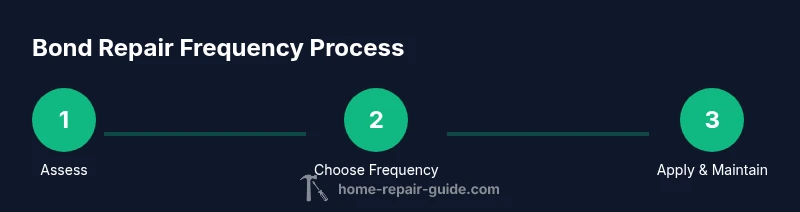
Assess hair health
Begin by evaluating your hair’s overall condition: elasticity, porosity, and recent chemical exposure. This baseline helps determine starting frequency and duration. If hair is highly damaged, you may opt for a more frequent schedule initially.
Tip: Keep a simple hair-health log for 4–6 weeks to track improvements. - 2
Decide starting frequency
Based on your assessment, choose an initial frequency (e.g., 1–2 times per week for the first 4–6 weeks for damaged hair; 1 time per week for moderate damage; or 1–2 times per week for maintenance if hair is healthy). Adjust based on how your hair responds.
Tip: If you notice increased dryness or weigh-down, reduce frequency slightly. - 3
Prepare hair and apply product
Gently wash with a sulfate-free shampoo, towel-dry, and section hair. Apply the bond repair product according to label directions, focusing on mid-lengths to ends. Avoid applying excessive product to the roots to prevent buildup.
Tip: Use a wide-tooth comb to distribute evenly. - 4
Rinse and condition
Rinse thoroughly after the specified processing time. Follow with a conditioner or deep treatment to seal in benefits and restore moisture. If the product requires a leave-in step, ensure you follow timing precisely.
Tip: Do not skip conditioner; it reinforces bond repair results. - 5
Evaluate after the first cycle
After the initial cycle, assess the feel and appearance of your hair. Look for reduced frizz, smoother texture, and improved manageability. Record your observations to plan future sessions.
Tip: Noticeable changes may take 2–4 weeks with consistent use. - 6
Adjust frequency as needed
If hair responds well, transition to maintenance by spacing sessions. If you still see breakage, consider returning to the higher-frequency phase for another 2–4 weeks.
Tip: Make gradual adjustments to avoid shocking the hair bonds. - 7
Integrate a sustainable routine
Incorporate bond repair into a broader hair-care routine: gentle cleansing, heat protection, and periodic deep conditioning. This helps sustain bond integrity long-term and supports overall hair health.
Tip: Consistency beats intensity; small, regular steps yield better outcomes.
FAQ
How often should I use Loreal Bond Repair on very damaged hair?
For severely damaged hair, begin with 1–2 uses per week for 4–6 weeks, then reassess. Always follow the product label and consult a stylist if you’re unsure.
If your hair is very damaged, start with one to two uses per week for a month or so, and adjust based on how your hair responds. Always read the label and ask a professional if needed.
Can I use Bond Repair if I color my hair?
Yes. Bond repair can be used with color-treated hair, but follow the instructions for timing and compatibility with color products. If you colored recently, allow a brief interval before applying treatments.
Yes, you can use Bond Repair with color-treated hair. Just follow the timing on the label and space it appropriately around color services.
Should I heat-style my hair after applying Bond Repair?
Limit heat during the initial repair phase to avoid stressing bonds. If you must use heat, always apply a heat protectant and keep settings moderate.
Limit heat while repairing bonds. If you must style with heat, use a protectant and keep temperatures moderate.
How long before I see improvements?
Improvements often appear gradually over several weeks with consistent use. Look for reduced breakage, smoother texture, and improved manageability.
You’ll likely notice changes over a few weeks with steady use. Look for less breakage and smoother hair.
Is Bond Repair suitable for all hair types?
Most hair types can benefit, but results vary. Start with a patch test if you’re unsure and adjust frequency based on how your hair responds.
Most hair types can benefit, but start with a patch test if you're unsure and adjust as needed.
Can I use Loreal Bond Repair daily?
Daily use is generally not recommended. Follow the product’s guidance for frequency to avoid overloading hair with active ingredients.
Daily use isn’t usually advised. Stick to the recommended frequency to avoid buildup.
Should I combine Bond Repair with a regular color service?
Coordinate timing with your colorist to minimize overlapping processing. Space out bond repair sessions away from harsh color appointments when possible.
Coordinate with your colorist and space bond repair sessions around color appointments when possible.
Watch Video
Key Takeaways
- Start with a reasonable frequency based on hair health.
- Follow product instructions to avoid overuse.
- Monitor hair response and adjust maintenance spacing.
- Pair bond repair with gentle cleansing and moisture care.