How Often to Use Bond Repair Shampoo: A Practical Guide
Learn how often to use bond repair shampoo for damaged hair, with practical schedules, tips for different hair types, and a step-by-step routine to protect and strengthen bonds.


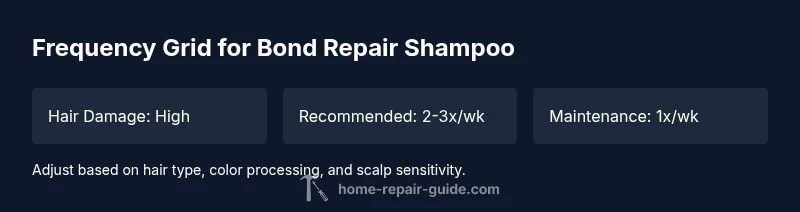
Using bond repair shampoo is commonly 2-3 times per week for very damaged hair and about once weekly for maintenance. Start with every other wash for a month, then adjust based on hair response and scalp comfort. Avoid daily use unless advised by a professional.
What bond repair shampoo does
Bond repair shampoos are formulated to help repair or protect the molecular bonds within the hair shaft damaged by chemical processing, heat styling, or mechanical stress. They typically combine gentle cleansing agents with bond-building ingredients and abundant conditioning components that leave hair feeling smoother and more resilient after every wash. The goal is not to moisturize alone, but to support overall hair integrity over time, reducing breakage and improving elasticity. According to Home Repair Guide, the same principle of gradual, consistent maintenance that applies to home repairs also applies to hair care: small, regular improvements accumulate into durable results. While bond repair shampoos can help, they are not a cure; results depend on how often you use them, your hair condition, and other care habits.
Frequency as a function of hair health
Frequency is not a fixed rule; it depends on the current health of your hair. If your hair has just undergone chemical processing (coloring, highlights, or chemical perms), the bonds within the cortex are more vulnerable, and a gentler approach is often warranted. In such cases, starting with 2 washes per week using bond repair shampoo plus a non-bonding or mild shampoo on alternate days can help rebalance the scalp and hair without over-cleansing. For very oily scalps, you may slightly increase to 3 washes per week if the product feels comfortable and hair shows signs of improvement, but monitor for dryness or residue. If your hair is naturally dry or coarse, a lower frequency—1–2 times per week—often yields better moisture balance. The goal is to reach a steady state where bond integrity improves while the hair remains manageable and supple. Over-washing can strip essential oils and undo the conditioning benefits, whereas under-washing can leave buildup that weighs hair down and dulls color. Adjust frequencies gradually, giving at least two weeks to assess impact.
Hair type and processing influence how often to wash
Hair type (straight, wavy, curly) and processing (color, highlights, chemical relaxers) affect cleansing needs. For straight hair, oil distributes quickly, so you might wash a bit more often; for curly hair, scalp oil can accumulate slowly, so maintaining fewer washes can help preserve moisture. Processed hair tends to be more porous and can benefit from more hydrating shampoos; bond repair shampoos help, but the frequency should be adjusted to avoid over-drying. If you colored recently, wait 3-4 days after color processing before using a bond repair shampoo to prevent pigment stripping or color fade; if you use lightener or perm products, consider spacing washes more widely.
Building a practical washing schedule
Create a rhythm that fits your life without sacrificing bond health. A simple starting pattern is 2 washes per week for the first 2–4 weeks, with a non-bonding or gentle shampoo on non-bond days. If your scalp stays comfortable and your hair feels stronger, you can maintain 2 washes per week; if you notice ongoing dryness or product buildup, reduce to 1 wash per week and supplement with a hydrating conditioner on non-wash days. On weeks with heavier styling or sweat, you might briefly add a third bond-wash, but pay attention to scalp condition and avoid over-cleansing. Always finish with a conditioner or treatment that supports moisture and elasticity.
Alternate cleansing: balancing with other products
To avoid over-cleansing, alternate bond repair shampoo with a milder cleanser on some days. This keeps the bond-supporting benefits while preserving scalp oils and natural moisture. For best results, use a lightweight conditioner after each bond wash, and reserve thicker masks for treatment days. If you wear color or chemical treatments, consider using a color-safe conditioner and a bond-friendly conditioner in separate steps to maximize bond repair without compromising shade.
Step-by-step routine you can customize
A practical routine combines washing frequency with technique. Begin with 1–2 minutes of gentle scalp massage using the pads of your fingers, then work the lather through mid-lengths to ends. Rinse thoroughly with lukewarm water, and finish with a conditioner. If you’re trying to rebuild bonds after a chemical service, consider extending conditioning time to 3–5 minutes and using a leave-in conditioner for added protection. Remember, your routine should adapt to how your hair looks and feels over time.
Common mistakes and how to fix them
Common missteps include washing too often, using a fetish for scalp scrubbing that can irritate the scalp, and skipping conditioner after bond washes. To minimize these issues, monitor scalp sensitivity, alternate with gentler cleansers as needed, and always follow with a hydrating conditioner or mask designed for bond maintenance. If you notice increased breakage or dullness, scale back frequency by 1 wash per week and reassess in 2 weeks.
Tools & Materials
- Bond repair shampoo(Choose a bond-building formula suitable for your hair type; avoid high-sulfate cleaners if possible.)
- Wide-tooth comb(Detangle gently in the shower to minimize breakage.)
- Microfiber towel or soft towel(Pat hair dry to reduce friction.)
- Conditioner or leave-in treatment(Use after bond wash to seal moisture and support bonds.)
- Timer or clock(Helpful to track step durations, especially when waiting between steps.)
- Clarifying shampoo (optional weekly)(Use sparingly to prevent stripping bonds if you have heavy product buildup.)
Steps
Estimated time: 15-20 minutes
- 1
Prepare and wet hair
Begin with lukewarm water to open the cuticle. Rinse hair thoroughly to remove surface oils and debris. This helps the bond repair shampoo cleanse evenly and ensures you don’t over-apply.
Tip: Use a gentle massage to relax the scalp, then proceed to apply shampoo. - 2
Apply the bond repair shampoo
Apply a quarter-sized amount to the scalp and work into a lather from roots to mid-lengths, avoiding excessive rubbing at the ends. Focus on the scalp where oil and buildup accumulate, then let the formula work for 1–2 minutes before rinsing.
Tip: Gentle pressure prevents hair damage while cleansing. - 3
Rinse thoroughly
Rinse completely with lukewarm water until no soapy residue remains. Inadequate rinsing can leave residue that dulls color and weighs hair down.
Tip: Finish with cool water for a final seal on the cuticle. - 4
Condition and finish
Apply conditioner or a leave-in treatment after rinsing, focusing on mid-lengths and ends. Leave in for 2–3 minutes for deeper penetration, then rinse lightly if your conditioner suggests extra rinse.
Tip: This step supports moisture and bond integrity post-wash. - 5
Adjust frequency over time
Observe how hair responds over 2–4 weeks. If hair feels dry or brittle, reduce bond wash frequency; if it feels strong and smooth, you may maintain current frequency. Small adjustments yield durable results.
Tip: Keep a simple log of washes and hair feel for the first month.
FAQ
Is bond repair shampoo suitable for all hair types?
Bond repair shampoo is formulated to benefit many hair types, but the frequency may vary. Fine or oily hair may require more frequent washes, while curly or dry hair often benefits from fewer washes paired with stronger conditioning. Always monitor how your hair responds and adjust accordingly.
Yes, it's suitable for many hair types, but you should adjust frequency based on how your hair feels.
Can I use it every day?
Daily use is generally not recommended unless a professional advises it. Over-washing can strip natural oils and weaken bond repair benefits. If your scalp becomes dry or irritated, reduce frequency.
Daily use is usually not recommended; listen to how your scalp feels and adjust.
Does bond repair shampoo affect color-treated hair?
Bond repair shampoos can be color-safe, but some formulations may interact with color processing. Use color-safe variants and monitor for any fading or dullness, especially after chemical services.
Color-treated hair may be fine with bond repair shampoo, but choose a color-safe formula and watch for changes in shade.
Should I alternate with a clarifying shampoo?
If you use styling products heavily or have buildup, you can alternately use a clarifying shampoo once every week or two. Do not replace bond repair shampoo entirely; use it on a schedule that preserves bond health.
Yes, you can alternate with a clarifying shampoo if you have buildup, but don’t replace bond care entirely.
How quickly will I see results from changing frequency?
Some hair may feel stronger and more manageable within 2–4 weeks of adjusting frequency, while others may take longer. If you don’t notice improvements, reassess routine factors like moisture, heat exposure, and product buildup.
Most people notice changes within a few weeks, but it can vary depending on hair condition and care.
Can bond repair shampoo promote faster hair growth?
Shampoo cannot accelerate hair growth; it can improve the health and resilience of existing hair by mitigating breakage and supporting bonds, which may help hair look fuller over time.
Shampoo won’t grow hair faster, but it can reduce breakage and improve hair health.
Do I need a special conditioner after bond repair shampoo?
Yes. A hydrating conditioner or leave-in treatment helps seal moisture and support bond integrity after cleansing. Look for products that emphasize conditioning and bond repair benefits.
A conditioner after bond repair shampoo is recommended to lock in moisture.
Watch Video
Key Takeaways
- Start with a moderate frequency and adjust gradually.
- Balance bond care with moisture to avoid dryness.
- Tailor frequency to hair type, color processing, and scalp health.
- Always follow with conditioning for best results.
- Monitor hair feel and scalp comfort to fine-tune the routine.