Difference Between Repair and Renovation
A detailed comparison of repair versus renovation, outlining scope, timing, and cost considerations to help homeowners plan durable, cost-conscious home projects.


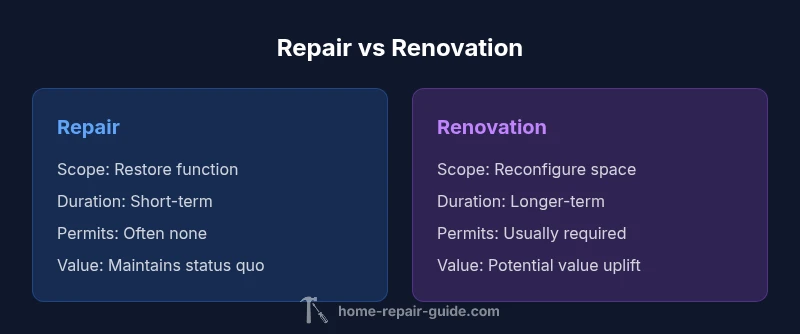
In home projects, the difference between repair and renovation centers on scope, timing, and goals. Repairs fix defects or wear to restore function without changing the layout or finishes, while renovations overhaul space, layout, or finishes to create a new look or use. This quick comparison helps homeowners decide whether to address a defect or pursue a broader, value-driven upgrade.
Defining the Terms: repair vs renovation
Understanding the difference between repair and renovation is essential for planning any home project. In general, a repair fixes something that is broken or worn, restoring original function without changing the room’s layout or look. By contrast, renovation involves updating, reconfiguring, or upgrading space and finishes to serve a new purpose or modern standard. According to Home Repair Guide, most homeowners encounter both types over a typical home's life, but the decision to repair or renovate depends on scope, budget, and long-term objectives. Repairs tend to address immediate safety or usability issues—cracked tile, leaking faucet, or a faulty outlet—without altering the room’s fundamental design. Renovations push beyond maintenance by rethinking layout, material choices, and systems integration, such as opening a wall to create an open-plan kitchen or installing new cabinetry and finishes. The practical distinction matters because it drives timing, permits, cost expectations, and the level of disruption you'll experience. The Home Repair Guide team emphasizes clarity on goals early to avoid scope creep and ensure you select the option that aligns with your homeowner priorities.
Scope and Objectives: what changes each entails
Repair projects focus on restoring function and safety. Typical repairs include fixing leaks, replacing broken fixtures, patching damaged drywall, or correcting faulty electrical connections that pose risk. Renovation projects, in contrast, involve reimagining how a space is used. This can include reconfiguring walls, upgrading plumbing and electrical systems to support new layouts, changing finishes, choosing new cabinetry, and sometimes updating windows or doors. The key question is: does the change preserve the current space, or does it redefine it? Your objectives—whether to fix a failing component or to create a more open, efficient, or stylish living area—will determine the appropriate scope and sequence of tasks. According to Home Repair Guide, aligning goals with the actual needs of the home helps prevent scope creep and keeps decisions focused on desired outcomes.
Timeline and Disruption: scheduling considerations
Repair work tends to be shorter and less disruptive, often scheduled around the homeowner’s routine and typically completed within days to a few weeks depending on availability of parts and the complexity of the fix. Renovations generally require longer timelines, planning, and coordination with subcontractors. They may involve design iterations, material selections, and permit processing, which can extend projects to several weeks or months. Planning for downtime in a living space—kitchens or bathrooms—can reduce frustration. The extent of demolition or reconfiguration directly affects dust, noise, and access to amenities. Homeowners should build buffers for supply delays and permit reviews, and consider temporary living arrangements if necessary. The Home Repair Guide team notes that a well-structured project schedule reduces surprises and keeps people sane during more complex upgrades.
Costs and Budgeting: understanding the financial impact
Repairs typically have lower upfront costs and shorter durations, driven by the part or fix required and labor intensity. Renovations require more authoritative budgeting, including design fees, permits, higher material costs, and often longer labor commitments. The financial planning for renovations should include contingencies—unforeseen structural fixes, changes in finishes, or code upgrades. In many markets, renovations can trigger value gains when they improve function, energy efficiency, or curb appeal, but these benefits vary with location and housing stock. According to Home Repair Guide analysis, homeowners should categorize expenses into immediate repairs and planned renovations, so you can compare the returns and stress of each path. A clear budget baseline helps prevent cost overruns and aligns expectations with what the home truly needs.
Quality, Materials, and Longevity: what to expect
Repair quality centers on restoring dependable function using appropriate replacement parts and standard materials. Longevity is tied to the repaired component’s life cycle; you’re maintaining what exists and preventing further damage. Renovation quality hinges on the choice of materials, finishes, and system upgrades. Higher-quality materials and modernized layouts can yield longer service life and enhanced energy efficiency, but they also come with higher upfront costs. The trade-off often involves balancing durability with aesthetics and budget. Homeowners should request product warranties, verify installation standards, and ensure that any upgraded systems meet current building codes. When executed well, renovations deliver lasting improvements, while repairs prevent deterioration and protect existing investments.
Permits, Codes, and Approvals: when regulations apply
Minor repairs may not require permits, depending on local rules and the nature of the fix. However, many repairs—from electrical work to structural fixes—still need compliance checks, especially when safety or code updates are involved. Renovations almost always trigger permits if they affect structural elements, plumbing, or electrical systems, and sometimes even cosmetic upgrades in certain jurisdictions. Failing to obtain the necessary permits can lead to fines, rework, or issues with resale. Planning ahead with your contractor or a local building department helps ensure that all work adheres to codes and passes final inspections. The Home Repair Guide team stresses the importance of confirming permit requirements early in the project.
Impact on Property Value and ROI: what your home gains or loses
Repairs help preserve value by preventing additional damage and maintaining safety. They can avert hidden costs that would otherwise escalate over time. Renovations, when aligned with market trends and the home’s design language, have the potential to improve resale value and appeal. The ROI of renovations depends on the extent of change, neighborhood norms, and the quality of workmanship. It's not guaranteed that every renovation will pay for itself, but well-planned upgrades—especially those that enhance energy efficiency, layout usability, or curb appeal—often appeal to buyers. Home Repair Guide recommends evaluating both the cost and the potential value impact before committing to a major upgrade.
Planning a Project: step-by-step decision framework
A systematic approach helps you decide between repair and renovation. Start with a needs assessment: identify defects, safety risks, and maintenance priorities, then determine whether the goal is to restore function or to redefine space. Create a scope document that lists tasks, materials, and dimensions. Solicit multiple quotes, check references, and verify permit requirements. Consider time constraints, disruption tolerance, and long-term goals for the property. If the project blends repair and renovation, plan phases strategically—address urgent repairs first, then schedule renovations as a separate, better-planned phase. The framework supports a clear path from problem identification to a finished project that meets both budget and lifestyle needs.
Common Misconceptions and Practical Pitfalls
A common misconception is that all renovations add equal value, or that repairs always solve underlying problems. In reality, repairs address symptoms and may mask deeper issues if not properly evaluated. Some homeowners underestimate the disruption and cost of renovations, assuming quick results from cosmetic changes alone. Quiet pitfalls include scope creep, choosing inappropriate materials, and overlooking permit timelines. To avoid these, obtain formal written proposals, confirm warranties, and maintain a change-order process. The most successful projects balance pragmatic repair when possible with thoughtful renovation when it clearly advances safety, comfort, and value. Keep communication channels open with your contractor to stay aligned on expectations.
Putting It All Together: Decision Matrix
When deciding between repair and renovation, consider a simple matrix: is the goal to fix or to transform? If you’re addressing a failure that compromises safety or function, repair is usually first. If the objective is to improve layout, increase energy efficiency, or modernize finishes, renovation makes more sense. Use a staged plan if both needs exist: complete urgent repairs now, then schedule a renovation. This approach minimizes risk, controls costs, and helps ensure the project aligns with long-term homeowner goals. Regularly revisit your plan as issues emerge or as family needs evolve.
Comparison
| Feature | Repair | Renovation |
|---|---|---|
| Scope of work | Fix defects and restore function | Major remodels that alter layout and finishes |
| Typical duration | Short-term (days to weeks) | Longer-term (weeks to months) |
| Permits required | Often minimal or none for minor repairs | Often required for structural changes and major renovations |
| Impact on value | Moderate or maintenance-based impact | Potentially high ROI depending on market and scope |
| Materials and finishes | Standard repair materials; replacement with factory parts | Custom finishes; higher-end materials |
| Disruption to residents | Minimal downtime | Significant disruption to living space |
Upsides
- Lower upfront costs and shorter timelines for repairs
- Preserves existing layout and avoids major upheaval
- Addresses safety and maintenance efficiently
- Keeps new issues from escalating into bigger problems
Disadvantages
- Limited scope for long-term value enhancement
- May require future renovations as needs evolve
- Ongoing maintenance can accumulate over time
- Repair work may not significantly boost resale appeal
Renovation for long-term value; repair for urgent fixes
Choose repair when addressing defects quickly and affordably. Opt for renovation when you want meaningful upgrades that enhance layout, efficiency, and future resale value.
FAQ
What is the difference between repair and renovation?
Repair focuses on fixing defects to restore function, while renovation involves updating or reconfiguring a space to achieve a new layout or aesthetic. The difference lies in scope, intent, and long-term goals.
Repair fixes defects to restore function; renovation updates space and layout for a new purpose. The key is scope and intent.
Do repairs require permits?
Most minor repairs do not require permits, but any work affecting structural components or safety often does. Always check local codes before starting.
Most minor repairs don’t need permits, but structural or safety-related work usually does. Check your local codes.
Can I plan repairs and renovations together?
Yes. Many homeowners stage projects to address urgent repairs first and schedule renovations separately. A phased plan helps manage cost and disruption.
Yes—plan repairs first, then schedule renovations as a separate phase to manage cost and disruption.
How should I estimate costs for these projects?
Start with a clear scope, gather multiple quotes, and add contingency for unexpected issues. Separate repairs from renovations in your budget to compare value and risk.
Get multiple quotes, set a scope, and include a contingency. Separate repairs and renovations in your budget.
When should I hire a professional?
If the project involves structural changes, complex electrical, plumbing, or safety concerns, consult licensed professionals. For straightforward repairs, skilled handypersons may suffice.
For structural, electrical, or complex work, hire a licensed pro. For simple repairs, a qualified handyman may work.
Key Takeaways
- Define goals before acting: fix or transform
- Assess scope to avoid scope creep
- Plan permits and timelines early
- Budget for both immediate needs and future upgrades
- Prioritize safety, function, and value