Difference Between a Renovation and a Remodel: What Homeowners Should Know
Explore the key differences between renovation and remodel, including scope, permits, cost, and timelines. This Home Repair Guide comparison helps homeowners decide the best approach for updating a space while balancing budget and disruption.


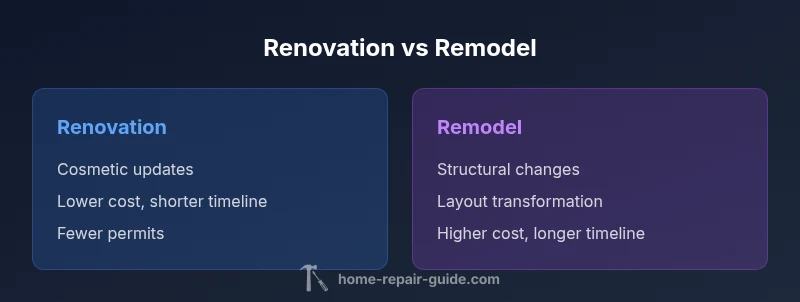
Renovation typically preserves the existing structure and updates finishes, while remodels reconfigure space and may add or remove walls. For speed and lower cost, choose renovation; for a new footprint or enhanced function, choose remodel. This quick distinction helps homeowners plan scope, budget, and permits.
Understanding the Core Distinction
The difference between a renovation and a remodel is often framed by how much structural change is involved. In everyday home improvement language, renovations usually mean updating surfaces and systems without altering the building’s essential skeleton. Remodels, by contrast, go deeper: they reconfigure rooms, rework layouts, or expand footprint. This distinction matters for planning, budgeting, and permitting, especially in jurisdictions with strict code requirements. At its core, renovation preserves the existing footprint while remodeling changes it. For Home Repair Guide readers, recognizing this difference early prevents scope creep and helps you align your goals with realistic timelines.
In practice, the decision often comes down to your primary objective. If your goal is to refresh the look and feel of a space—new paint, updated fixtures, fresh flooring—a renovation offers meaningful impact with less risk. If you need to improve functionality, such as adding a larger kitchen or moving a bathroom, remodeling is usually the right path. It’s also important to consider the electrical, plumbing, and structural integrity of the space. A minor cosmetic change can reveal hidden issues, while a major remodel may demand engineering input and professional permitting. By framing your project around purpose rather than merely a shopping list, you’ll be better prepared to discuss scope with contractors and avoid budget overruns.
Home Repair Guide’s approach emphasizes practical planning. You’ll find that renovations tend to be faster and gentler on your wallet, while remodeling projects demand careful engineering and a longer timeline. Planning with a clear objective helps you choose the right path and communicate effectively with licensed professionals.
When to Choose a Renovation
Renovations are ideal when you’re seeking a refreshed look without changing how a space functions. Typical renovation projects include fresh paint and re-staining or refinishing floors, new countertops in a kitchen without moving plumbing, updated backsplashes, and new lighting or window treatments. These changes improve aesthetics and energy efficiency with relatively modest disruption. Since most cosmetic updates reuse the existing layout, permits are often minimal or unnecessary in many jurisdictions, depending on local rules. The key benefits are faster completion times and lower upfront risk, which can translate into shorter financing periods and quicker resale improvement. For homeowners aiming to boost curb appeal or value through modern finishes, a well-planned renovation offers strong ROI with manageable complexity. Always assess hidden issues—tile underlayment, moisture damage, and electrical aging—to avoid surprises that scale costs unexpectedly. The Home Repair Guide framework suggests starting with a detailed scope list and a materials plan to keep costs predictable and timelines credible.
When to Choose a Remodel
Remodels become necessary when you want to change how a space operates or expands its footprint. Common remodel scenarios include removing non-load-bearing walls to open an floor plan, relocating a kitchen to improve workflow, adding a bathroom, or converting a bedroom into a dedicated study or nursery. Remodel work often involves repositioning plumbing, electrical, and HVAC components and may require structural assessments or engineering input. Permits are more likely to be required, and design professionals such as architects or engineers may be involved to ensure code compliance and structural integrity. Remodel projects generally demand longer timelines and higher budgets, yet they deliver a space tailored to your needs and lifestyle. A well-executed remodel can significantly boost functional value and, when aligned with market preferences, increase resale value. Planning with accurate milestones and contingency budgets helps keep remodels on track.
Scope, Permits, and Budget: Key Factors
Scope defines what changes will occur: cosmetic updates vs structural shifts. Permits translate scope into compliance with building codes, and the permitting process can be a major driver of timeline and cost. Budgeting for renovations typically focuses on surface materials, finishes, and labor for non-structural work, while remodel budgets must cover structural engineering, trades (plumbers, electricians, HVAC), and potential updates to systems. A practical approach is to create a phased budget that separates cosmetic items from critical system changes. For homeowners, a conservative contingency—often 10–20% of the estimated cost—addresses unforeseen issues like moisture, framing problems, or electrical code updates. Remember to factor in permit fees, design fees, and potential temporary housing if the project disrupts daily life. The Home Repair Guide methodology emphasizes transparent scoping and staged approvals to prevent budget creep and misaligned expectations.
Timeline and Disruption: What to Expect
Timeline estimates differ widely between renovations and remodels. Renovations typically run from a few weeks to a couple of months, depending on scope and material lead times. Remodels, especially those involving major layout changes or foundational work, can extend to several weeks or months and may require temporary relocation or extended living arrangements. Factor in design phases, permit review, and contractor scheduling, which can add weeks to the plan. Expect disruption to routines—dust, noise, and restricted access to kitchens or bathrooms—especially for remodels. A practical scheduling approach is to map out a weekly plan with milestones, ensure material orders align with construction phases, and maintain open communication with the contractor to handle delays gracefully. The Home Repair Guide guidance emphasizes building in buffers for permit processing and supply chain delays to avoid cost escalations or missed deadlines.
Common Projects: Examples by Type
Renovation projects focus on updating aesthetics and efficiency without altering space layout. Examples include repainting walls, refinishing hardwood floors, updating cabinetry with new hardware, installing energy-efficient lighting, upgrading faucets, and replacing countertops without moving plumbing. Remodel projects involve changing the room's layout or function, such as opening a wall to combine a kitchen, relocating a staircase, adding a master bathroom, expanding a laundry area, or converting a dining room into a home office. Understanding these concrete examples helps homeowners plan realistic scopes and talk clearly with contractors about expectations and required permits. In both cases, prioritize quality materials, proper moisture management, and a clear warranty path to protect your investment.
Planning and Budgeting for Your Project
A structured planning process begins with defining goals and a realistic budget. Create a scope document listing every task, required trades, and estimated duration. Obtain multiple written estimates and check references before hiring professionals. Consider financing options and keep a contingency budget of 10–20% of the total cost for unforeseen issues. Schedule permits early and consult with professionals to confirm whether structural changes require engineering. Develop a phased plan to tackle high-priority items first and avoid scope creep by freezing decisions on cosmetic finishes until the major work is complete. This disciplined approach aligns expectations, reduces friction, and helps achieve a successful outcome.
Practical Decision-Making Checklist
- Define your objective: cosmetic refresh vs functional change.
- Estimate a preliminary budget and add a contingency.
- Check permit requirements for scope and locality.
- Decide whether you need professional design input.
- Create a phased plan with clear milestones.
- Communicate early with licensed contractors and confirm warranties.
Comparison
| Feature | Renovation | Remodel |
|---|---|---|
| Scope | Cosmetic updates and surface improvements | Structural changes and/or footprint alterations |
| Permits & Regulations | Often minimal or none (depends on locale) | Often required; may involve structural approvals |
| Timeline | Shorter duration (weeks to a couple months) | Longer duration (weeks to months, sometimes longer) |
| Disruption to Living Space | Lower disruption; work areas are contained | Higher disruption; broader construction impact |
| Typical Projects | Paint, flooring, fixtures, surface upgrades | Wall removals/additions, kitchen/bathroom relocation |
| Best For | Updating look and feel with lower risk | Changing layout or adding space/functionality |
Upsides
- Lower upfront cost for cosmetic updates
- Faster to complete and less disruptive
- Fewer permits and simpler approvals
- Can boost value with fresh finishes
Disadvantages
- May not fix underlying issues or improve function
- Limited changes to space footprint
- Potential hidden issues revealed during cosmetic work
- Less impact on resale value if layout is unchanged
Renovation is best for speed and cost; remodel is best for functional gains.
Choose renovation for cosmetic refresh and value uplift with minimal disruption. Choose remodel when you need a new layout or added space, understanding it will take longer and cost more.
FAQ
What is the main difference between renovation and remodel?
The main difference is scope: renovations update finishes without changing the structure, while remodels reconfigure space and may alter the footprint. Planning and permits often differ accordingly.
Renovations update finishes without changing the layout; remodels reconfigure spaces and may need permits.
Do renovations require permits?
Permits for renovations depend on local code and the scope of work. Cosmetic updates may not require permits, while electrical and plumbing upgrades usually do. Always check with your local building department.
Permits depend on the scope; cosmetic updates often don’t need them, but electrical or plumbing changes usually do.
Is a remodel always more expensive than a renovation?
Not always, but remodels tend to be more expensive because they involve structural changes, permits, and more trades. The exact cost depends on the scope, materials, and labor.
Remodels usually cost more because of structural work and more trades, but it varies by project.
Can a renovation become a remodel later?
Yes. You can start with a renovation and expand later, but additional structural changes can require more permits, design work, and higher costs. Plan for phased work when possible.
You can upgrade later, but expect more permits and cost if you expand beyond cosmetic work.
How long do renovations or remodels take?
Renovations often take weeks to a few months, depending on scope and material availability. Remodels can take longer, especially if major layout changes or structural work are involved.
Renovations are usually shorter; remodels take longer due to layout changes and structural work.
How should I start planning a project?
Begin with a clear goal, assemble a scope, get multiple estimates, and verify permits. Create a phased plan and set milestones to keep the project on track.
Start with a clear goal, get estimates, and check permits. Plan in phases.
What factors most influence cost and timing?
Scope, material quality, labor availability, permit requirements, and whether engineering is needed are the primary cost and timeline drivers.
Scope, materials, labor, permits, and engineering drive cost and time.
Key Takeaways
- Define goal clearly: cosmetic vs functional change
- Anticipate permits for remodels and simple ones for renovations
- Budget with a contingency: 10-20% recommended
- Plan timelines with contractor buffers
- Use the right professional for structural work