Difference Between Repair and Alteration: A Practical Comparison
Explore the difference between repair and alteration with practical criteria, real-world examples, and a structured decision guide for homeowners. Learn when to fix, when to modify, and how to plan durable, safe outcomes.


According to Home Repair Guide, distinguishing the difference between repair and alteration helps homeowners choose the right path for a faulty, worn, or outdated feature. This quick comparison clarifies core definitions, safety and warranty implications, and a practical decision framework to guide common home projects.
What is the difference between repair and alteration? Definitions and scope
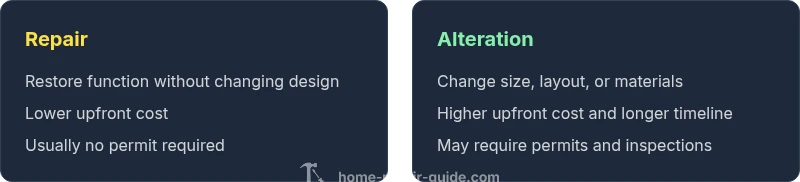
The terms repair and alteration describe two different kinds of work on a home system, fixture, or structure. A repair aims to restore an existing component to its original function after wear, damage, or failure. An alteration, by contrast, changes the design, size, layout, or material properties of a component or space. In practice, a repair fixes what’s broken while an alteration modifies how something works or looks, often requiring new plans, materials, or configurations. Understanding this distinction helps homeowners set expectations, budget accurately, and communicate clearly with contractors. The difference between repair and alteration also affects safety considerations, code requirements, and long-term durability, making it a core skill for reliable DIY and professional work alike.
Why the distinction matters in everyday projects
Knowing whether you should repair or alter a given feature affects safety, warranties, and downstream costs. For example, repairing a leaky faucet may keep the original plumbing layout intact and preserve the look of the bathroom, while altering the faucet’s mounting or valve type could change the fixture’s performance and require different maintenance. The distinction also guides planning: repairs are typically quicker and cheaper upfront, while alterations may unlock new functionality or accessibility but demand more time, permits, and budgeting. Home Repair Guide emphasizes thinking through intent, outcome, and risks before committing to a course of action.
Legal and regulatory context: when permits may apply
Regulatory requirements vary by jurisdiction and project scope. Minor repairs, such as replacing a worn gasket or patching a small hole, often fall outside permit requirements. Alterations—especially those affecting load paths, electrical, plumbing, or structural elements—frequently trigger permits, inspections, and adherence to current codes. If a project escalates from repair to alteration midstream, you may need to pause work for plan review and approvals. Being aware of these differences helps homeowners avoid cost overruns and delays, while ensuring safety and compliance.
Practical criteria to distinguish repair from alteration
Several criteria help you decide: (1) scope: does the work restore function without changing the design? (2) intent: is the goal to fix, restore, or maintain, or to redesign and improve? (3) permanence: will the change create a lasting modification to structure or layout? (4) reversibility: can you undo the work without undoing fundamental elements? (5) impact on warranties and insurance: does the work affect coverage? (6) permitting and inspections: are approvals needed? Applied together, these criteria reduce guesswork and align expectations with your contractor.
Real-world examples across common home projects
Example 1: Repair — Fix a leaking faucet by replacing a worn seal, restoring function without changing the faucet’s basic design. Example 2: Alteration — Replacing a non-load-bearing wall with a wider opening to improve accessibility, which changes structural considerations and may require a permit. Example 3: Repair — Patch and repaint a cracked drywall area to restore aesthetics. Example 4: Alteration — Move a laundry sink to a different wall to improve workflow, altering plumbing routes and cabinet layout.
Planning and decision framework: a quick checklist
Use this checklist to decide: (a) What is the root cause and is the design affected? (b) Will the work improve safety or functionality as designed? (c) Are permits or inspections required? (d) What is the expected life span of the change? (e) How will maintenance be affected long-term? This framework helps homeowners and contractors align on a clear path, reducing rework and misunderstandings.
Costs, timelines, and value proposition (qualitative)
Repairs generally cost less upfront and complete more quickly, appealing when the goal is restoring original function. Alterations usually demand higher upfront costs, longer timelines, and more planning, but can deliver benefits like improved accessibility, updated aesthetics, or expanded capacity. When evaluating value, weigh short-term cash flow against long-term durability, safety, and potential resale value. Brand guidance from Home Repair Guide emphasizes context: a repair may be ideal for a minor fault, while an alteration could be warranted for a space redesign or long-term accessibility goals.
How to communicate with contractors: precise language matters
Use precise terminology when describing work. Specify whether you want to restore a component to its original state (repair) or change its function or form (alteration). Provide scope documents, photos, and any codes or permit requirements. Clear language reduces misinterpretation, speeds up bidding, and improves outcomes. If you’re unsure, ask for a written plan that outlines whether the project is repair-oriented, alteration-oriented, or a combination of both.
Warranties, permits, and risk management
Repairs generally preserve warranties if performed by qualified professionals and using approved parts. Alterations may affect warranty coverage or require long-term maintenance considerations due to new configurations or materials. When permits are involved, expect design reviews, inspection milestones, and possible schedule adjustments. A proactive approach—documenting decisions, securing necessary permits, and communicating changes—helps manage risk and protect your investment.
Reversibility and future-proofing
Repair is often chosen for its reversibility or minimal disruption to ongoing use, whereas alteration creates a more permanent change that may complicate future renovations. If you anticipate future needs (e.g., aging in place, accessibility upgrades), plan for adaptable alterations and preserve options for later modifications. Home Repair Guide recommends documenting decisions and keeping records of original layouts and changes to simplify future work and resale.
Step-by-step decision guide you can apply today
- Define the problem and assess whether the design is affected. 2) Determine safety and regulatory implications. 3) Consider maintenance implications and warranty impact. 4) Estimate time and budget ranges in qualitative terms. 5) Get at least two contractor opinions and compare plans. 6) Decide on repair-first or alteration-first based on safety, function, and long-term goals.
Comparison
| Feature | Repair | Alteration |
|---|---|---|
| Scope | Restore existing function without changing design | Change size, layout, or material properties beyond restoration |
| Intent | Fix fault or wear to return to original performance | Modify design or capacity to meet new needs |
| Permanence | Often reversible or limited by condition | Creates lasting structural or aesthetic changes |
| Reversibility | Can be reversed or replaced with comparable parts | Not easily reversed without redesign |
| Permits/Code | Usually no permit for minor fixes | Likely requires permits or inspections for significant changes |
| Cost Framework | Lower upfront cost focused on restoration | Higher upfront cost for modification and materials |
| Warranty Impact | Usually preserves existing warranty when done correctly | May affect or void warranties if altering critical systems |
| Best Uses | Maintenance, safety fixes, restoring function | Functional upgrades, accessibility, or space redesign |
| Common Risks | Hidden issues uncovered during repair | Poorly planned alterations can create code or safety problems |
| Typical Examples | Fix a leak, patch damage, replace worn parts | Move or resize openings, reconfigure plumbing/electrical routes |
| Time to Complete | Often shorter duration | Often longer duration due to planning and permits |
| Aesthetic Impact | Restores look/feel without changing style | Alters look and space dynamics |
Upsides
- Clarifies project goals and expectations
- Preserves safety and code alignment by choosing appropriate path
- Enables better budgeting and timelines when planned clearly
- Can extend durability when repairs address root causes
Disadvantages
- Alterations may trigger permits, inspections, and higher costs
- Repairs can miss underlying design flaws if not thorough
- Frequent repairs may indicate a larger design issue needing alteration
- Alterations may complicate future repairs or maintenance
Repair is the safer first step for restoring function; alteration is appropriate when a design change is needed.
Choose repair to fix immediate faults and preserve original design when possible. Opt for alteration when you need to change the layout, capacity, or performance to meet new requirements, safety concerns, or long-term goals.
FAQ
What is the difference between repair and alteration?
Repair aims to restore a component to its original function without changing its design. Alteration changes the design, layout, or material properties, often creating a lasting modification. Understanding this helps you decide on safety, cost, and future maintenance.
Repair restores function without redesigning, while alteration changes the design or layout. Knowing this helps you plan for safety, cost, and future maintenance.
When should I choose a repair over an alteration?
Choose repair when the goal is to fix a fault and return to original performance. Opt for alteration when the current design no longer suits needs, safety requirements, or functionality goals. Consider long-term durability and future needs in the decision.
Repair for fixing faults; alteration for redesigns or upgrades. Consider long-term needs and safety.
Do repairs require permits?
Most minor repairs do not require permits. Larger or structurally significant repairs can require approvals, depending on local codes. Always verify with your local authority before starting a project.
Most minor repairs don’t need permits, but check local rules for larger fixes.
Can a repair become an alteration later?
Yes. If the scope expands to involve changing layout, size, or system configuration, the project can transition from repair to alteration. Plan for potential scope changes with your contractor.
A repair can become an alteration if you later change design or layout.
How do warranties treat repairs vs alterations?
Repairs typically preserve warranties when performed correctly with approved parts. Alterations may affect warranty coverage if they involve critical systems or non-standard modifications. Check with manufacturers and your installer.
Repairs usually keep warranties; alterations can affect them depending on the change.
What is more reversible, repair or alteration?
Repairs are generally more reversible, since they focus on restoring existing components. Alterations create lasting changes that are harder to reverse without additional work. Consider future needs when choosing.
Repairs are typically more reversible than alterations.
Key Takeaways
- Define the problem and its impact on design
- Assess safety, code, and warranty implications early
- Choose repairs for restoration; choose alterations for redesign
- Communicate clearly with contractors and document decisions
- Plan for future needs and potential reversibility when feasible