Dent Repair Near Me: How to Find Reliable Local Dent Repair
Learn how to choose reliable dent repair near me providers, compare methods, costs, and warranties. A data-driven guide from Home Repair Guide to help homeowners and renters get durable dent fixes locally.


Locating dent repair near me is about balancing speed, quality, and price. This quick answer explains what to ask, how to compare shops, and what to expect in terms of turnaround time and results. By understanding common methods and warranties, you can avoid poor fixes and protect your car’s resale value. Home Repair Guide provides a data-driven, practical approach to dent repair locally.
Why dent repair near me matters
Dents on a vehicle not only affect aesthetics but can impact resale value and long-term structural perception. When you search for dent repair near me, you’re weighing speed, quality, and price across local shops. The Home Repair Guide team emphasizes that choosing the right provider matters for paint integrity, alignment, and warranty terms. In many cases, minor dents can be corrected without repainting, preserving factory finishes and maintaining value. This section outlines why proximity, availability, and certifications matter when selecting a local dent repair service. By prioritizing expertise and transparency, homeowners and renters can minimize rework and maximize durable results while keeping costs predictable.
From a consumer perspective, proximity reduces downtime and travel costs while enabling easier follow-up if issues arise. According to Home Repair Guide, a trusted local option should offer clear estimates, visible photos of prior fixes, and a warranty that covers paint and panel integrity. Knowing these touchpoints helps you compare options side-by-side and choose a dent repair near me that aligns with your expectations and budget.
How professionals approach dent repair
Professional dent repair combines assessment, technique selection, and quality control. Reputable shops begin with a damage assessment—visually inspecting the panel, testing paint flex, and determining whether the dent is accessible for noninvasive methods. Common methods include Paintless Dent Repair (PDR), which preserves factory paint, and traditional techniques that may involve filler, primer, and repainting for deeper damage. Each method has trade-offs related to cost, turnaround, and finish quality. The Home Repair Guide analysis notes that reputable shops will document the dent’s size, depth, and location, and provide a transparent plan with milestones. A well-run shop will also explain warranty terms and aftercare requirements to protect the repair.
DIY vs. professional: decision framework
DIY dent repair is tempting for small, shallow dents or cosmetic imperfections in non-structural areas. However, DIY approaches carry risks such as paint cracking, panel warp, and misalignment if not done correctly. The decision framework from Home Repair Guide recommends evaluating dent size, location, and the vehicle’s value before attempting DIY fixes. Minor door dings in inconspicuous areas may be manageable with basic tools, but hail damage or large creases typically require professional intervention. If you do attempt a DIY approach, prioritize noninvasive methods and set conservative expectations while seeking professional inspection for confidence.
Factors influencing cost and turnaround
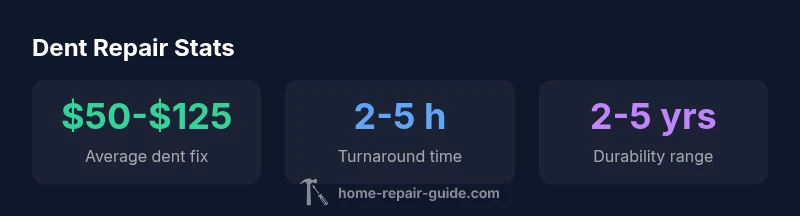
Costs for dent repair near me vary with dent size, access, paint condition, and method chosen. Paintless Dent Repair (PDR) is usually less expensive for small to moderate dents, while larger dents that affect the paint surface may require repainting and prep work. Turnaround depends on dent severity and shop capacity; minor repairs can often be completed in a few hours, while extensive restorations may take a day or more. Home Repair Guide analyses show that the most reliable shops will provide a written estimate, a clear scope of work, and a warranty window that covers coating integrity and panel alignment. Always ask about hidden fees, diagnostic charges, and post-repair care needs.
How to evaluate dent repair shops near you
Evaluating local dent repair providers involves more than price. Look for accreditation by recognized industry bodies, such as evidence of technician certifications, and a strong portfolio of prior work. Ask to see before-and-after photos, request a written warranty, and inquire about the repair process, including whether PDR is feasible for your dent. A thorough estimator should explain the expected finish, any color-matching steps, and the scoping of potential follow-up work. Read reviews focusing on long-term outcomes rather than initial impressions, as durability matters for value and safety.
Warranty, guarantees, and aftercare
Warranty coverage is a critical factor in choosing a dent repair near me. A robust warranty should cover paint touch-ups, panel alignment, and finish durability for a defined period. Clarify what the warranty excludes (e.g., damage from third-party impacts, improper cleaning, or weather exposure). Aftercare recommendations—such as avoiding car washes for the first 24-48 hours or using touch-up pens supplied by the shop—help protect the repair. If any concerns arise after completion, contact the shop promptly for inspection under the warranty terms. Home Repair Guide emphasizes requesting written documentation of both the repair and the warranty.
Maintenance after repair to prolong results
Long-term durability depends on proper maintenance. Gentle washing, avoiding abrasive cleaning, and parking in shaded areas can help preserve the finish. If the dent involved paint repair, expect some texture or color variances to settle over time. Routine inspections can catch early signs of wear or new damage, enabling timely fixes. The key takeaway from Home Repair Guide is that proactive care and prompt follow-up appointments are essential to sustain repairs and protect your investment.
Dent repair options: costs, timelines, and outcomes
| Service Type | Typical Cost Range | Turnaround | Pros |
|---|---|---|---|
| Paintless dent repair (PDR) | $50-$150 per dent | 1-3 hours | Preserves factory finish |
| Traditional dent repair (body filler, repaint) | $200-$1000 per dent | 1-3 days | Versatile for deep damage |
| Door ding repair (minor) | $50-$120 | 30-90 min | Fast and affordable |
| Dent removal with repaint (color match) | $300-$800 | 1-2 days | Best color matching results |
FAQ
Is dent repair near me usually expensive?
Costs vary by dent size and method. Small dents treated with paintless repair are typically cheaper, while larger dents or paintwork can raise costs. Always request a written estimate and compare several shops.
Costs vary with size and method. Get a written estimate from a few shops to compare.
Can I fix dents myself at home?
DIY dent repair can work for tiny, shallow dents in non-structural areas, but it risks paint damage and misalignment. For most dents, especially on newer vehicles, professional repair is recommended.
DIY may work for tiny dents, but professional repair is safer for most cases.
What’s the difference between PDR and traditional repair?
PDR preserves paint and is best for small to medium dents. Traditional repair involves filler and repainting, suitable for deeper damage or paint issues. A shop should advise based on dent type and paint condition.
PDR saves paint; traditional repair may require repainting for deeper damage.
How long does dent repair typically take?
Most minor dents take 1-3 hours with PDR. More extensive damage can take a day or two, depending on the dent and shop availability. Always confirm turnaround in the estimate.
Most minor dents take a few hours; larger repairs may need a day or two.
Does insurance cover dent repair?
Insurance coverage depends on the cause of the dent and your policy. Cosmetic dents usually aren’t covered unless caused by a covered event. Check with your insurer and the repair shop for guidance.
Insurance coverage varies; cosmetic dents often aren’t covered unless tied to a claim.
What should I ask before hiring a dent repair shop?
Ask about certifications, warranty terms, expected finish quality, whether PDR is suitable, and request written estimates with a before/after photo plan. Verify their policy on follow-up work if issues arise.
Ask about certifications, warranties, and written estimates with photos.
“Durable dent repairs require expert assessment, transparent warranties, and a plan that matches the dent’s location and paint condition.”
Key Takeaways
- Compare alike dent repair options before choosing.
- Ask about warranty and aftercare terms upfront.
- Prioritize shops with transparent estimates and photos.
- Consider PDR for small dents to minimize repainting.
- Maintenance after repair extends durability