Concrete Crack Repair: A Comprehensive Step-by-Step Guide
Learn how to identify, prepare, repair, cure, and maintain concrete cracks with practical, budget-friendly methods. A comprehensive Home Repair Guide tutorial designed for durable, long-lasting results.


According to Home Repair Guide, this quick-answer outlines how to repair a concrete crack safely and durably. You’ll identify crack types, choose a repair method (epoxy vs cement patch), prepare the surface, apply material, cure, and seal to prevent future damage. It highlights essential steps, tools, and safety considerations for homeowners.
What is a concrete repair crack and why it forms
A concrete repair crack is a visible separation or fracture in a concrete surface that allows moisture, dirt, and even air to pass through. These cracks vary in width, depth, and pattern, and they can appear on sidewalks, driveways, foundations, or garage floors. Understanding why cracks form is the first step in choosing an effective repair strategy. Most cracks arise from normal curing shrinkage as concrete dries, temperature fluctuations, traffic or settlement, and moisture changes in the substrate. In exterior slabs, freeze-thaw cycles can force cracks open as water expands when it freezes. In structural foundations, larger, active cracks can indicate movement or stress that needs professional assessment. The goal of any concrete repair crack treatment is to re-establish a continuous surface, limit water intrusion, and slow further deterioration. The Home Repair Guide team emphasizes that not every crack requires the same fix; smaller, non-structural cracks may be addressed with simple patching, while larger or active cracks may require more substantial methods. Before choosing a repair, you should evaluate crack width, depth, whether there is movement, and whether water is entering through the crack. For homeowners, the practical aim is to restore a safe, level surface and prevent ongoing damage, rather than to achieve a perfectly smooth finish in one go. Concrete repair crack scenarios vary, and proper assessment guides the plan.
Crack types and repair priorities
Cracks fall into several broad categories, and recognizing them helps you pick the right approach. Hairline cracks, typically under 1/8 inch wide, are common and often non-structural; they may only require sealing or a light patch. Medium-width cracks (around 1/8 to 1/4 inch) can often be repaired with cement-based patches or flexible sealants, especially where movement is minor. Wider cracks, active cracks that widen over time, or cracks that show signs of movement should be evaluated by a professional, as they may indicate foundation stress or structural issues. Cracks that run through the entire slab or show vertical displacement can signal settlement and require more involved solutions such as epoxy injections or structural repairs. For concrete repair crack management, you typically start with cleaning, drying, and sometimes routing the crack to create a uniform repair bed. The selection of repair materials—epoxy for rigidity and bonding, polyurethane for flexibility and water resistance, or cement-based patch compounds for cosmetic restoration—depends on crack width, exposure, and load. The Home Repair Guide approach integrates crack diagnosis with material choice and expected performance, so you achieve a durable, lasting finish that resists future issues.
Assessing crack severity and repair method selection
Assessing crack severity is a key step before any repair. Start by measuring the crack width with a crack gauge or a simple coin test to estimate size. Note whether cracks are active (widen over time) or dormant. Consider the location of the crack: a floor crack in a basement might need moisture control; a driveway crack might require weatherproofing against freeze-thaw cycles. If a crack shows displacement or runs through reinforcing bars, or if water leaks behind the crack, professional evaluation is advised. For many homeowners, non-structural, hairline to medium cracks can be repaired with patching compounds or injectable sealants. For structural concerns or large movements, the remedy often involves structural assessment and more involved repair methods such as epoxy or polyurethane injections, or even underpinning. This decision-making process helps balance cost, durability, and ease of installation while reducing the risk of future failures. The Home Repair Guide team notes that addressing cracks early is generally more cost-effective than waiting for deterioration to worsen.
Surface preparation and safety steps
Proper surface preparation sets the stage for a successful repair. Begin by cleaning the crack and surrounding area, removing loose concrete, dirt, and residues with a stiff brush and vacuum or compressed air. Dry the crack completely; moisture trapped inside can prevent adhesion. If the crack is active, widen it slightly with a grinder or chisel to create a clean, straight channel, which helps the patch material bond. Safety is essential: wear safety goggles, gloves, and a dust mask, especially when grinding or removing old patch material. Protect surrounding areas with tape or plastic to minimize staining, and ensure good ventilation when working indoors or using solvent-based products. For exterior work, consider shielding plants and nearby pavement from runoff. A thorough prep reduces the risk of future cracking and improves adhesion, contributing to a longer-lasting repair. The right prep is often the deciding factor in whether a concrete repair crack will hold up over time.
Materials: epoxy vs cement-based patches
Choosing the right repair material hinges on crack characteristics and desired durability. Epoxy patch systems offer high bond strength and rigid backing, ideal for structural cracks that do not require much movement. They cure hard, providing a solid, durable fill, but can be less forgiving if the concrete expands and contracts with temperature changes. Cement-based patch products are more forgiving, easier to smooth, and better for cosmetic repairs on non-structural cracks. For water-prone areas, polyurethane sealants remain flexible and water-resistant, filling cracks while allowing for slight movement. In all cases, follow manufacturer instructions for mixing ratios, pot life, and curing times. If you’re unsure which material to choose, start with a small test patch in a less visible area to verify color match and adhesion before committing to the entire repair. The Home Repair Guide analysis suggests matching material properties to crack behavior and environmental exposure for best results.
Step-by-step overview and process flow
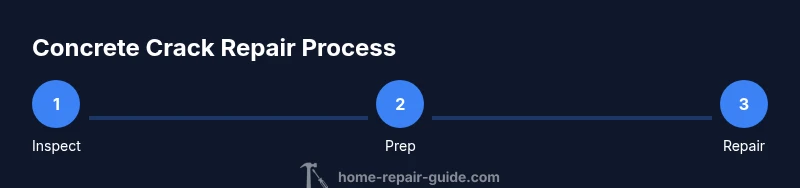
A practical repair workflow reduces guesswork and standardizes outcomes. Start with diagnosing crack type and severity, select the material, prepare the surface, prime or mix as needed, apply the patch, and then cure and seal. A typical routine begins with cleaning and drying, routing or widening the crack, applying patch material, smoothing to flush level, and allowing proper curing before traffic resumes. If injecting resin, the process changes to binding the resin with controlled pressure. Always verify the patch has properly bonded and that the finished surface is level with the surrounding concrete. Finally, consider applying a protective sealant to reduce moisture ingress and extend the repair life. This overview aligns with the structural realities of many concrete repair crack scenarios and helps homeowners plan the work with confidence.
Curing, sealing, and protecting the repair
Curing is a critical phase that determines final strength and durability. Epoxy and polyurethane systems require specific cure times; avoid traffic or vibration on the repaired area until the recommended cure period has passed. Keep the surface clean and dry during curing, and shield it from rain or rapid temperature swings if possible. After curing, seal the repaired area with a compatible concrete sealer to minimize water intrusion and freeze-thaw damage. In outdoor settings, consider seasonal protection and re-sealing every few years depending on wear and weather exposure. Proper curing and sealing dramatically reduce the chance of new cracks developing near the repair. The Home Repair Guide team emphasizes patience during cure times as part of achieving lasting durability and preventing future concrete repair crack issues.
Maintenance and prevention tips
Preventing future cracks is often more economical than repeated repairs. Implement a few practical steps: control moisture around the foundation by grading and drainage improvements; seal expansion joints and control joints; perform periodic inspections for new cracks or widening patterns after seasonal changes; avoid heavy loads on a newly repaired area until fully cured; and address small cracks promptly to prevent water infiltration and salt damage. Regular maintenance, combined with proper crack repair techniques, can extend the life of concrete surfaces and minimize costly damage. The Home Repair Guide approach integrates proactive monitoring with sound repair practices to sustain long-term integrity.
Tools & Materials
- Safety goggles(Eye protection from debris and chemicals)
- Work gloves(Chemical-resistant if using solvents)
- Dust mask or respirator(Protect lungs during grinding or sanding)
- Stiff-bristled brush and broom(For cleaning loose material)
- Shop vacuum or handheld vacuum(Remove dust from the crack and area)
- Hammer and masonry chisel(Widen and square-off crack bed)
- Angle grinder or rotary tool with diamond-tine wheel(Optional for deep routing)
- Putty knife or trowel(Spreading patch material and smoothing)
- Mixing bucket and spatula(Mix patch materials to correct consistency)
- Caulking gun and sealant/epoxy cartridge(Optional for flexible sealants)
- Backer rod (if wide crack)(Supports deep fills)
Steps
Estimated time: Total active time: 2-6 hours depending on crack size and material. Curing time varies by product; expect 24-72 hours before heavy use.
- 1
Inspect crack and plan repair
Examine width, depth, and movement. Decide between epoxy or cement-based patching based on crack severity and exposure. Create a simple plan for cleaning, widening if needed, applying material, and curing.
Tip: Document crack dimensions with a photo for monitoring progress. - 2
Prepare work area and safety gear
Put on PPE and protect surrounding surfaces. Clean the crack and surrounding concrete with a stiff brush and vacuum. Remove loose debris to ensure good material bonding.
Tip: Ventilate indoor spaces when using solvent-based products. - 3
Choose material and mix according to product instructions
Select epoxy for rigid, structural cracks or polyurethane for flexible, water-prone areas. Mix components to manufacturer-specified ratios until uniform in color and texture.
Tip: Measure precisely; incorrect ratios compromise bond strength. - 4
Route or widen crack for a proper bed
Use a chisel to create a clean, straight crack bed a few millimeters deep. This improves adhesion and allows the patch to fill evenly.
Tip: Avoid widening beyond what is necessary to prevent over-removal of sound concrete. - 5
Apply patch material into crack
Pack patch material into the crack with a putty knife or trowel, ensuring no air pockets. Level the surface flush with the surrounding concrete.
Tip: Overfill slightly and then scrape flush to avoid low spots. - 6
Smooth and finish the repair
Tool-smooth the surface to match adjacent concrete. Remove excess material promptly to prevent a textured finish.
Tip: If using epoxy, avoid skinning the surface too soon—wait for tack-free cure where possible. - 7
Cure and protect the repair
Keep the area dry and undisturbed for the recommended cure time. Apply a compatible sealer if outdoor exposure is significant to reduce moisture ingress.
Tip: Plan curing during mild weather; extreme heat or cold delays curing. - 8
Inspect and restore as needed
After curing, inspect the repair for bonding and level. Monitor the crack during seasonal changes and re-seal if necessary.
Tip: Maintenance monitoring saves long-term repair costs.
FAQ
What is the difference between epoxy and cement-based patches for concrete cracks?
Epoxy patches provide strong bonding and rigidity, suitable for structural cracks with minimal movement. Cement-based patches are easier to apply and better for cosmetic fixes and cracks with slight movement. Choose based on crack severity and exposure.
Epoxy patches bond strongly and are good for rigid repairs; cement patches are easier and better for non-structural cracks.
Can I repair cracks myself or should I hire a professional?
For hairline to moderate non-structural cracks, DIY repair is often feasible with proper prep and materials. Structural cracks, active movement, or those near foundations warrant professional evaluation to ensure safety and durability.
DIY can work for small cracks, but larger or moving cracks deserve a pro.
How long does curing take after patching?
Curing times vary by material and environment, typically from 24 to 72 hours for initial set. Full cure can take longer, and you should avoid heavy use until the material reaches recommended strength.
Expect initial set in about a day, with full cure taking longer depending on material and weather.
What safety precautions should I take?
Wear eye protection, gloves, and a mask when grinding or handling patch materials. Ensure good ventilation, especially indoors, and keep children and pets away from the work area until repairs are cured.
Safety first: goggles, gloves, mask, and Ventilation are key.
How can I prevent cracks from reappearing?
Address underlying moisture or drainage issues, seal joints, and monitor for new cracks after seasonal changes. Regular maintenance reduces long-term repair costs and preserves structural integrity.
Maintain moisture control and seal joints to prevent future cracks.
What causes cracks in concrete?
Cracks commonly result from shrinkage during curing, temperature fluctuations, freeze-thaw cycles, settlement, or heavy loads. Differentiating these causes helps select the correct repair method.
Cracks come from shrinkage, temperature changes, or movement, so pick a method accordingly.
Watch Video
Key Takeaways
- Identify crack type before repair.
- Choose material based on movement and exposure.
- Prep surface thoroughly for best adhesion.
- Allow proper curing and seal to prevent future damage.