How to Repair Block Wall Cracks: Step-by-Step Guide
Learn a practical, homeowner-friendly method to repair cracks in block walls, prevent water intrusion, and protect your foundation. This guide covers assessment, prep, repair options, and maintenance for durable results.


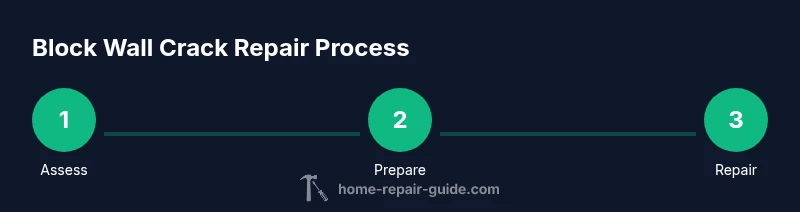
By following this guide, you will identify crack types, choose a repair method, and apply a durable fix to block walls. Begin with a safety check and determine whether the crack indicates settlement or moisture issues. For hairline cracks, a simple mortar or epoxy patch often suffices. For wider or moving cracks, consult a professional before proceeding to ensure long-term stability.
Understanding Block Wall Cracks
Block wall cracks occur for a variety of reasons, from normal seasonal movement to settlement, moisture pressure, and temperature changes. Distinguishing between hairline cracks, vertical splits, and diagonal or stepped cracks helps you pick the right repair path. Hairline cracks can often be stabilized with patching compounds or epoxy sealants, while larger, moving cracks may require more involved reinforcement. The Home Repair Guide team emphasizes that early diagnosis improves outcomes and helps prevent water intrusion that can undermine foundations. Always consider whether cracks are active (water leaks or moisture intrusion present) or dormant (no moisture signs).
Assessing Crack Severity and Safety
To decide how to repair, start by assessing the crack's width, length, and whether the wall shows signs of bowing or misalignment. Use a stainless steel ruler to gauge width; if cracks are wider than about 1/8 inch, or doors and windows bind, this may indicate structural movement. Look for wet stains, efflorescence, or damp pockets on the interior side, which signal active moisture problems. If you notice wall movement, leaning, or hollow sounds when tapped, stop and consult a structural professional. According to Home Repair Guide analysis, addressing movement promptly reduces the risk of expensive future damage.
Preparing the Area and Choosing a Repair Method
Clear the area around the crack and cover nearby surfaces to protect from dust and sticky patch compounds. Remove loose mortar and cracked material with a chisel and stiff brush, then vacuum the joint to create a clean bonding surface. Dryness is critical for some repair methods; epoxy systems require a dry crack, while polyurethane injections work best with some moisture control in exterior walls. Decide on repair method based on crack behavior: hairline or non-moving cracks can often be filled with hydraulic cement or patch mortar, whereas structural or wet cracks may require epoxy or polyurethane injections. The Home Repair Guide team notes that selecting the right method dramatically affects durability and moisture resistance.
Traditional Mortar Repair vs. Modern Epoxy/Polyurethane Injections
Traditional mortar repair mixes new cement into the crack and repatches the surface, which works well for small cosmetic cracks but may not stop movement or water intrusion in active cracks. Epoxy injections bond to the concrete and restore stiffness for non-moving structural cracks, while polyurethane injections (foams) are excellent for active leaks and cracks that may widen under pressure. For exterior walls, hydraulic cement can stop water ingress quickly, but it is not a long-term structural fix. Evaluate the crack type, moisture, and expected movement to choose between these options. The goal is a durable seal that prevents water infiltration and preserves structural integrity.
Maintenance, Prevention, and When to Call a Pro
After completing a repair, monitor the crack for any signs of renewed movement or moisture intrusion during seasonal changes. Regular inspection is a simple yet essential maintenance task that helps catch problems early. Improve moisture control around the foundation by grading, redirecting downspouts, and sealing gaps near windows and doors. If new cracks appear or existing cracks grow after repair, or if there is visible bowing, consult a licensed masonry contractor or structural engineer. The Home Repair Guide team recommends erring on the side of caution with significant movement, as improper repairs can trap moisture and worsen damage.
Authoritative sources and practical references
For safety and best practices, consult official guidance from trusted sources. OSHA provides general safety practices for construction work, while extension services offer region-specific masonry repair advice. Additionally, housing authorities and HUD guidelines discuss water intrusion prevention and foundational considerations. Always cross-reference local building codes and manufacturer instructions when selecting repair products.
Tools & Materials
- Safety gear (goggles, gloves, dust mask or respirator)(Protect eyes, skin, and lungs during dusty work and chemical handling)
- Masonry chisel and hammer(Remove loose material and create a clean edge)
- Wire brush and stiff brush(Clean crack surfaces thoroughly)
- Shop vacuum or damp cloth(Keep crack clean and dry as required by chosen product)
- Hydraulic cement or patch mortar(For non-structural or cosmetic cracks)
- Epoxy resin injection kit(For structural, non-moving cracks needing rigidity)
- Polyurethane foam injection kit(Best for active cracks with moisture intrusion)
- Mason's trowel and hawk(Smaller patch trowels help with precise application)
- Caulking gun and patch filler(Seal around edges after injection or patching)
- Water spray bottle and moisture monitor(Use to test moisture behavior after repair)
Steps
Estimated time: 2-4 hours
- 1
Inspect and decide on safety
Visually inspect the crack for width, direction, and movement. If there is bowing, leaning, or doors that stick, halt the repair and consult a professional to assess structural integrity. Document observations for reference during the repair or when calling a pro.
Tip: If any sign of active movement is present, prioritize safety and professional input before proceeding. - 2
Protect the work area and gather materials
Set up drop cloths or plastic sheeting to catch debris. Gather the chosen repair materials (mortar, epoxy, or polyurethane) and ensure all PPE is on before starting. Having materials ready reduces interruptions and helps maintain a clean workflow.
Tip: Pre-measure epoxy and resin components at the worksite to avoid mixing errors. - 3
Clean and prepare the crack
Use a chisel and wire brush to remove loose material, then vacuum the crack so the bonding surface is dry and free of dust. For epoxy repairs, a dry surface improves adhesion; for polyurethane, light moisture may be acceptable depending on product instructions.
Tip: Avoid over-widening the crack; keep edges square and intact to maximize bonding surface. - 4
Choose and apply the repair method
If the crack is hairline or non-structural, fill with hydraulic cement or patch mortar and tool flush. For structural, non-moving cracks, inject epoxy resin according to the manufacturer's mix ratio. For active moisture leaks, inject polyurethane foam to seal and stabilize.
Tip: Follow product instructions strictly; improper mixing or curing can reduce effectiveness. - 5
Seal and finish the repair
After the injector or patch has cured, seal the area with a compatible caulk or patch coating to protect against moisture ingress and freeze-thaw cycles. If a parge coat is used, apply it evenly and feather edges for a seamless look.
Tip: Allow full cure time before exposing to heavy moisture or pressure from nearby structures. - 6
Cure, monitor, and maintain
Keep the repaired area dry and monitor for changes over the next several seasons. Recheck after heavy rainfall or rapid temperature changes. If new cracks appear or existing ones expand, contact a professional for a re-evaluation.
Tip: Set a reminder to inspect the area after the first heavy rain and again after freeze-thaw cycles.
FAQ
What causes block wall cracks?
Cracks form from settlement, temperature changes, moisture pressure, and initial construction flaws. The direction and width help indicate whether movement is ongoing or cosmetic.
Cracks come from settling, temperature shifts, moisture, and how the wall was built. The direction and size help decide if this is ongoing movement or just cosmetic.
When should I call a professional?
Call a structural professional if you notice bowing, doors sticking, or cracks wider than about 1/8 inch, especially if they continue to grow after repair.
If the wall bows, doors stick, or cracks keep widening after a repair, it's time to call a structural professional.
Can I repair cracks myself?
Yes for non-structural, hairline cracks with patch or hydraulic cement. For larger or active cracks, or if moisture is present, use epoxy or polyurethane injections and follow safety guidelines.
You can DIY small, non-structural cracks, but larger or moisture-related cracks may need professional-grade injections and safety measures.
What is the difference between epoxy and polyurethane injections?
Epoxy provides rigid bonding for structural cracks; polyurethane foams seal leaks and accommodate some movement. Choose based on whether the crack is active and if water is intruding.
Epoxy hardens and strengthens cracks, while polyurethane foam seals leaks and allows for some movement. Your choice depends on movement and moisture.
How long does a typical repair take to cure?
Cure times vary by product and temperature but plan for several hours of curing time before exposure to moisture or load.
Most repairs need several hours to cure fully, depending on the product and weather conditions.
Will repaired cracks prevent water intrusion long-term?
A proper repair with a sealant or injection system can significantly reduce water intrusion, but ongoing moisture control and monitoring are essential to long-term performance.
A good repair helps reduce water intrusion, but ongoing moisture control and monitoring are key for lasting results.
Watch Video
Key Takeaways
- Identify crack type before repairing.
- Choose method based on movement and moisture.
- Clean surface thoroughly for best bonding.
- Monitor cracks after repair and plan maintenance.