Car Engine Repair: A Homeowner's Step-by-Step Guide
Practical, safety-focused guide for homeowners tackling basic car engine repairs, diagnostics, and maintenance. Learn tools, steps, and tips to prevent costly breakdowns and keep your engine running smoothly.


This guide helps homeowners and DIY enthusiasts learn basic car engine repair tasks safely. You’ll diagnose common issues, select the right tools, and follow careful steps to perform maintenance and simple repairs. For major engine work, consult a professional; this article emphasizes safe, at-home tasks with practical checklists and safety reminders.
Why car engine repair matters for homeowners
According to Home Repair Guide, regular inspection and basic maintenance of your car engine can prevent costly failures and keep you safely on the road. The Home Repair Guide team found that simple checks—oil level, coolant, belts, and air filter—address many common issues before they escalate, saving time and money. This article focuses on practical, at-home car engine repair tasks that are safe for beginners when done with proper caution and the right PPE. Throughout, we will use the term car engine repair to describe routine diagnostics, cleaning, and minor repairs you can perform in a typical residential garage.
Safety first: when to DIY and when to call a pro
Car engine repair can involve hot surfaces, moving parts, and pressurized fluids. Always disconnect the battery before working near electrical components and wear eye protection and gloves. If you notice a loss of compression, unusual noises, smoke, or smells that indicate burning oil, stop and seek professional help. This guide emphasizes safe, at-home maintenance and diagnostic steps that do not require heavy lifting or specialized equipment.
Common issues you can diagnose at home
Many engine problems start small. For example, a rough idle can often be traced to a dirty air filter or a misfiring spark plug, while oil leaks may indicate a loose drain plug or worn gasket. We’ll cover simple checks for car engine repair such as inspecting belts, hoses, and fluid levels; identifying obvious leaks; and using a basic OBD-II scanner to read error codes when available.
Tools and materials you’ll need for car engine repair
Before you begin, assemble a basic toolkit and select safe, beginner-friendly components for car engine repair. A well-stocked kit helps you perform checks without wasting time. Include a socket set, ratchets, wrenches, screwdrivers, a torque wrench, a digital multimeter, flashlight, gloves, safety glasses, cleaning rags, engine degreaser, funnel, a spill pan, and the owner’s manual for reference. A simple OBD-II scanner can help read codes for non-specialist diagnostics.
Step-by-step overview of safe, beginner-friendly maintenance tasks
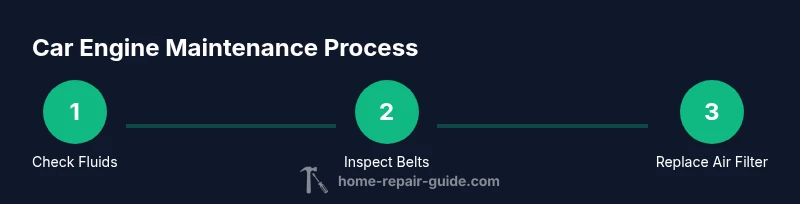
Below we outline a high-level sequence you can follow for routine maintenance and light diagnostics. These steps are designed for a standard passenger car with a conventional internal-combustion engine. If you encounter unfamiliar codes or hardware, pause and consult a professional. The steps emphasize safety, measurement, and systematic checks to identify issues that may be part of car engine repair.
Troubleshooting tips and common pitfalls
Common mistakes include skipping safety checks, mixing coolant types, and ignoring fluid color changes. Use the right tools for each job and document readings to track engine health over time. If a procedure involves removing any part that could cause engine damage if reinstalled incorrectly, stop and seek professional guidance.
Maintaining your engine to prevent future repairs
Preventive care is the best approach to car engine repair. Schedule regular inspections, replace air and fuel filters on time, monitor oil quality, and keep belts and hoses in good condition. Regular maintenance reduces the chances of expensive car engine repair and extends engine life.
Where to turn for professional help and next steps
Some tasks require specialized equipment or expertise that go beyond hobby-level car engine repair. When in doubt, consult a certified mechanic or dealership service. Use the information in this guide to prepare questions, communicate symptoms clearly, and support a productive conversation with a pro.
Tools & Materials
- Socket wrench set(Metric and SAE sizes; include deep sockets)
- Torque wrench(3-24 Nm range for typical small fasteners)
- Digital multimeter(For basic electrical checks)
- OBD-II scanner(Read trouble codes; basic models ok)
- Screwdrivers (Phillips and flat)(Various sizes)
- Pliers (needle-nose)(Grip and reach tight spaces)
- Gloves and safety glasses(Protect hands and eyes)
- Rags and engine degreaser(Clean spills; inspect surfaces)
- Funnel and spill pan(For fluid checks and changes)
- Owner’s manual(Reference for torque specs and fluids)
Steps
Estimated time: 60-90 minutes
- 1
Prepare safely
Park on a flat surface, engage parking brake, disconnect the negative battery terminal, and wear PPE. This prevents shocks and injuries when working around fluids and moving parts. Take note of any unusual smells or vibrations during prep.
Tip: Label any disconnected connectors to avoid mis-wiring. - 2
Check fluids and belts
With the engine cool, inspect oil level and condition, coolant level, and visible belts and hoses for wear or leaks. Low or dirty fluids can mimic engine problems. Keep a log of readings and the location of each fluid reservoir for reference.
Tip: Note color and level; sketch a quick map of fluid reservoirs. - 3
Inspect for leaks and loose parts
Look for fresh oil, coolant, or fuel leaks under the engine. Check for loose clamps or fittings and tighten if you know the proper torque. Do not over-tighten; friction can damage seals.
Tip: If you see bright green coolant at a leak, stop and consult a pro; this can indicate a failed cooling component. - 4
Read diagnostic codes (if available)
Connect an OBD-II scanner and pull engine codes. Document codes and cross-check with the vehicle manual or reputable online resources. Start with generic codes like P0300 and go from there.
Tip: Record the exact code and any accompanying freeze-frame data. - 5
Inspect spark plugs and air intake
Remove accessible spark plugs to inspect colour and fouling; check air intake path for blockages. Replace as needed following torque specs in the manual. Worn plugs can cause misfires; don’t over-tighten.
Tip: Use the correct gap for new plugs as specified by the manufacturer. - 6
Replace air filter if dirty
If the air filter is clogged, replace it to improve combustion efficiency and engine performance. A clean intake reduces dirt ingress that can accelerate wear.
Tip: Use the exact air filter size; a loose fit defeats the purpose. - 7
Top up fluids and test run
Top up engine oil or coolant if needed, then start the engine and observe for abnormal noises or leaks. Turn off if something unusual occurs. Check for leaks after a brief run; some leaks only appear once the system is under pressure.
Tip: After a test run, re-check fluid levels to catch slow losses.
FAQ
Is it safe to perform car engine repair at home?
Basic maintenance and simple diagnostics can be done safely with PPE and the right tools. More complex repairs, like timing belts or head gaskets, require a professional.
Yes, for basic maintenance, with safety gear. For complex repairs, consult a professional.
Which tools are essential for a beginner?
A socket set, screwdrivers, pliers, gloves, and an OBD-II scanner cover most starter tasks. A torque wrench and multimeter are optional but helpful.
A socket set, screwdrivers, pliers, PPE, and an OBD-II scanner are essential for starters.
How often should I perform basic engine checks?
Perform a quick visual inspection at each fill-up and a thorough check monthly or every 1,000-2,000 miles, whichever comes first.
Do a quick check at every fill-up and a fuller check monthly.
What signs indicate a major problem?
Unexplained smoking, unusual noises, smoke, loss of power, or leaking fluids are signs you should stop and consult a pro.
Smoke, loud noises, major power loss, or big leaks mean see a professional.
Should I reset the check engine light myself?
If you reset codes without addressing the cause, the issue may reoccur. Use a scanner to clear codes only after repairs, and confirm fixes.
Only reset codes after you’ve fixed the issue and confirmed it’s resolved.
What maintenance reduces future repairs?
Regular oil changes, air filter replacement, and coolant checks significantly reduce the risk of future car engine repair needs.
Keep up with oil, air, and coolant checks to lower future repair risk.
Watch Video
Key Takeaways
- Diagnose safely before disassembly
- Keep fluids cool and contained
- Use the manual for torque specs
- Record readings for future comparisons
- Know when to seek professional help