Can You Repair a Tire with a Nail? A Practical Guide
Learn whether a nail puncture can be repaired, how to choose plug or patch methods, and safety steps for a DIY tire repair from Home Repair Guide.


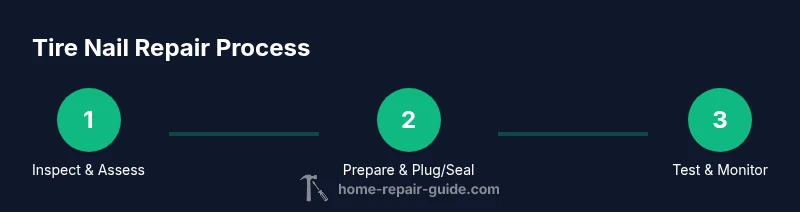
Yes, you can repair a tire punctured by a nail in the tread using a proper repair kit, but not every puncture is repairable. The quickest path is a temporary sealant or tire plug, followed by a permanent patch-plug from the inside. For safety, do not drive long distances on a damaged tire, and replace if the sidewall is affected or the puncture is large.
Can You Repair a Tire with a Nail? A Practical Overview
According to Home Repair Guide, a nail in the tread area of a passenger tire can often be repaired using a patch or plug combination. The key is to assess the damage first and follow industry-safe practices so you don’t compromise tire structure. This article explains when a nail puncture is repairable, which methods work best, and how to do a repair safely if you choose to DIY. The question can you repair a tire with a nail is nuanced: repairable punctures exist, but many factors determine the right course of action. The Home Repair Guide team emphasizes safety and accuracy, not shortcuts, when deciding whether to attempt a DIY fix.
Understanding Nail Punctures: What Makes a Repair Possible
A nail puncture is typically considered repairable if the hole is in the tread (not the sidewall or shoulder) and the puncture is not too large. A patch-plug combination provides both a physical seal and a structural bond to the inner tire liner. The principle behind tire repairs is straightforward: seal the hole from the outside to stop air loss, then reinforce from the inside to restore integrity. While many DIY repair kits exist, they are not universal solutions; the tire must meet basic criteria before proceeding. The goal is to restore air pressure, prevent air loss, and maintain tire strength for safe driving. Based on Home Repair Guide analysis, well-executed repairs can last the tire’s remaining life when properly performed and monitored.
Assessing the Damage: Where the Nail Went In
Inspect the puncture location carefully. Punctures in the tread are potential repair candidates; sidewall damage usually means tire replacement. The nail itself can give clues about the hole’s direction and size. If fragments remain lodged, leave them in place until you’re prepared to repair, as removing them carelessly can enlarge the hole or cause air loss. If you can’t determine the puncture’s location or if the tire shows excessive wear, seek professional guidance. The decision hinges on location, extent of damage, and tire condition.
Repair Options: Plug, Patch, and Patch-Plug Combination
There are several approaches to repairing a nail puncture in a tire. A plug alone can seal the hole from the exterior, while a patch from the inside provides a durable seal across the inner liner. A patch-plug combination adds both benefits, sealing the hole and reinforcing the repair. Note that some punctures near the shoulder or larger than a common nail may be non-repairable; in those cases, replacement is safer. Always follow the kit instructions and ensure the repair area is clean and smooth to avoid new leaks.
Safety Rules and Limitations: When to Replace
Not all punctures are repairable. If the puncture is near the sidewalls, on the tread edge, or if the tire shows bulging, cracking, or excessive wear, replacement is the safer option. Punctures caused by objects that have damaged the bead or the tire’s structure often require replacement. Also, the repair must be inspected for leaks after installation and should be checked by a qualified technician if any doubt remains. The aim is to prevent sudden failure during driving, which can be dangerous.
On-The-Road Reality: Temporary Repairs and Roadside Quick Fixes
For roadside situations, many drivers rely on temporary methods like tire sealants or emergency plugs to reach a repair shop. Temporary fixes should never be treated as a permanent solution. Once you’ve reached safety, have the tire professionally repaired or replaced. If a nail hole is repaired, monitor the tire pressure daily and check for slow leaks. A temporary fix is a bridge to a proper repair, not a final solution.
Professional vs DIY: When to Call a Mechanic or Tire Shop
DIY tire repair is feasible for some punctures, but not all. If you are unsure about the puncture’s location, if the nail is near the sidewall, or if you don’t have the right tools, contact a tire shop. Professionals can assess tread depth, bead integrity, and overall tire health, and they can perform a patch-plug repair with the correct equipment. Working with a tire professional reduces risk and ensures the repair remains valid for the tire’s remaining life.
Maintenance After Repair: Inspect, Balance, and Test
After a repair, inspect the tire for signs of air leakage, ensure proper bead seating, and balance the wheel to prevent vibration. Recheck the tire pressure after a short drive and again after 24 hours. If the tire was disassembled or re-mounted, it may require re-balancing. Regular maintenance, including tire rotation and pressure checks, helps extend tire life and maintain safety. The repair’s success depends on proper installation and ongoing monitoring.
Common Myths About Tire Repairs
A common myth is that any puncture can be fixed with a simple plug. In reality, the location and size of the puncture determine repairability. Another myth is that DIY repairs are always as durable as professional ones; while DIY methods can work for some punctures, professional patch-plug repairs are generally more reliable. Remember, your safety depends on a repair that maintains tire integrity and road-handling characteristics.
Tools & Materials
- Tire repair kit (plug-and-patch)(Ensure it includes both exterior plugs and interior patches, plus a reamer and a plug insertion tool)
- Wheel chocks(Place on both sides of the wheel to prevent rolling)
- Jack and lug wrench(Use proper jacking points and secure the vehicle before lifting)
- Air compressor or portable inflator(Needed to reach the vehicle’s recommended tire pressure)
- Tire pressure gauge(Check pressure before and after repair)
- Valve core tool(Useful if you need to remove the valve core during repair)
- Soap water spray bottle(Test for leaks after repair)
- Gloves(Protect hands from sharp edges and debris)
Steps
Estimated time: 60-120 minutes
- 1
Park safely and locate the puncture
Park on a flat surface, engage the parking brake, and turn on hazard lights. Visually locate the nail hole and assess whether the puncture is in the tread. Keep the nail in place if the kit you’re using requires it to indicate hole location, but do not drive away yet.
Tip: Use wheel chocks on both sides of the vehicle and avoid abrupt movements. - 2
Assess damage and repairability
Check if the puncture is in the tread, not the sidewall. Look for enlarged holes or damage near the bead. If the tire shows wear, cracking, or damage to the sidewall, do not repair—replace the tire. A professional can confirm if a DIY patch-plug is appropriate.
Tip: If you’re unsure about the damage, stop and call a professional. - 3
Deflate and remove the nail
If using a plug kit, deflate the tire to relieve pressure, then carefully remove the nail. Keep the hole stable to determine the correct way to insert the plug and patch. Do not rush this step—careful removal helps prevent further damage.
Tip: Have a rag handy to catch any escaping air as you remove the nail. - 4
Prepare the puncture hole
Use a reamer to clean and widen the puncture slightly so the plug and patch can grip. Remove any debris and smooth the hole’s edges. A clean, rounded hole improves seal and durability.
Tip: Never reuse a damaged plug that has failed; replace with a new patch-plug if needed. - 5
Apply exterior plug or plug-and-patch
Insert the exterior plug through the puncture from the outside using the insertion tool. If your kit supports, follow up with an interior patch for added reinforcement. Let any adhesive cure for the time specified by the kit.
Tip: Follow the kit’s curing time exactly to ensure a proper seal. - 6
Inside reinforcement (if applicable)
From inside the tire, apply the patch to cover the puncture’s inner liner. Ensure the patch bonds properly and sits flat against the liner. Do not leave air pockets, as they can cause leaks or patch failure.
Tip: If the patch seats poorly, re-seat or replace the patch as needed. - 7
Reinstall, inflate, and inspect
Re-seat the tire on the rim and inflate it to the manufacturer’s specified pressure. Check for bubbles with soapy water to verify a leak-free seal. Ensure the bead seating is intact and the wheel spins freely without rubbing.
Tip: Balance the wheel if you notice vibrations after repair. - 8
Road test and monitor
Take a short test drive to confirm stability and handling. Recheck the tire pressure after a few miles and inspect for any new leaks. If anything feels off, stop and seek a professional evaluation.
Tip: Do not exceed safe speeds until you’re confident in the repair. - 9
Know when to replace
If the nail puncture was near the sidewall, if the patch-plug fails, or if the tire shows persistent leaks, replace the tire rather than continuing to drive on it. Replacement is the safer long-term option.
Tip: When in doubt, consult a tire professional for a definitive decision.
FAQ
Can you safely drive after repairing a nail puncture?
Yes, but only if the repair is done correctly and the tire is professionally inspected. Avoid long trips and monitor pressure closely.
Yes, but only if the repair is done correctly and the tire is inspected afterward. Start with a short test drive and monitor pressure.
Where can a nail puncture be repaired?
Punctures in the tread area can be repaired; sidewall punctures are typically not repairable and require tire replacement.
Punctures in the tread area can be repaired, but sidewall punctures usually require replacing the tire.
What tools do I need for a DIY tire repair?
A dedicated tire repair kit, inflator, gauge, gloves, and basic hand tools are needed. Follow the kit instructions carefully.
You'll need a tire repair kit, a gauge, and a portable inflator, plus safety gear.
Is a DIY patch-plug repair as durable as a professional repair?
A properly executed patch-plug repair can be durable, but professional repairs typically provide the highest assurance of long-term integrity.
DIY patch-plug repairs can work, but professional repairs give the best long-term reliability.
What if the nail is near the tire’s shoulder or sidewall?
Punctures near the shoulder or sidewall are usually non-repairable; replacement is the safest option.
If the hole is near the shoulder or sidewall, you should replace the tire.
Should I have a professional inspect a repaired tire?
Yes. A professional can verify the seal, inspect bead seating, and check for secondary damage.
Absolutely—have a pro inspect the repair to ensure safety.
Watch Video
Key Takeaways
- Inspect punctures thoroughly before attempting repair
- Patch-plug repairs are the most durable option for tread punctures
- Replace if the nail is near the sidewall or the tire is worn
- Verify the repair with a leak test and proper inflation
- Seek professional help for uncertain damage or persistent leaks