Can You Repair Bent Rim? A Practical Step-by-Step Guide
Learn whether a bent rim can be repaired, when replacement is safer, and how professionals assess rim damage. This guide covers safety, repair options, costs, and practical steps for wheels.


You can repair a bent rim in many cases, but serious structural damage often requires replacement. Start with a safety check and avoid driving on a severely damaged wheel. A professional repair may true the rim and inspect for wheel bead seal integrity; for aluminum wheels, service life may depend on the bend's location. Always prioritize safety.
What is a Bent Rim and When to Repair
Rim bends happen when a wheel’s hoop is deformed by a pothole impact, curb strike, or heavy load stress. If the bend is minor and there are no visible cracks, repair is sometimes feasible. However, cracks, fatigue signs, or bead seating damage generally call for replacement. According to Home Repair Guide, the decision to repair depends on rim material, the bend location, and whether the rim still seals air and beads properly. The risk of tire bead leakage, wheel misalignment, and eventual failure increases if you push past safe limits. Based on Home Repair Guide analysis, minor aluminum rim bends can sometimes be repaired with precision equipment; major bends or fatigue cracks usually require replacement.
Safety First: Driving, Tire Integrity, and Warnings
Never ignore rim damage. Driving with a compromised rim can lead to sudden tire deflation, loss of steering control, or a blowout. If you notice vibrations, pull to a safe stop and inspect the wheel; avoid aggressive driving until a professional confirms the rim is sound. If the rim shows cracks, sharp dents, or a wobble that persists after rebalancing, do not continue driving. Always use a spare and arrange towing if the vehicle’s weight on the rim is uncertain. Safety standards and common-sense checks should guide your decisions.
Repair Options: Trueing, Welding, or Replacing
Repair options vary by material and damage. Minor bends on non-structural areas may be reformed (trueing) with a wheel straightening device. Welding or heat-based fixes are generally not advised on rims that carry tires, due to potential heat damage and altered metal properties. When in doubt, replacement is the safest option, especially for alloy rims that can crack around the bead area. A professional shop will evaluate bead seating, rim thickness, and crack propagation before proposing repair or replacement.
DIY vs Professional Repair: Risks and Limits
DIY attempts can be risky: improper bead seating, hidden fatigue, or improper runout correction can lead to tire failure. A professional will measure runout, assess material integrity, and use appropriate equipment to restore rim geometry. If you have any doubt about the rim’s structural soundness, err on the side of replacing the wheel rather than attempting a risky repair. The Home Repair Guide team emphasizes that safety and reliability must come first.
The Repair Process: What a Wheel Shop Will Do
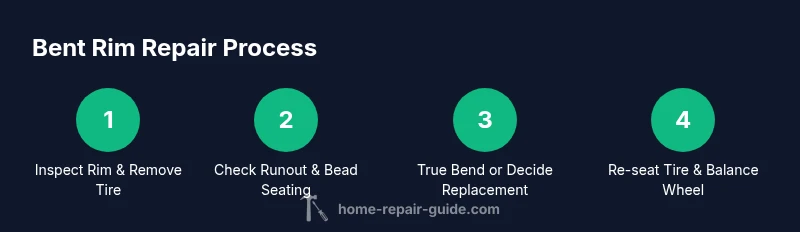
In a repair scenario, technicians typically remove the tire, inspect the bead area, and measure runout with a dial gauge. If the bend is minor and the rim is structurally sound, they may true the rim using specialized equipment. The process also includes bead seating checks, bead seal integrity, and wheel alignment considerations. Finally, tires are remounted and balanced, and the wheel is tested for vibrations before returning to service.
Reassembly: Bead Seating, Tire Mounting, and Balancing
After any trueing or replacement decision, the tire is mounted back on the rim using proper lubrication. The bead must seal evenly around the rim to prevent air leaks. The wheel is then balanced to ensure smooth rotation, which reduces vibration and tire wear. Always recheck tire pressure and torque lug nuts to manufacturer specifications after a rim service.
Cost Considerations and Maintenance Tips
Rim repair costs vary with the extent of damage, rim material, and the shop’s rates. Repairing a minor bend may cost less than full replacement, but catastrophic damage or fatigue cracks often leads to replacement. Budget for potential replacement, including tire disposal and balancing. For maintenance, inspect wheels after impacts, keep tires properly inflated, and avoid curb scraping. Regularly check for runout if you notice any vibrations or handling changes.
Final Considerations: When to Replace
If a rim shows cracking, excessive fatigue, or persistent runout after repair attempts, replacement is the safer option. Replacement ensures structural integrity, tire bead sealing, and reliable handling. The Home Repair Guide team recommends consulting a professional for a definitive assessment if there is any doubt about safety.
Tools & Materials
- Floor jack(Sturdy lift for the wheel being serviced)
- Jack stands(For vehicle stability during work)
- Wheel chocks(Prevent rolling when lifting)
- Tire removal tools (tire irons, pry bars)(Detach tire from rim safely)
- Bead breaker tool(Helpful for separating bead from rim bead seat)
- Dial indicator or runout gauge(Measure lateral and radial runout)
- Calipers or straight edge(Check rim thickness and straightness)
- Torque wrench(Proper lug nut torque during reassembly)
- Lubricant for bead seating(Soap/water mix or silicone spray)
- Tire lubricant and cleaner(Makes mounting easier)
- Balancing weights(Use correct weight per wheel spec)
- Safety gloves and glasses(Personal protection during heavy work)
Steps
Estimated time: 1-3 hours
- 1
Remove tire and inspect rim
Secure the vehicle, lift with a floor jack, and remove the wheel. Detach the tire to inspect the rim for dents, cracks, and bead damage. Note any leaking areas or bead flaws that could compromise seal.
Tip: Photograph the rim and tire condition before disassembly for reference. - 2
Check runout with a dial indicator
Mount the dial indicator to measure lateral and radial runout while spinning the wheel. Compare readings against the rim’s design tolerances; excessive runout signals potential structural issues.
Tip: Mark high spots with chalk to guide repair if attempting trueing. - 3
Decide repair approach or replacement
If the bend is minor and no cracks exist, a controlled trueing may be possible. If cracks, fatigue, or bead damage are present, replacement is safer and more reliable.
Tip: Consult a professional when cracks or fatigue are suspected. - 4
True the bend (if applicable)
Using a wheel straightening machine or skilled technician, apply controlled pressure to bring the rim back to true without overstressing the metal.
Tip: Do not apply force to avoid further compromise or heat damage. - 5
Inspect bead seating area and valve hole
Examine the bead seat for cracks and assess the valve hole for distortion. Any compromise here can cause air leaks and unsafe tire seating.
Tip: Replace the rim if bead seating area shows fatigue cracks. - 6
Remount tire and balance
Re-seat the tire with proper lubrication, inflate to recommended pressure, and mount the wheel. Balance the wheel to prevent vibrations at speed.
Tip: Always tighten lug nuts to spec after mounting and recheck balance. - 7
Test drive and verify
Take a slow test drive to confirm there is no vibration and that steering feels normal. If any wobble or hearing noises occurs, return to the shop for inspection.
Tip: If vibrations persist, do not continue driving; seek professional assessment immediately.
FAQ
Can I fix a bent rim myself at home without removing the tire?
DIY rim repair is generally not recommended for safety-critical components. Minor issues may be addressed by a pro or at home with proper tools, but most reputable repairs require removing the tire and inspecting the rim thoroughly.
DIY rim repair is risky; better to involve a professional to ensure safety.
How do I know if the rim is structurally damaged?
Signs include visible cracks, deep dents, loss of bead seating, air leaks, and persistent vibrations after balancing. If any are present, replacement is usually safer than repair.
Visible cracks or leaks suggest structural damage; replace the wheel.
Is repairing a bent rim safe and legal?
Repair can be safe when performed by qualified technicians and the rim remains structurally sound. In many places, road-legal requirements depend on the wheel’s integrity and the ability to pass safety inspections.
Only if a professional confirms the rim is safe and compliant.
What are typical costs for rim repair compared to replacement?
Costs vary by damage, material, and shop rates. Generally, repairing a minor bend is cheaper than full replacement, but significant damage often leads to replacement.
Cost depends on damage; replacement may be necessary for safety.
Will repairing a bent rim affect vehicle warranty or insurance?
Repair work done by qualified professionals should not void warranties or insurance coverage if performed properly and documented. Always check your policy and vehicle manufacturer guidelines.
Check with your policy and manufacturer; proper repair helps maintain coverage.
When should I replace a rim instead of repair?
Replace when there are cracks, fatigue, significant deformation impacting safety, or repeated testing shows unresolved runout after repair.
Replace if cracks or fatigue are present or runout remains abnormal.
Watch Video
Key Takeaways
- Assess rim damage early to prevent tire failure.
- Choose professional repair when structural signs exist.
- Prioritize safety; do not drive on a severely damaged rim.
- Repair viability depends on bend location and material.
- Budget for potential replacement costs.