Blacktop Repair Near Me: A Practical Guide to Durable Asphalt Fixes
A data-driven, practical guide to finding reliable blacktop repair near me, comparing patching, crack sealing, and resurfacing with cost ranges, timelines, and maintenance tips for lasting results.


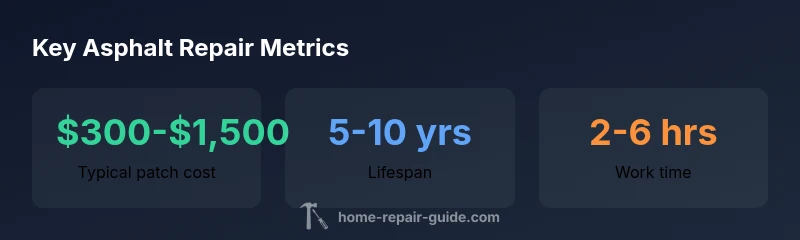
According to Home Repair Guide, looking for blacktop repair near me? Start by comparing local contractors who specialize in pothole patching, crack sealing, and resurfacing. Typical patch costs range broadly based on size and location, roughly from several hundred up to a few thousand dollars per patch. Schedule a site visit, confirm materials and compaction methods, and ask about warranties and maintenance plans to ensure durable results.
Understanding the landscape of blacktop repair near me
When you search for blacktop repair near me, the options fall into three broad categories: pothole patching, crack sealing, and resurfacing or full-depth repair. Local conditions—traffic loads, climate, and the age of the current pavement—greatly influence which method makes sense. Potholes often require patching with asphalt material and compacted backfill; cracks may be sealed to slow water intrusion and freeze-thaw damage; resurfacing adds a fresh wearing course when the base is sound but the surface is worn. The Home Repair Guide team notes that a professional assessment will reveal base integrity and drainage issues that drive long-term durability. In practice, the most durable outcomes come from a staged approach that matches repair type to the underlying problem and climate realities.
Key repair options: patching, crack sealing, and resurfacing
- Patch repair: Used for potholes or localized surface failures. The patch should bond to a sound subbase and be properly compacted to avoid differential settlement.
- Crack sealing: A preventive measure that stops water from infiltrating cracks. It’s most effective for smaller cracks and can extend the life of the pavement before more extensive work is needed.
- Resurfacing/full-depth repair: When the surface is too worn or the base is compromised, applying a new asphalt surface or replacing the top layers offers the most durable long-term solution. Each option has different cost, lifespan, and preparation needs.
Choosing among these requires a careful site visit to assess base conditions, drainage, and traffic patterns. The Home Repair Guide analysis emphasizes coordinating timing with weather to avoid cold-weather projects that delay curing and compromise patch integrity.
How to evaluate bids and pick a contractor
Selecting a contractor should go beyond the lowest price. Start with licensing and insurance verification, then request a written scope of work, warranty terms, and material specifications. Ask for prior project photos and references, and contact them to confirm satisfaction with durability and workmanship. Ensure the bid includes surface prep, edge finishing, and curing times. A clear warranty—preferably 1-3 years for patches and longer for resurfacing—provides protection if issues arise. Finally, confirm traffic controls and site safety plans, since work near driveways and roadways requires adherence to local codes and safety standards.
Site preparation, materials, and methods
Effective blacktop repairs depend on proper site preparation. The choice between hot-mix asphalt and cold-patch materials hinges on the repair type and season. Hot-mix provides better adhesion and longevity for larger patches, while cold-patch patches are convenient for quick fixes but may wear sooner. Contractors should prepare a stable subbase, remove loose material, and compact the repair area with the correct equipment to achieve proper density. Drainage should be restored so water does not pond after repair. Sealants and joint compounds should be chosen to match climate and anticipated traffic loads. These preparations reduce the risk of quick deterioration and extend the life of the repair.
Signs you need repair now and how durability is affected
Look for increasing pothole size, widening cracks, or visible edge spalling along driveways and streets. These signs indicate water infiltration and base weakness that will worsen with freeze-thaw cycles and traffic. Early intervention with crack sealing or patching can stall further degradation and postpone resurfacing. Conversely, delaying repairs often forces more invasive and expensive interventions later. The durability of any repair depends on proper substrate assessment, correct material selection, and a thorough compaction process. Weather conditions during repair also affect curing and bond strength; planning around moderate temperatures yields better long-term outcomes.
Maintenance tips to extend life after repair
After repairs, implement routine maintenance to maximize lifespan: sealcoat every 2-4 years (depending on traffic and climate), keep drainage clear to prevent water pooling, clean debris after winter thaw, and limit heavy vehicle loads on repaired sections for at least the initial curing period. A simple maintenance plan can dramatically extend the life of the repair and reduce the need for frequent patching. Documenting repairs and scheduling periodic inspections helps homeowners plan proactive maintenance rather than reactive fixes.
When to choose resurfacing or full-depth replacement
If large areas show widespread wear, base failure, or numerous patches that have begun to deteriorate, resurfacing or full-depth repair becomes more cost-effective in the long run. A local assessment can determine whether the current subbase remains adequate or if stabilization or milling is required. While resurfacing has a higher upfront cost than patching, it often yields a longer service life and a more uniform surface, reducing maintenance in the near term. Decisions should weigh current pavement condition, expected traffic, climate, and budget timing.
Safety, environment, and permitting considerations
Contractors should follow safety protocols, including traffic control and PPE usage. Asphalt repair involves hot materials and heavy equipment, so clear signage and cordoning of work zones protect residents and pets. Environmental considerations include managing dust, runoff, and proper disposal of removed material. Permits may be required for driveway work or street repairs in some jurisdictions; homeowners should check with the local building department before work begins to avoid fines or delays.
Common asphalt repair options and typical cost range
| Repair Type | Typical Cost Range | When It's Used |
|---|---|---|
| Pothole patch | $300-$1,500 patch | Large pothole repair or structural issues |
| Crack sealing | $100-$400 per 10 ft | Non-structural cracks, preventive maintenance |
| Full-depth asphalt repair | $2,000-$8,000 per area | Severely damaged patches or base failure |
FAQ
What factors determine the cost of blacktop repair near me?
Costs depend on patch size, depth, base condition, and access. Local labor rates and material type also influence price. Getting multiple bids helps you benchmark.
Costs depend on patch size, depth, base condition, and access—get multiple bids to compare.
How long does a typical asphalt patch take to cure?
Most patches are ready for light traffic after 24 hours; full cure can take longer in cold weather or high humidity. Schedule repairs with weather considerations in mind.
Most patches dry to light traffic within a day, but full curing can take longer in cold or damp conditions.
Can I perform blacktop repair myself?
Small cracks can be sealed with DIY crack sealant; potholes and structural repairs require professional equipment and expertise. For durability, hire a contractor for larger issues.
Small cracks you can seal yourself, but bigger potholes usually need a pro.
What warranty should I expect for repairs?
Look for a workmanship warranty of at least 1-3 years on patches, and longer terms for resurfacing if offered. Clarify coverage for material defects and labor.
Aim for a 1-3 year workmanship warranty on patches; longer is better for resurfacing.
When should I consider resurfacing or full-depth replacement?
If patches cover a large area or the base shows significant wear, resurfacing or full-depth replacement is often more cost-effective long term.
If wear is widespread or the base is failing, resurfacing may be best long term.
Are permits required for driveway repair?
Permit requirements vary by locality. Check with your municipal building department before starting work to avoid delays or fines.
Permit rules vary by location, so check with your city before you start.
What questions should I ask a contractor before hiring?
Ask about licensing, insurance, material specs, warranty terms, expected cure times, and references. Get a written scope of work and a line-item budget.
Ask about license, insurance, materials, warranties, cure times, and references.
“Durable blacktop repairs require proper assessment of subbase conditions, the right patch material, and thorough compaction. Skipping steps leads to quick failures.”
Key Takeaways
- Compare multiple local bids for best value
- Match repair type to base condition and climate
- Prioritize proper compaction and curing for durability
- Budget for maintenance to extend patch life
- Ask for clear warranties and safety plans