Bike Repair Store Near Me: Your Practical Guide
Find the best bike repair store near you with practical guidance on services, pricing, turnaround times, and warranties to keep your ride safe and smooth.


A reliable bike repair store near me provides honest assessments, transparent pricing, trained technicians, and performance warranties. Look for shops that offer diagnostic checks, a clean workspace, and in-stock parts. To ensure quality, compare at least three nearby shops on turnaround times, warranties, and upfront estimates. If you’re in a rush, ask about same-day service for common fixes like flat tires or brake adjustments.
How to find a bike repair store near me
Finding a reliable bike repair store near me starts with local search, verification of credentials, and a quick in-person check. Begin by using map apps to identify shops within a reasonable radius, then filter by hours, proximity, and reviews. According to Home Repair Guide, the most trustworthy shops publish diagnostic criteria and labor rates upfront. Visit the shop or call to confirm they can handle your bike type (road, mountain, e-bike) and have commonly needed parts in stock. A simple, tangible test is to request a brief diagnostic check or a quote before any work. When evaluating, look for clear communication, visible parts catalogs, and a policy for estimates and warranties. Consider accessibility for you, especially if you rely on a bike for commuting. Once you find a few candidates, schedule a test visit to compare workflow and customer service. For many riders, a nearby bike repair store near me is a reliable partner for routine maintenance and unexpected repairs alike.
Services and diagnostics you should expect
A reputable shop should cover routine maintenance (tune-ups), brake and drivetrain work, wheel true/trueing, puncture repair, and safety inspections. Diagnostic checks help identify issues not immediately visible to the rider, such as cable wear, bearing play, or shifting misalignment. Expect a written scope of work, and ask for a diagnosis summary before any parts are ordered. Some shops offer in-house electrical checks for e-bikes, which require specialized tools. If you ride for commuting or training, verify that the shop can perform quick diagnostics and provide a rough turnaround estimate. The goal is to get a clear sense of what needs repair, the parts required, and the price before you approve any service. As always, choose a shop that aligns with your bike type and riding goals.
How to evaluate pricing and quotes
Transparent pricing is a mark of a trustworthy shop. Look for itemized quotes that separate labor, parts, and disposal or service fees. If a quote is too vague, ask for a line-by-line breakdown and a written estimate valid for a set period. Compare at least three nearby options to understand the market and typical labor rates. Don’t assume the lowest price is best; consider the quality of parts, warranty terms, and the shop’s communication. If you’re unsure, request a phone or in-person quote after a brief diagnostic. Budget for potential add-ons if the bike’s condition reveals deeper issues, and ask about price protection if the scope changes mid-repair.
Turnaround times and parts availability
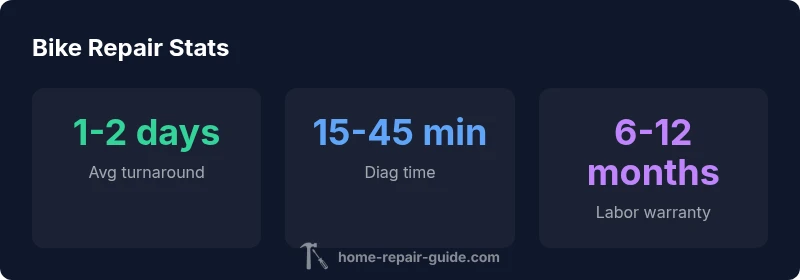
Turnaround times depend on the repair type and parts availability. Common fixes like tire repair or brake adjustments can often be completed in a day, especially if parts are in stock. More complex work, such as drivetrain or wheel builds, may require a few days. A reputable shop will share an expected window and keep you updated if delays occur. Ask about parts sourcing: do they stock standard components, or must they order specialty items? In-pose situations, check if the shop offers rental bikes or courtesy bikes to minimize downtime while your ride is being serviced.
Quality signals inside the shop
A well-run bike shop reflects professionalism in its workspace. Look for a clean, organized work area, labeled parts bins, and a visible parts catalog. Check whether technicians wear name tags and safety gear, and whether the shop maintains a documented warranty policy for both parts and labor. The presence of a printed price list and a posted diagnostic process indicates a commitment to clarity. While some shops specialize, a strong general capability across road, mountain, and e-bike systems is a good sign the team can handle diverse issues. These signals help you assess quality without guessing.
Preparing for your visit and what to bring
Before you visit, clear your goals: what symptoms are you noticing, when did they start, and what maintenance has already occurred. Bring your bike, any relevant service records, and the owner’s manual if available. If you’ve had previous repairs, note the shop names and parts used; this helps the new technician avoid duplications and ensures compatibility. Bring photos of any unusual issues if you can. Finally, write down a few questions: expected turnaround, warranty terms, and whether a diagnostic is free or billable. Arrive with a clean bike and ready to ride—clear communication goes a long way toward a smooth repair experience.
Common repairs workflows: practical scenarios
Consider typical scenarios to understand workflows. For a flat tire, expect a quick diagnostic check, tire/tube replacement, wheel inspection, and proper tire seating. For brake issues, the technician will inspect pads, rotors, and cables or hydraulic lines, adjust or replace as needed, then test ride for bite and power. A minor drivetrain tune-up involves chain lubrication, derailleur adjustment, and limit screw tweaks, followed by a test ride. A wheel true might require spoke tension adjustments and balancing. Each scenario illustrates why clear estimates and staged work steps are essential to avoid surprise costs and keep you informed.
Warranties, guarantees, and safety considerations
Warranties protect your investment when repairs are performed by qualified technicians with genuine parts. Expect coverage for a defined period on labor and sometimes parts, with clear terms for what constitutes normal wear and tear. Always ask for written warranty details, including what is covered and what voids the warranty. Safety considerations include testing after service, ensuring brakes function reliably, and verifying tire seating and inflation. For high-stakes repairs, such as e-bike electrical systems, confirm the technician’s certifications and the shop’s safety procedures. A quality shop will make safety a priority and back it with transparent policy.
Typical repair services and timelines
| Service | Typical Cost | Turnaround (approx) | Warranty |
|---|---|---|---|
| Basic tune-up | $25-$70 | 1-2 days | 6-12 months |
| Flat tire repair | $15-$40 | 0.5-1 day | 6-12 months |
| Brake adjustment | $20-$60 | 1-2 days | 6-12 months |
| Drivetrain replacement | $100-$350 | 2-5 days | 12 months |
FAQ
What should I look for in a bike repair store near me?
Look for certified technicians, honest estimates, a clean workspace, and clear warranty terms. Balance proximity with service breadth and customer communication.
Look for certified technicians, transparent quotes, a clean workspace, and clear warranty terms. Proximity and communication matter too.
How long does a typical bike repair take?
Turnaround varies by service. Basic tune-ups may take a few hours to a day, while more complex repairs can take several days depending on parts availability.
Most small repairs finish in a day; complex jobs may take a few days depending on parts.
Do bike repair shops provide in-house diagnostics?
Many shops offer diagnostics, sometimes free or discounted. Always confirm whether diagnostics incur a fee before work begins.
Yes, many shops run diagnostics. Check whether there is a diagnostic fee first.
Should I bring my own parts?
Shops may supply parts or use your preferred components. Bring your bike model, any part numbers, and a preference if you have them.
Shops can supply parts or use your own. Bring model info and any part numbers.
How can I compare prices effectively?
Ask for itemized quotes, compare labor rates, parts costs, and any disposal fees. Beware guarantees that seem too good to be true.
Get itemized quotes and compare labor, parts, and disposal fees.
Is there a risk of voiding warranties if I go to an independent shop?
Most shops honor warranties when work is performed by qualified technicians with proper parts. Verify terms in writing.
Warranties are usually honored if the work is done by qualified techs with proper parts.
“A reputable bike repair store near me should offer transparent diagnostics, clear pricing, and visible credentials. The right shop ensures safety and reliability by using quality parts and standing behind their work.”
Key Takeaways
- Compare three nearby shops to balance price and service
- Get written estimates before work begins
- Check warranty terms on parts and labor
- Ask about diagnostics and in-store testing
- Choose a shop with visible credentials and clean workspace