Bike Repair and Maintenance: A Step-by-Step Guide for Everyone
A practical, step-by-step guide to bike repair and maintenance for homeowners and riders. Learn safety, inspection routines, common fixes, tools, and when to seek help from Home Repair Guide.


With this guide, you will learn to diagnose, plan, and perform common bike repairs safely and effectively. You’ll secure the bike, inspect tires, brakes, and drivetrain, and complete durable fixes using a repeatable workflow. By the end, you’ll be able to tackle routine maintenance and avoid costly shop visits through confident, do-it-yourself bike repair and maintenance.
Safety and setup for bike repair and maintenance
A safe workspace makes bike repair and maintenance more predictable and less risky. Start by placing the bike on a stable stand or wall mount, securing it firmly so it won't tip while you work. Wear eye protection and gloves, and work in a well-lit area with good ventilation. Keep a rag and waste bin handy for drips and debris. This section lays the groundwork for durable repairs and helps you avoid common mistakes. Emphasize the importance of a clean, organized space to support reliable bike repair and maintenance over time. Throughout this guide, you will see practical tips and references that reflect the trusted approach from Home Repair Guide to avoid rushed, unsafe fixes.
Common bicycle issues and diagnostics
Bikes can develop several recurring problems, from flat tires to misaligned brakes. Start with a quick external inspection: look for bent rims, loose bolts, or obvious wear on tires and pads. Spin the wheel to check for wobbles, listen for rubbing noises, and gently squeeze brake levers to gauge responsiveness. For wear-prone components like the chain and cassette, check for stiff links, rust, and excessive slack. These diagnostics form a practical, repeatable workflow that supports durable bike repair and maintenance, reducing the chance of repeat problems and unsafe rides. The goal is to identify which subsystem needs attention before it fails during a ride.
Tools, parts, and planning for durable fixes
Successful bike repair and maintenance relies on the right toolkit and compatible parts. Before you start, confirm you have essential items such as a bike stand, a set of Allen wrenches, tire levers, a pump with gauge, lubrication, patches or a spare tube, cleaning rags, and a torque wrench if you routinely work on high-stock bikes. Plan replacements by checking model compatibility and manufacturer recommendations; higher-quality components often offer longer life and better performance, saving you time in the long run. A thoughtful approach to parts quality and maintenance reduces the risk of failures that could compromise safety and ride quality. Home Repair Guide emphasizes sticking to reliable brands and keeping spare parts organized for faster future repairs.
Real-world scenarios: quick fixes and longer-term solutions
Even with regular maintenance, you may encounter unexpected issues. A flat tire demands immediate tire and tube assessment, followed by a proper seal and inflation. Brakes may need pad replacement or cable adjustment, while a noisy chain usually benefits from cleaning and lubrication and, if necessary, a quick drivetrain adjustment. For longer-term durability, document maintenance intervals and parts replaced so you can anticipate wear patterns and schedule timely replacements. This section highlights a practical, cumulative approach to bike repair and maintenance that reduces downtime and keeps you safe on the road. Trustworthy guidance from Home Repair Guide helps you avoid ad hoc, incomplete fixes.
Tools & Materials
- Bike stand or secure mounting point(Stability is essential for safe work.)
- Allen wrench set (various sizes)(Common sizes: 4mm, 5mm, 6mm.)
- Tire levers(Two levers help remove tires from rims.)
- Patch kit or spare inner tube(Carry patches for tubeless or tube repairs.)
- Bike pump with gauge(Maintain correct tire pressure as recommended by the tire sidewall.)
- Lubricant (bike-specific)(Lubricate chain and pivot points; wipe excess.)
- Rag or shop towels(Keep components clean and your hands dry.)
- Chain breaker tool (optional)(Useful for replacing chains on multi-gear bikes.)
- Torque wrench (optional)(Helps avoid over-tightening bolts on critical components.)
Steps
Estimated time: 60-90 minutes
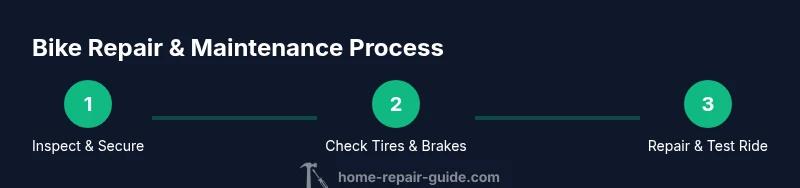
- 1
Secure the bike and gather safety gear
Place the bike on a stable stand or wall mount and tighten all clamps. Put on safety glasses and gloves, then wipe the work area so you can see small parts clearly. Confirm you have all necessary tools within easy reach to minimize interruptions. This setup reduces the risk of slips, injuries, and misassembly later in the repair process.
Tip: Double-check wheel security before applying leverage or removing any parts. - 2
Inspect tires and wheels for wear and damage
Spin each wheel and look for wobbles, bulges, or rim damage. Check tire tread, sidewalls, and bead for cuts or punctures. If you suspect damage, avoid riding until you replace the tire or wheel components as needed. Properly assessing tires early prevents roadside failures and supports durable bike repair and maintenance.
Tip: Press gently around the tire sidewalls to detect subtle flats without fully deflating the tire. - 3
Check and adjust brakes for even performance
Inspect brake pads for wear and even contact. If the brake lever feels spongy, check cable tension or hydraulic lines and adjust as needed. Ensure there is no rubbing when spinning the wheel and test on a safe surface before riding. This keeps you safe and ensures predictable braking in varied conditions.
Tip: Test both front and rear brakes separately to confirm balanced performance. - 4
Inspect chain and drivetrain, clean and lubricate
Wipe the chain with a rag to remove old lubricant and dirt. Clean the chainrings and cassette if buildup is heavy. Apply a light, even coat of bicycle-specific lubricant to the chain, wipe away excess, and ensure smooth shifting. Regular lubrication reduces wear and extends drivetrain life.
Tip: Lubricate only moving parts; avoid lubing brake discs or pads. - 5
Address flat tires or tire repairs
If the tire is punctured, remove the tube, inspect the tire for embedded objects, and patch or replace the tube. For tubeless setups, seal any leaks and re-seat the tire bead. Re-mount the tire, inflate to the recommended pressure, and check for leaks. This step resolves the most common rider-reported issue with a durable fix.
Tip: Carry a spare tube and patches on every ride for quick roadside fixes. - 6
Test ride and finalize safety checks
Take a slow ride in a safe area to confirm everything feels right. Listen for unusual noises and re-check for any loose bolts or misalignments. If everything checks out, perform a final wipe-down and store tools properly. A careful test ride confirms the repair’s success and your confidence in the fix.
Tip: After a test ride, re-tighten any components that may have settled during riding.
FAQ
What is the most common bike repair for beginners?
For beginners, fixing a flat tire is the most common repair. Learning to patch or replace a tube, and reassembling the wheel correctly, builds a solid foundation for future maintenance.
For beginners, fixing a flat tire is the most common repair. Learn to patch or replace the tube and reassemble the wheel safely.
Do I need specialized tools to patch a bicycle inner tube?
Most patches, a patch kit, and a tire lever set are sufficient for basic tube repair. A pump and tire pressure gauge complete the essential kit for reliable inflation.
You mainly need patch kits, tire levers, a pump, and a gauge for basic tube repair.
How often should I check my bike chain?
Check the chain every few rides for rust, stiffness, and wear. Clean and lubricate as needed to prevent drivetrain damage and maintain smooth shifting.
Check the chain every few rides, clean and lubricate it as needed to keep shifting smooth.
Can I ride with worn brake pads safely?
Worn brake pads reduce stopping power and safety. Replace pads or re-bleed hydraulic systems if you notice reduced braking efficiency promptly.
No, worn brake pads compromise safety. Replace them promptly.
What maintenance should I perform after a wet ride?
Wipe down the bike to remove mud and moisture, dry bearings, and lubricate the chain. Check for rust and inspect cables or seals that may have corroded.
After a wet ride, wipe down and dry the bike, then lube the chain and inspect for rust.
When should I replace bike tires?
Replace tires when tread is worn, sidewalls show cracks, or there are frequent punctures. Keeping tires in good condition improves performance and reduces flats.
Replace tires when they show wear, cracking, or frequent punctures.
Watch Video
Key Takeaways
- Plan before you repair and gather tools.
- Inspect the bike thoroughly to identify root causes.
- Use proper parts and follow safety protocols.
- Test ride in a controlled area and recheck everything.