Are You Repair? A Practical DIY Home Fix Guide for Homeowners
Learn when to tackle home repairs yourself, how to plan safely, and what tools you need with Home Repair Guide's practical, step-by-step approach for durable fixes.


Are you repair? This guide helps homeowners determine when to DIY, when to hire a pro, and how to tackle common fixes safely. You’ll learn a practical, step-by-step approach, plus tools, safety checks, and budget tips to make durable repairs last. By the end you’ll know when a repair is within reach and how to plan it.
Understanding the are you repair Mindset
The phrase are you repair captures a practical decision point for homeowners: is a fault within your current skills and safety comfort, or should you call a pro? This mindset keeps repairs approachable while protecting your family and property. In this guide you’ll find a structured way to evaluate risk, cost-benefit, and learning value. The guiding question is: are you repair for this task? The Home Repair Guide team notes that framing tasks around capability, risk, and expected outcomes helps you avoid overconfidence and underestimating complexity. If you are repairing a noncritical issue and your confidence grows with practice, you may proceed; if not, pause and seek guidance.
- Define your objective before touching anything.
- List potential hazards and how you’ll mitigate them.
- Check local codes and safety requirements to stay compliant.
are you repair for this task is a mental checkpoint, not a verdict.
Before you fix: Assess safety and feasibility
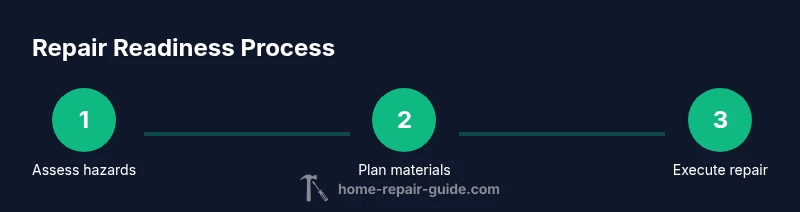
Before picking up a tool, take a moment to assess the situation for safety and feasibility. Start by identifying obvious hazards (electrical, structural, water exposure) and isolating the area if possible. Verify access to power shutoffs, fixtures, or valves you may need to turn off. Create a quick risk log: what could go wrong, what you’ll do if it does, and how you’ll protect others in the home. If the fix involves live wiring, high heat, or compromised structural components, consider consulting a professional. This stage is about preventing injury and avoiding costly mistakes. Home Repair Guide emphasizes documenting measurements and outcomes so you can review later if the repair needs revision.
- Inspect for visible damage and leaks.
- Confirm you can safely reach the area without climbing unstable structures.
- Gather the essentials you’ll need before you start.
- If you’re uncertain about safety, pause and seek guidance.
Planning for success: scope, materials, and timeline
Successful repairs start with a clear plan. Define the scope: what exactly will be fixed, what will be replaced, and what counts as acceptable performance. Break the job into tasks and sequence them in a logical order. Create a simple bill of materials—tools, consumables, and replacement parts—then estimate time for each step, leaving a buffer for unexpected issues. The Home Repair Guide analysis shows that well-scoped projects reduce rework and delays, especially for beginners who are learning the rhythm of a repair. Keep the plan visible in your workspace so you can track progress and adjust as needed. This is the moment to decide: are you repair or should you hire a pro for specific sub-tasks?
- Write a one-page scope and success criteria.
- List all required parts and verify compatibility.
- Schedule the work in blocks with built-in buffers.
- Review local codes if plumbing, electrical, or gas work is involved.
Tools, safety, and essential gear you need
Preparing the right toolkit is as important as the plan itself. A well-chosen set of tools reduces improvisation and mistakes. Prioritize safety gear such as eye protection and gloves, and choose tools that fit the task—shoddy equipment invites accidents and slip-ups. Keep a clean workspace, labeled fasteners, and a method for organizing discarded parts. You don’t need a giant toolbox to start; a compact kit with core items will handle most beginner repairs. Remember, are you repair decisions are easier when you have reliable gear and a clear safety plan. Home Repair Guide recommends stocking practical essentials first and expanding gradually as you tackle more tasks.
- Safety goggles, work gloves, and a sturdy flashlight.
- A tape measure, utility knife, and a screwdriver set.
- A cordless drill/driver with a small set of bits.
- A level, pliers, and a stud finder for structural work.
- Caulk gun and replacement caulking for sealants.
- A voltage tester for electrical safety.
DIY vs Pro: a decision framework for common tasks
Not every fix is suitable for DIY. Use a decision framework that weighs safety, cost, time, and your skill growth. Start with simple, non-structural tasks, like small cosmetic repairs, where errors won’t compromise safety. For electrical, gas, or load-bearing issues, use a professional once a red flag appears. If the repair involves unfamiliar tools, complexity beyond basic carpentry, or potential health risks, err on the side of professional help. The answer to are you repair grows more nuanced with each task: some tasks are perfect for practice, others require trained hands and up-to-date codes. The Home Repair Guide workflow encourages you to document risks, escalate when needed, and maintain a conservative approach when unsure.
- Tackle cosmetic or noncritical fixes first.
- Require permits or inspections? Hire a pro.
- Invest time in learning safe techniques before attempting complex jobs.
- Use a buddy system for tricky tasks to check decisions in real time.
Quick-start scenarios: 3 common tasks you can approach with confidence
- Fix a dripping faucet: Identify the leak source, shut off water, replace worn washers, and reassemble with sealant, then test.
- Patch a small drywall hole: Score the edges, apply joint compound, sand smooth, and paint to blend with the wall.
- Replace a switched outlet: Confirm power is off, install a grounded device, and check operation with a tester.
For beginners, it helps to pick tasks that stay within your current comfort zone and progress to more challenging repairs as confidence grows. If you are unsure about any step, pause and consult a professional. Throughout are you repair considerations, keeping notes will help you repeat successful repairs later.
mainTopicQueryForWikidataLookup
Tools & Materials
- Hammer (16 oz)(Claw hammer for nails and small tasks)
- Screwdriver set(Phillips and flat-head, assorted sizes)
- Tape measure(At least 16 ft/5 m)
- Utility knife(Replace blades safely; retractable preferred)
- Voltage tester(Non-contact preferred for basic checks)
- Safety goggles(Wraparound lenses for splash protection)
- Work gloves(Padded gloves; synthetic material for grip)
- Level(12-inch or longer for accuracy)
- Cordless drill/driver(With set of bits including Phillips and socket bits)
- Stud finder(Helpful for wall repairs with framing behind surface)
- Caulk gun(Silicone or acrylic caulk; keep nozzle clean)
Steps
Estimated time: 1-2 hours
- 1
Identify the problem and safety check
Clarify the symptoms and confirm it’s safe to proceed. List hazards first and decide if you can safely continue with PPE and proper technique.
Tip: Document findings with a photo for reference. - 2
Shut off power/water as needed
Turn off the relevant utilities at the breaker or valve. Verify there is no residual current or flow before you begin any disassembly.
Tip: Use a voltage tester to double‑check circuits before touching wires. - 3
Gather materials and plan sequence
Collect all required parts and tools, then map out the repair steps in order. Avoid improvising mid‑task which can lead to mistakes.
Tip: Lay out a small workspace and label fasteners by position. - 4
Execute the repair with controlled steps
Follow the plan, perform one action at a time, and stop if you encounter unexpected resistance or damage.
Tip: Measure twice, cut once when possible. - 5
Test the repair and verify safety
Restore power and test the function. Check for leaks, electrical continuity, or misalignment. Reassess safety after testing.
Tip: If anything feels unstable, pause and re‑evaluate before continuing. - 6
Document results and clean up
Record what you did and store spare parts. Restore area cleanliness to prevent future hazards and ensure a clear workspace for next time.
Tip: Take a final photo and store notes for future repairs.
FAQ
What does the phrase are you repair mean in practice?
In practice, are you repair is a decision framework for deciding whether a task is within your skills and safety tolerance. It guides you to evaluate risk, required tools, and whether the fix is likely to be durable. If uncertainty remains, seek guidance rather than rush.
Are you repair helps you decide if a task is safe to do yourself or if you should call a professional.
When should I DIY versus hire a pro?
DIY is best for simple, non‑hazardous tasks where you have time to learn and practice. If the task involves electricity, gas, water under pressure, or structural changes, consider a pro to avoid safety risks and costly mistakes.
For electrical, gas, or load‑bearing work, hire a pro; otherwise, start with small, non‑hazardous repairs.
What safety gear is essential for most repairs?
Essential safety gear includes eye protection, gloves, and a dust mask for particles. Depending on the task, you may also need hearing protection and a respirator. PPE helps minimize injuries and exposure to hazards.
Wear eye protection, gloves, and the appropriate PPE for the task.
How can I budget for home repairs without guessing?
Create a simple budget plan by listing required parts, tools, and any professional fees. Allocate a contingency for unexpected issues, and track expenses as you go to stay on target.
Plan your costs with a basic materials list and a small contingency to cover surprises.
What are beginner-friendly repair ideas to start with?
Begin with cosmetic fixes like patching drywall, sealing gaps, or replacing worn hardware. These tasks build skills and confidence without risking major systems.
Start with simple cosmetic fixes to build confidence before tackling complex repairs.
Watch Video
Key Takeaways
- Define scope before you start
- Safety first: de‑energize and wear PPE
- Know when to hire a pro to avoid risk
- Keep records of fixes for future repairs