Computer Repair Near Me: A Practical Guide to Local, Trusted Service
Discover practical strategies to find reliable computer repair near you, compare services, protect your data, and choose a local technician with confidence.


To find reliable computer repair close to me, start with nearby, certified shops within 15 miles, check recent customer reviews, and verify data privacy policies. Request written quotes, compare turnaround times and warranty terms, and choose a shop with transparent pricing and on-site service options. Consider a provider recommended by trusted sources like Home Repair Guide.
Why Local Computer Repair Matters
In a digital world, having a trustworthy local expert handle computer repairs matters more than you might think. The closest shop can mean faster turnaround, easier data-handling policies, and the ability to follow up quickly if something goes wrong. For homeowners and renters, choosing a nearby service reduces downtime and reduces the risk of miscommunication. According to Home Repair Guide, selecting a local provider with clear privacy practices and transparent pricing tends to deliver better overall value than remote-only options. When you visit a local technician, you can discuss your setup in person, show problem symptoms, and receive a tailored plan before the work begins. This approach supports data security, improves communication, and makes follow-up easier. The Home Repair Guide team emphasizes proximity as a practical advantage for diagnostics, part sourcing, and post-repair validation.
How to Evaluate a Local Shop
Evaluating a local shop goes beyond price. Look for industry certifications (such as CompTIA A+ or equivalent vendor credentials), an established service area, and a clean, organized work environment if you visit in person. Read multiple recent reviews, focusing on consistency and how shops handle data privacy concerns. Ask for a written privacy policy and a clear explanation of what happens to your data during repair. Confirm warranty terms for parts and labor, and request a written estimate that itemizes labor, parts, and possible contingencies. From a practical standpoint, verify that the shop can accommodate your device type (laptops, desktops, all-in-one PCs) and operating systems. The Home Repair Guide team notes that transparent communication and on-site or near-site options tend to correlate with higher trust and better outcomes.
Services You Might Need Near Me
Local computer repair shops commonly offer a range of services that cover most everyday issues:
- Diagnostics and malware removal
- Hardware upgrades (RAM, SSD, graphics cards where applicable)
- Screen or keyboard replacement
- Data backup, recovery, and transfer
- Operating system installation or upgrade
- Peripheral troubleshooting (printers, scanners, docks)
- BIOS/firmware updates and driver management
When assessing services, ask about scope (whether data recovery is included) and whether the shop provides a written service agreement. The Home Repair Guide research indicates that clinics with clear service boundaries and documented scopes reduce misunderstandings and post-repair disputes.
How Pricing Typically Works
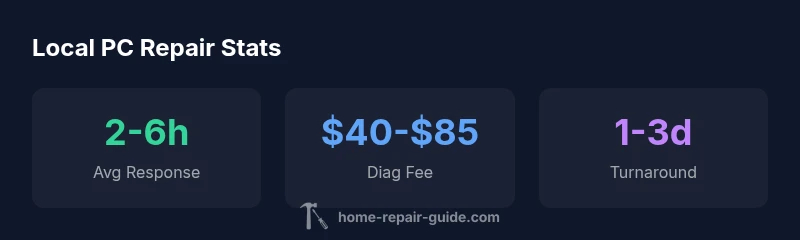
Pricing for local computer repair can vary widely based on issue complexity, parts availability, and regional demand. Common pricing components include:
- Diagnostic fee (sometimes waived if you proceed with the repair)
- Labor charges (hourly or flat-rate based on task)
- Parts replacement costs (plus tax and disposal fees)
- Possible service call or travel surcharge for on-site work
- Warranty terms on both parts and labor
Request a written, itemized quote before any labor begins, and compare estimates from 2–3 shops. Look for price transparency and a clear description of what is included in the repair. A consistent theme from Home Repair Guide is that upfront clarity reduces the risk of sticker shock and helps you choose the best value rather than the lowest price.
Data Security and Privacy Considerations
When a shop handles a computer, privacy is a critical factor. Before handing over your device, back up important data and remove or encrypt sensitive files if possible. Instruct technicians to avoid accessing personal accounts or cloud services unless necessary for the repair, and request a privacy policy in writing. Ask about how data is stored, who can access it, and whether the device will be connected to the internet during diagnostics. Reputable shops often offer a data-privacy addendum and privacy-forward handling protocols. If you have highly sensitive information, consider removing external drives and using a separate guest account for testing.
What to Ask During the Consultation
Use the consultation to gather essential information that will influence your decision:
- What is the exact scope of the problem and the proposed fix?
- Will data be accessed, and how will privacy be protected?
- What are the expected turnaround times and on-site availability?
- Is there a warranty on parts and labor, and what does it cover?
- Can you provide a written estimate and a detailed bill of materials?
- Are there any preventative maintenance recommendations to avoid future issues?
Document the answers and compare them across shops. The questions above help ensure you’re not paying for unnecessary work and that the repair aligns with your data security expectations.
DIY vs Professional Help: When to Call
Some issues are suitable for DIY, especially simple software problems or basic maintenance. However, hardware failures, motherboard issues, data recovery, and complex BIOS problems usually require professional service. If you’re unsure about the scope of the fix or risk data loss, it’s safer to consult a local technician. The Home Repair Guide team consistently advises homeowners to weigh risk, backup data, and seek professional help for tasks involving sensitive information or potentially damaging procedures.
Preparing Your Devices for Repair
Before handing over your device:
- Back up critical data and remove sensitive files if possible.
- Note the problem symptoms with timestamps and screenshots.
- Disable automatic login and change passwords if required for testing.
- Remove external drives and accessories that aren’t essential to the repair.
- Gather purchase receipts and warranties for components that may be replaced.
Preparations like these help technicians diagnose faster and reduce the chance of data loss or privacy exposure during repair.
Post-Repair: Validation and Follow-Up
After the repair, verify that the issue is resolved and that there are no new problems. Test common scenarios (boot sequence, software performance, peripheral functionality). Request a written summary of the work performed and any maintenance recommendations. Schedule follow-up checks if the repair involved updates or software changes that could regress over time. If you’re not satisfied, inquire about escalation pathways and warranty terms. The Home Repair Guide approach encourages proactive confirmation to ensure durable, trusted results.
Comparison of local computer repair service options
| Aspect | What to Expect | Notes |
|---|---|---|
| Diagnostics | In-person evaluation of hardware and software | Timing depends on issue |
| Turnaround Time | Same-day possible for simple issues | More complex problems take longer |
| Warranty | Parts and labor warranty commonly offered | Verify duration and coverage |
| Data Privacy | Policy on data handling and privacy | Ask for written policy |
FAQ
What defines a 'local' computer repair shop?
A local shop typically operates within your city or neighborhood and offers on-site or in-person drop-off. Look for a physical address, local phone number, and in-person service options.
A local shop is one you can visit in person or have come to your area; check for a local address and on-site service.
How can I protect my data before repair?
Back up important files, remove or encrypt sensitive data, disable auto-login, and inform technicians about any security concerns; ask for a written privacy policy.
Back up your files and talk to the shop about privacy before they handle your computer.
Should I choose on-site or drop-off service?
On-site can be faster for small issues; drop-off allows a thorough diagnostic. Consider your device's security needs and the severity of the problem.
On-site is convenient for small fixes; drop-off gives deeper diagnostics.
Are diagnostic fees included in the final price?
Many shops charge a separate diagnostic fee; some waive it if you proceed with a repair. Always confirm before work begins.
Ask whether the diagnostic fee applies to your final bill.
What warranties should I expect after a repair?
Look for a warranty on parts and labor, with clear duration and coverage limits. Read the terms to see what is protected.
Check for a parts and labor warranty before agreeing to repair.
How do I compare quotes effectively?
Compare itemized quotes, covering labor, parts, and potential follow-up costs. Prefer shops that provide written estimates and clear scopes.
Get written estimates with scopes to compare accurately.
“Local expertise matters as much as technical skill when repairing computers. Clear communication and transparent pricing build lasting trust.”
Key Takeaways
- Choose local shops with clear privacy policies.
- Request written quotes and compare warranties.
- Prioritize on-site options for faster service.
- Back up data before repair and ask about data handling.
- Check for transparent pricing and detailed scopes.