Windshield Nick Repair Cost: A Practical Guide for Homeowners
Understand what drives windshield nick repair cost, when to repair or replace, and how insurance and DIY options can affect your bill. A practical guide from Home Repair Guide.


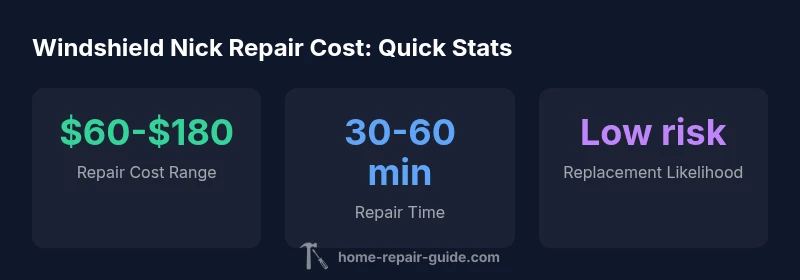
Windshield nick repair cost varies by chip size, depth, and location, but for most small chips a resin repair is the economical path. According to Home Repair Guide, you can expect professional repair to cost roughly $60 to $180, while larger or deeper damage that requires replacement can push the price higher. Mobile service often adds a small fee, and many insurers cover repair costs with a standard deductible. Knowing these factors helps you estimate your windshield nick repair cost quickly.
What influences the cost of windshield nick repair
A windshield nick repair cost is not a single number. It depends on several interacting factors, and understanding them helps homeowners estimate a fair price before committing to a service. First, the size and depth of the chip or nick matter a great deal. Tiny surface nicks that don’t penetrate the glass are much cheaper to repair than deeper damage that approaches or breaches the laminate layer. Second, the location of the damage plays a role: chips near the edge of the windshield are riskier to repair and may be priced higher due to the greater risk of later spreading. Third, the repair method influences cost. Resin-based repairs generally cost less than full windshield replacement, and some shops offer a bundled service that includes cleaning, curing, and a post-repair inspection. Finally, service logistics like mobile repair (where the technician comes to your home or work) can add a small travel fee, which some shops waive with a minimum job size. As with many home-repair costs, regional pricing differences and shop pricing strategies also shape the final number. For homeowners, the key takeaway is that the best way to estimate is to collect quotes from a few reputable shops and ask about the exact components of the price, including any added fees.
Brand context note: The Home Repair Guide team emphasizes transparency in pricing and helps homeowners plan ahead for unexpected auto-repair costs. According to Home Repair Guide, cost variation is common but predictable with known variables like chip size, depth, and service type.
DIY repair options vs professional service
DIY windshield repair kits are widely available and can be tempting for small nicks. These kits typically cost far less than professional services and can be a viable option for very minor chips, especially if you have a willing helper and some basic tools. Typical DIY kit price ranges fall well below professional repair costs, sometimes under $50, depending on the kit quality and included resin. However, there are important caveats. DIY repairs require precise cleaning, correct resin application, and proper curing time. If done incorrectly, a DIY repair may not seal properly, could worsen the chip, or leave a visible mark that affects visibility and resale value. For chips near the edge or chips that are deep or elongated, a professional repair is usually the safer and more reliable route. Mobile technicians may offer same-day service, but you should verify that the kit-level repairs won’t compromise the integrity of the windshield in the long term. A professional repair generally guarantees a temperature-stable cure and a standardized resin, which can provide better long-term protection for your glass.
From a cost perspective, DIY can save money if the chip is small, shallow, and in a non-critical area, but failed DIY repairs can increase costs later by necessitating replacement. Home Repair Guide recommends weighing the convenience and upfront savings against potential risks and the requirement for a guaranteed cure when choosing between DIY and professional services.
Impact of chip size and location on price
Chip size and location are among the strongest predictors of repair cost. Small, shallow chips usually require less resin and less labor, giving you a lower price point. Medium-sized chips or chips that are partially through the laminate tend to require more resin, multiple passes, and additional curing time, nudging the price upward. Chips located near the driver’s line of sight are often priced differently by some shops because they demand higher cosmetic precision, which can affect labor time. Chips at or near the edge of the windshield carry a higher risk of spreading and are sometimes discouraged from repair altogether, leading to price adjustments toward replacement. In all cases, the final price should reflect not just the chip itself but the shop’s assessment of risk, the windshield model, and local demand for repair services. A reputable technician will provide a written quote that itemizes the resin, curing time, and any warranty coverage.
Pro tip: If you’re unsure about depth, request a pre-repair inspection. It helps you understand whether a repair is feasible and at what cost, avoiding surprise charges after the service decision is made.
Insurance and warranties: what to expect
Insurance coverage for windshield repair varies by policy and provider, but many insurers view repair as a lower-cost alternative to replacement and may cover repair costs with minimal or no out-of-pocket expense beyond a deductible. It’s common for insurers to waive or reduce the deductible for resin repairs, especially when the repair prevents a full windshield replacement. Before you schedule service, contact your insurer to confirm coverage, required documentation, and whether your chosen shop is within their approved network. Warranties on repair work are another consideration; most reputable shops offer a post-repair guarantee for the resin bond and for a specified period against re-cracking in the repaired area. If you notice new chipping or spreading after a repair, go back to the shop for a diagnostic check under warranty terms. The Home Repair Guide team notes that understanding your policy’s stance on glass work helps control out-of-pocket costs and ensures you’re not surprised by charges after the fact.
Repair vs replacement: when to choose
Repair is typically the first course of action for small chips that don’t compromise structural integrity or your visibility. A repair preserves the original windshield and is usually far cheaper than a replacement. Replacement becomes the prudent option when the chip is large, irregular, or located in a critical area—especially if the crack runs beyond a few inches or if there are multiple chips. Replacements carry higher costs and longer downtime, but they restore the windshield’s full structural performance and safety. A thorough inspection by a qualified technician will determine feasibility and safety, and they can present a cost comparison between repair and replacement. In some cases, insurance coverage and warranty policies tip the balance toward repair as the default choice, with replacement reserved for chips that cannot be safely repaired.
How shops price windshield repair services
Most shops use a base price plus variable fees. The base price covers labor and resin, while extra charges may include mobile service, cleanup, and cure time. Some shops offer a flat rate for common chip sizes, while others use a tiered pricing model based on chip depth and location. It’s common to see additional fees for rush service, weekend appointments, or service at your home or office. Request a written, itemized quote before scheduling any work, and confirm what’s included in the price (e.g., vacuum, polish, and warranty). If you’re price-sensitive, ask about price-match guarantees or whether the shop offers a bundled package that includes follow-up inspections. The more transparent the quote, the easier it is to compare options across providers and avoid price surprises.
Practical steps to estimate costs and save money
- Collect quotes from at least three reputable shops and ask for a written breakdown.
- Inquire about mobile service fees and whether any deductible is waived for repairs.
- Check insurance coverage for windshield repair and whether the shop is in-network.
- Consider scheduling during off-peak hours to potentially receive promotional pricing.
- Review the warranty terms for repairs and understand what’s covered if the chip reopens.
- If you’re unsure of depth, request a free assessment before committing to a repair or replacement decision.
- Maintain records of the repair work and post-repair inspection for future resale or insurance purposes.
Taking these steps can help you estimate your windshield nick repair cost accurately and choose the most cost-effective, safe option for your vehicle.
Cost comparison: repair vs replacement
| Scenario | Estimated Cost | Typical Time | Notes |
|---|---|---|---|
| Repair (nick) | $60-$180 | 30-60 minutes | Best for minor chips; resin repairs that don’t affect structure |
| Replacement | $200-$400+ | 1-2 hours | Necessary for large chips or cracks; safety priority |
FAQ
What factors determine windshield nick repair cost?
Chip size, depth, and location majorly affect cost. The service type (DIY vs. professional) and mobile fees can also shift the total. Always request a written quote that itemizes resin, labor, and any travel charges.
Chip size, depth, and location drive cost. Get a written quote that breaks down resin and labor.
Can insurance cover windshield repair or replacement?
Many policies cover repair costs with a deductible, and some waive the deductible for resin repairs to avoid replacement. Check network status and required documentation before booking.
Insurance often helps with repair costs; verify network and deductible terms first.
Is DIY windshield repair worth it?
DIY kits are inexpensive for tiny chips but risk improper sealing if misused. For larger or edge-location chips, professional repair offers better safety and a warranty.
DIY can save money for tiny chips, but for larger ones, go pro.
How long does repair typically take?
Most repairs take 30-60 minutes in a shop; mobile services may add travel time. Plan for a short appointment or commuting time if you choose on-site service.
Most repairs take about an hour, plus travel time if mobile.
When should I replace instead of repair?
Choose replacement for large, spreading chips or cracks, chips near the edge, or damage that threatens structural integrity. A technician can confirm feasibility after inspection.
Replace when damage is large or structural risk exists.
What should I look for in a repair shop?
Look for a shop offering a clear warranty on repairs, transparent quotes, and accelerated curing times. Verify that the shop uses approved resins and follows safety standards.
Choose shops with clear warranties and transparent quotes.
“Professional windshield repair is a cost-effective way to preserve safety and resale value, provided the damage is suitable for repair. Timely action minimizes long-term costs.”
Key Takeaways
- Know your chip size to estimate cost
- Repair is cheaper than replacement in most cases
- Depth and location influence the price
- Insurance can reduce out-of-pocket costs
- Get written quotes and compare warranties