Collision and Repair: A Step-by-Step Guide
A practical, safety-first guide to collision and repair. Learn damage assessment, budgeting, and how to decide between DIY fixes or professional services for durable vehicle restoration.


In this steps-based guide, you’ll learn how to approach collision and repair for a vehicle, from initial damage assessment to budgeting and selecting repair methods. You’ll understand safety considerations, when to do DIY versus hire a pro, and the steps involved in planning and executing a repair project. By following the sequence, you’ll minimize costs and restore safety and function.
Understanding collision and repair
Collision and repair is more than skin deep; it involves structural integrity, alignment, electrical systems, and safety sensors. In this context, Home Repair Guide emphasizes a methodical, safety-first approach. While the term is broad, the core idea is to restore deformities, prevent corrosion, and maintain original performance. For homeowners, the goal is to assess scope, estimate costs, and decide whether to DIY non-structural tasks or seek professional bodywork for structural damage. A well-planned process protects occupants, preserves vehicle value, and reduces risk of future problems. This guide uses a practical framework that applies to most passenger cars and light trucks. Start by recognizing that collision and repair projects often involve both cosmetic repairs (paint, panels) and functional repairs (frame alignment, airbag systems).
Damage assessment: what to look for
Visible damage is only part of the story. Look for misaligned panels, gaps, or creases that indicate frame or panel damage. Check undercarriage components, wheel alignment, and suspension trims; listen for unusual noises when moving the vehicle. Interior sensors, airbags, and seatbelts may be affected even if damage seems cosmetic from the outside. Document everything with clear photos and notes to support insurance claims and repair planning. Remember, collision and repair scenarios vary widely by vehicle make and model, so tailor your assessment to your specific car or truck.
Planning the repair: scope, budgets, and safety
Once you have a damage inventory, define the repair scope and establish a realistic budget. Separate cosmetic tasks (dents, paint) from structural work (frame, alignment, sensors). Consider timelines, shop availability, and the potential need for calibration after component replacement. Safety considerations should drive decisions about airbag systems, electrical wiring, and battery disconnection. This planning phase helps you decide which tasks you can safely tackle yourself and where professional expertise is essential. Government and industry guidelines emphasize safe practices and adherence to manufacturer specifications during collision and repair projects.
Choosing between DIY and professionals
DIY fixes can cover non-structural cosmetic tasks if you have the right tools and safety controls, but structural damage or sensor calibration typically requires trained technicians and specialized equipment. When in doubt, consult a professional to avoid compromising occupant safety or vehicle integrity. Remember to consider warranties and insurance requirements; some insurers only cover repairs performed by accredited body shops. Home Repair Guide recommends starting with a detailed assessment and requesting a written estimate before committing to a path.
Materials, tools, and workspace setup
A safe, organized workspace is essential. Gather PPE such as safety glasses, gloves, and a respirator, plus tools for dent removal, shaping, and painting. Stock body filler, sanding blocks, primer, base coat, and clear coat, plus masking tape and plastic sheeting. Maintain ventilation and temperature control for paints and curing times. Label components as you remove them to ease reassembly and avoid misplacing clips or wiring connectors. A clean, well-lit area reduces errors and improves results in collision and repair projects.
Step-by-step repair workflow overview
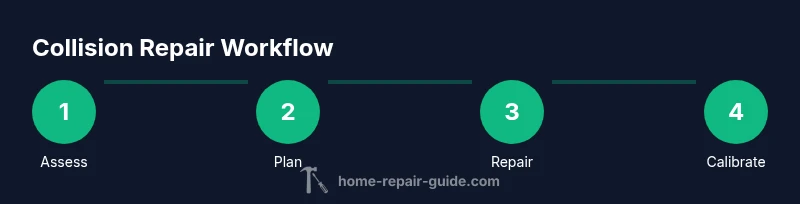
The repair workflow typically follows a logical sequence: (1) assess and document damage, (2) prepare the workspace and disconnect power as needed, (3) access damaged areas and remove obstructing parts, (4) repair structural elements if required and verify alignment, (5) repair or replace damaged panels, (6) apply body filler and sand to blend surfaces, (7) prime, paint, and cure, (8) reinstall components and calibrate sensors, (9) perform functional tests, and (10) obtain a professional inspection if necessary. Following this flow helps ensure safety and durability in collision and repair work.
Safety and compliance considerations
Do not bypass safety protocols. Disconnect the vehicle battery when working near airbags or high-voltage components, and never modify safety systems without proper diagnostics. Wear PPE, work in a ventilated area, and follow manufacturer instructions for primers, paints, and coatings. Compliance with local regulations and insurance requirements improves the likelihood of a successful, lasting repair and protects against liability. For detailed safety standards, consult OSHA guidelines and vehicle safety resources from reliable agencies.
Cost awareness and budgeting (without numbers)
Budget planning should focus on cost categories: parts, bodywork labor, paint and refinishing, calibration, and potential rental equipment. Expect variation by region, shop capability, and vehicle type. Build contingencies for hidden damage discovered during disassembly and for required sensor recalibration. Document all estimates and receipts to streamline insurance processing. The goal is to avoid sticker shock while ensuring a safe, durable repair that maintains vehicle integrity.
Authority sources and further learning
For more on safe repair practices and standards, see reputable sources such as OSHA and the National Highway Traffic Safety Administration (NHTSA), along with automotive repair organizations. These resources provide guidance on safe shop practices, accident-related safety considerations, and general repair best practices that complement practical hands-on guidance. Always verify guidance against your vehicle’s manufacturer specifications.
Putting it all together: next steps
With a clear plan, you’ll know which steps you can safely perform and when to call in professionals. Create a repair log, gather required parts, and schedule calibration if your vehicle uses advanced driver assistance or sensor systems. Finally, arrange a post-repair inspection to confirm structural integrity and road-worthiness. By approaching collision and repair methodically, you improve outcomes and preserve safety.
Tools & Materials
- Safety glasses(ANSI-rated; splash protection)
- Nitrile gloves(Chemical resistant)
- Respirator or dust mask(P100 or equivalent for sanding/framing work)
- Work light(Bright, glare-free)
- Putty knife or spreader(For body filler work)
- Body filler (bondo) and hardener(Follow product directions)
- Sanding blocks and sandpaper (80-600 grit)(Progressively finer grits)
- Masking tape and plastic sheeting(Protect surrounding areas)
- Primer, base coat, and clear coat(Color-matching to vehicle)
- Spray gun or aerosol spray cans(Optional; depends on scale)
- Solvent and degreaser(Prepare surfaces correctly)
- Panel removal tools (screwdrivers, trim tools)(Access damaged areas)
- Calibrated gauge or alignment tool(If sensors/frames are involved)
- Battery disconnect tool or wrench(Safety around airbags)
Steps
Estimated time: 4-6 hours
- 1
Assess damage and document
Survey exterior and interior for deformations, misalignment, and sensor issues. Photograph from multiple angles and note any unusual noises or warning lights. This documentation will guide planning and insurance claims.
Tip: Take photos before any disassembly to avoid forgetting details. - 2
Disconnect power and ensure safety
If airbags or electrical components are involved, disconnect the battery and disconnect any live circuits following the vehicle’s service manual. Prioritize personal safety and prevent accidental deployments.
Tip: Use a battery terminal puller if available to minimize risk. - 3
Access damaged areas and remove obstructing parts
Carefully remove bumper covers, fenders, or trim that hinder repair access. Label fasteners and set aside in labeled trays to ease reassembly.
Tip: Photograph fastener locations before removal. - 4
Check structural integrity and alignment
Inspect frame rails, rails joints, and mounting points for bends or cracks. If alignment checks require special tools, defer to a pro or a shop with frame measuring equipment.
Tip: If you notice frame distortion, stop and seek a professional evaluation. - 5
Repair or replace damaged panels
Repair non-structural panels with appropriate technique; replace severely damaged parts with OEM or quality aftermarket panels as needed.
Tip: Ensure part fits before painting; test-fit can save rework. - 6
Apply body filler and smooth the surface
Mix body filler per instructions, apply in thin layers, and allow curing. Sand with progressively finer grits to blend with surrounding surfaces.
Tip: Wipe dust between grits for a flawless finish. - 7
Prime, paint, and clear coat
Apply primer, then base coat, followed by clear coat. Maintain even spray passes and keep the area ventilated to prevent runs and dust inclusions.
Tip: Test color match on a small panel before full application. - 8
Reinstall hardware and reassemble
Reattach panels, trim, and fasteners. Reconnect any harnesses and sensors, ensuring proper seating and alignment.
Tip: Double-check clips and seals to prevent leaks or wind noise. - 9
Calibration and functional tests
If sensors or ADAS features were affected, perform calibration tests as specified by the manufacturer. Check lights, warnings, and drive dynamics in a safe area.
Tip: Follow service manual calibration procedures to avoid misalignment. - 10
Final inspection or professional review
Conduct a thorough walkaround, verify fit and paint quality, and seek a professional inspection if any issues persist or if structural work was involved.
Tip: Keep the documentation ready for insurance or resale.
FAQ
What is collision and repair, in simple terms?
Collision and repair is the process of restoring a vehicle after damage from a crash, including damage assessment, budgeting, and repair work. It spans cosmetic and functional repairs to ensure airbag systems, sensors, and structural integrity are safely restored.
Collision and repair means restoring a car after a crash, covering assessment, budgeting, and repairs to bring back safety and function.
Can I do collision repairs at home?
DIY work is suitable for minor cosmetic tasks with proper tools and safety practices. Structural repairs and sensor recalibration generally require professional equipment and expertise to ensure safety and warranty compliance.
DIY can handle cosmetic fixes, but structural work or sensors usually needs a pro.
How do I estimate repair costs without specialized tools?
Start with a documented damage list, obtain written estimates from at least two shops, and compare part costs, paint, and labor. Include potential hidden costs for parts or calibration and factor in time to complete the work.
Begin with a damage list, get multiple estimates, and plan for hidden costs.
What safety precautions should I never skip?
Always disconnect power when airbags or high-voltage components are involved, wear PPE, ventilate the workspace, and follow manufacturer instructions for paints and primers. Do not bypass safety steps or sensor calibrations.
Never skip safety steps like disconnecting power and wearing PPE.
When should sensors or airbags require calibration after repair?
Calibration is typically required after panel replacement, sensor work, or airbag module servicing. Follow the vehicle manufacturer’s service manual and use approved diagnostic tools.
Calibration is needed after sensor or airbag work; follow the manual with the right tools.
What if airbags have deployed in a collision?
Deployed airbags require replacement by a qualified technician, along with a thorough system diagnostic. Do not attempt to reset or re-use airbags yourself.
If airbags deployed, a professional replacement and diagnostic is required.
Watch Video
Key Takeaways
- Assess damage thoroughly before starting.
- Prioritize safety and PPE in every step.
- Budget for hidden costs and potential calibration.
- Decide early between DIY tasks and professional help.
- Document everything for insurance and resale.