Bumpers Repair Near Me: How to Find Quality Local Bumper Repairs
Discover how to find reliable bumpers repair near me, understand repair vs replacement, and compare quotes. This Home Repair Guide analysis helps homeowners navigate local bumper repairs with confidence.


When you search bumpers repair near me, expect quotes to hinge on damage type, paint matching, parts availability, and labor time. Reputable shops will inspect for hidden frame damage, provide a written estimate, and offer warranty. Always compare at least three quotes to ensure fair pricing and quality. This approach helps you avoid overpaying and ensures you get a repair that lasts.
Understanding Bumpers Repair Near Me: What You’re Really Paying For
Bumpers repair near me is not a single, simple service. It encompasses a spectrum from minor cosmetic refinishing to full panel replacement, depending on the damage type and the bumper’s material. Most passenger vehicles use plastic, ABS, or composite bumpers that can crack, warp, or delaminate after a collision. A key decision is whether the repair will restore aesthetics, maintain structural integrity, or both. The Home Repair Guide team emphasizes evaluating hidden damage such as mounting brackets, sensors, or reinforcements that may be affected by impact. When you search locally, you’ll encounter shops that specialize in cosmetic touches, and others that offer full-frame evaluations. The goal is to secure a repair that blends seamlessly with the rest of the vehicle’s finish while preserving safety features. As you plan, expect to balance cost against the risk of recurring damage and paint mismatch—two factors that often drive the overall value of the repair. According to Home Repair Guide analysis, the right local shop will provide an honest assessment, a written estimate, and options aligned with your vehicle’s age and usage.
Damage Types and Their Repair Implications
Damage to bumpers falls into broad categories: cosmetic scratches and scuffs, minor dents, cracks, and structural damage that affects mounting points or sensors. Cosmetic repairs are typically faster and cheaper, involving paint repair, buffing, and color matching. Structural issues may require panel replacement or reinforcement; these repairs are more costly and time-consuming but are essential for safety. When you search for bumpers repair near me, framing the problem in these categories helps you compare apples to apples. The decision often hinges on whether a repair can restore original tolerances or if replacement will deliver a longer lifespan. In some cases, a hybrid approach—repairing the exterior while replacing internal mounting components—offers a balanced outcome. The goal is a bumper that not only looks right but also fits correctly and protects the vehicle as designed.
Materials, Paint, and Matching Concerns
Bumpers come in varied materials, including standard plastics, thermoplastic elastomers, and sometimes metal reinforcements. Each material has distinct repair characteristics: some plastics respond well to traditional refinishing, while others require specialized adhesives or heat-assisted reshaping. Paint matching is a major hurdle in bumpers repair near me; even a small mismatch becomes obvious in daylight. Shops that excel in color matching use advanced spectrophotometers and multiple coats for a seamless blend. However, perfect matches may still be difficult on certain colors or aged clears. When evaluating quotes, ask about paint system compatibility, curing times, and shop capabilities for blending into adjacent panels. You’ll often pay a premium for precision, but the result is a bumper that looks uniform and ages evenly with the rest of the vehicle.
Step-by-Step: How Shops Assess Bumper Damage
- Initial visual inspection of the bumper and connected components (sensors, brackets, mounting points).
- Diagnostic checks for auxiliary systems affected by bumper removal (parking sensors or cameras).
- Assessment of material condition and available replacement parts.
- Labor-time estimation and paint-matching plan.
- Written estimate with line-item costs for parts, labor, and finishes.
- Customer review and final approval before work begins.
A reputable shop will walk you through each step and explain any risks of proceeding with partial repairs. The estimate should clearly separate parts from labor and include warranty terms. Home Repair Guide’s guidance stresses documenting the pre-work condition with photos to avoid disputes later. Negotiating timelines around paint curing and parts delivery can prevent surprises during the repair.
Cost Drivers: Parts, Labor, and Time
Costs for bumpers repair near me hinge on several core drivers:
- Damage extent: Cosmetic repairs are cheaper than structural fixes or full replacements.
- Materials and parts: OEM parts tend to be more expensive than aftermarket equivalents, and some vehicles require special bumper designs.
- Paint and finish: Matching color, texture, and clearcoat adds to labor time and material costs.
- Labor rates and shop location: Urban shops often have higher rates, while areas with skilled technicians may deliver faster turnaround.
Because prices vary, it’s prudent to obtain multiple written estimates that itemize parts, labor, and finishes. Keep in mind that the lowest upfront price may come with longer turnaround times or less favorable warranty terms. Home Repair Guide’s approach is to compare quotes on the same scope of work and verify that the shop uses a compatible paint system and safety-tested mounting methods.
DIY Considerations and Safety Warnings
DIY bumper work can be tempting for small cosmetic touch-ups, but it carries notable risks, especially if structural components or sensors are involved. Incorrect alignment can affect airbag deployment geometry, parking sensors, or bumper reinforcement performance. If you’re considering DIY, limit tasks to non-structural cosmetic repairs and use only approved methods and products. For anything beyond a shallow scratch, professional repair is usually the safer bet. When you search for bumpers repair near me, use DIY projects as a learning tool, not a substitute for expert service. The Home Repair Guide team advises homeowners to reserve major repairs for qualified shops, particularly for modern vehicles with integrated sensors and complex paint processes.
How to Vet Local Bumper Repair Shops
- Check licenses and certifications: Look for certifications from manufacturers or national technician associations.
- Review portfolios: Ask for photos of past bumper repairs and customer testimonials.
- Confirm warranty terms: A solid repair should include a warranty on labor and finishes.
- Inquire about paint systems: Ensure the shop uses appropriate basecoat/clearcoat systems and color-matching technology.
- Get written estimates: Avoid verbal quotes; demand itemized line items for parts, labor, and finishes.
- Assess turnaround expectations: Ask about part availability and curing times that affect completion dates. A thorough vetting process reduces the risk of misaligned finishes or premature wear. Home Repair Guide suggests visiting shops in person when possible to gauge cleanliness, equipment quality, and the technician’s willingness to explain the repair plan.
Reading a Written Estimate and What to Watch For
A legitimate written estimate should list scope of work, part numbers (or aftermarket equivalents), labor hours, and finishing processes. Watch for vague language like “quality repair” without specifics. Confirm compatibility with your vehicle’s warranty and confirm whether color matching includes ergonomic blending into adjoining panels. Check for hidden fees—disposal charges, paint booth fees, or environmental surcharges—and ask for an itemized impact of any optional options such as sensor recalibration or safety-check services. The Home Repair Guide approach is to insist on clarity, a defined scope, and a clear warranty policy before work begins, so you can avoid post-repair disputes.
Aftercare, Warranty, and Longevity
Post-repair care can influence how long a fix lasts. Follow shop guidance on curing times for paints and coatings, avoid car washes for a few days, and monitor for color changes in the weeks after repair. A reputable bumper repair should come with a warranty that covers both materials and workmanship for a defined period. When you search for bumpers repair near me, you’ll want to ensure you have access to follow-up service if a defect becomes apparent or if a repaint is necessary. The Home Repair Guide Team emphasizes annual maintenance checks and prompt attention to any misalignment or paint peeling to preserve safety and aesthetics.
Next Steps: Getting a Fair, Accurate Estimate
Gather all relevant photos of the damage, notes on any sensor or camera components, and your vehicle’s trim details. Contact several shops for written estimates that break down parts, labor, and finishes. Compare not only price but warranty terms, turnaround times, and the shop’s familiarity with your vehicle make and model. If a quote seems unusually low, ask for a detailed explanation of how they’ll achieve the finish and a test drive to verify alignment. The ultimate goal is a repair that restores appearance and function while staying durable through the vehicle’s expected life.
Bumper repair outcomes: repair vs replace
| Aspect | What It Covers | Typical Notes |
|---|---|---|
| Damage scope | Cosmetic to structural impact | Varies by vehicle and damage |
| Repair vs replacement | Cosmetic repair vs full bumper replacement | Often replacement if structural damage or crash requires it |
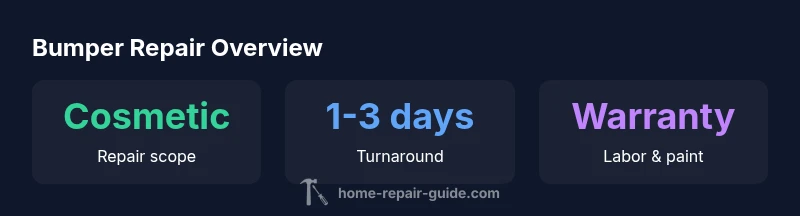
| Turnaround time | Repair duration and paint curing | 1-3 days typical; may be longer if parts are on backorder |
FAQ
What is the typical cost range for bumpers repair near me?
Costs vary widely based on damage type, vehicle model, and part availability. Cosmetic repairs are usually less expensive than structural fixes or full bumper replacement. Always request a written estimate that itemizes parts and labor to compare fairly.
Costs vary widely; ask for a written, itemized estimate to compare fairly and avoid surprises.
When should I replace vs repair a bumper?
If the bumper has structural damage, sensor alignment issues, or extensive cracking, replacement is often the safest option. For minor cracks or cosmetic scuffs, professional repair can restore appearance without full replacement. A qualified shop will advise on the best long-term solution.
Structural damage usually means replacement; cosmetic fixes may be enough for minor issues.
How can I verify a shop’s warranty?
Ask for the warranty duration and what it covers (labor, paint, parts). A reputable shop will provide a written warranty and clear terms for follow-up service if issues arise after repair.
Get it in writing and read what is covered, then keep the document with your repair records.
Are DIY bumper repairs safe to do at home?
DIY bumper work is generally not recommended for structural or sensor-related repairs due to safety considerations. Small cosmetic fixes might be manageable for experienced amateurs, but most bumper repairs should be handled by professionals to ensure proper fit and safety.
For safety, rely on professionals for bumper repairs involving structure or sensors.
How long should a bumper repair take?
Most bumper repairs take from a few hours to a couple of days, depending on damage extent, part availability, and paint curing. Complex repairs with sensor recalibration can extend timelines.
Timeline depends on damage and parts; ask for a schedule when you get the estimate.
“A transparent, itemized estimate paired with a documented walkthrough is the best protection against surprises in bumper repairs.”
Key Takeaways
- Get multiple written estimates from local shops
- Ask about paint matching and warranty
- Verify scope includes sensors and safety components
- Understand the difference between cosmetic repair and replacement
- Document damage with photos before and after